
The best crochet kits for beginners are not necessarily the ones with the most hooks or the biggest bag of yarn. It is the one that makes the first project clear: you know which hook to use, the yarn is easy to see and handle, and the instructions show what to do when your stitches do not look right. Some kits teach one small animal from start to finish. Others are supply bundles with enough tools and yarn for many projects, but leave you to find the lessons yourself. This guide compares both types so you can choose a crochet starter kit that matches the way you want to learn.
Affiliate disclosure: This article contains affiliate links. TestedWise may earn a commission if you purchase through them, at no additional cost to you. Read the full disclosure.
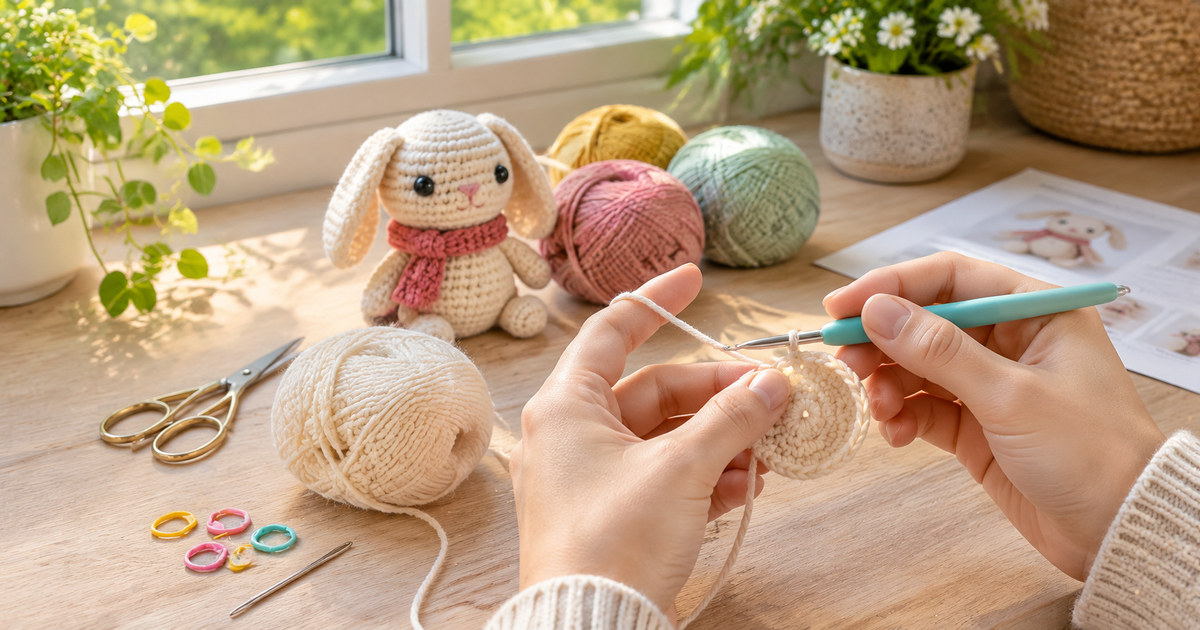
This guide is for adults and older teens shopping in the United States for a first crochet project or a practical starter set. It does not assume you already know how to read a pattern. Product contents below are based on the exact listed models and available product documentation; TestedWise has not physically tested or crocheted with these kits. Amazon listings, bundles and variants can change, so confirm the selected color or project before ordering.
1. The five beginner crochet kits at a glance
These five options cover different ways into crochet. They are not ranked by the number of pieces in the box. A kit with one hook and a well-designed lesson can be more useful to a complete beginner than a 100-piece bundle with no clear first project.
| Kit | Best fit | What makes it different | Main trade-off |
|---|---|---|---|
| The Woobles, Pierre the Penguin | A complete beginner who wants close guidance | Pre-started yarn, a project-specific hook, PDF pattern and right- or left-handed video lessons | Focused on one small amigurumi project; not a broad yarn stash |
| Crochetta Happy Axolotls | A beginner who wants to make two small animals | Two hooks, two axolotl projects, extra yarn, a basic manual and video tutorials | Still an amigurumi project, with shaping and assembly to learn |
| MAGIMUSE Plant Family | Someone who likes small decorative projects and repetition | Six hanging plant designs, extra yarn, stuffing, markers and video lessons | Six projects mean more rounds, parts and finishing than a single first toy |
| Aeelike Complete Set, Navy | A learner who wants a general-purpose tool and yarn bundle | 655 yards of yarn, nine crochet hooks, knitting needles and a wide range of notions | No single project path; the yarn weight is not clearly stated in the product details reviewed |
| INSCRAFT 113-Piece Crochet Kit | A self-directed learner who wants many colors for practice | Assorted yarn listed at about 1,600 yards plus a 73-piece accessory set | Large supply bundle, not a step-by-step crochet course |
If you are unsure, start with the first row that describes how you want to learn. Do not pay for dozens of tools before you know whether you enjoy making flat pieces, toys, blankets or wearable items.
2. First choose the kind of kit you need
Most beginner crochet kits fall into two useful groups. Product pages sometimes use the same words for both, which is why it helps to look past the title and read the actual contents.
Project-based kits: one clear thing to make
A project-based kit includes yarn and tools selected for a particular finished item: a penguin, axolotl, plant, coaster or blanket. The pattern tells you what to do, and the hook size is usually chosen for the yarn in that kit. Some include pre-started yarn, a printed booklet or video tutorials.
This is usually the easier route if you have never held a crochet hook. You do not have to decide which yarn weight to buy, which hook matches it or what pattern to search for. The trade-off is that the included yarn may be enough for the named project and a little practice, rather than a long list of unrelated projects.
Supply bundles: tools and yarn for your own projects
A supply bundle gives you several hooks, assorted yarn, stitch markers, needles, scissors and a storage case. It can be good value once you know what the tools do, or if you want to practice from free lessons and patterns. It is not automatically a better first purchase.
The missing piece is often instruction. A booklet that identifies a chain stitch or single crochet is useful, but it is not the same as a lesson that shows where to insert the hook, how to keep the yarn tension even and how to count stitches in a real project. If you choose a broad bundle, pair it with a structured course. The Crochet Guild of America beginner video series includes separate right- and left-handed lessons.
Which type should you buy first?
- Never crocheted before: Choose one project kit with slow, step-by-step video instruction and a hook that matches the included yarn.
- You can make a chain and a few basic stitches: A supply bundle gives you more room to practice different yarns and patterns.
- You want to make a gift: Choose a project with a finished item you actually want to keep or give. A cute kit is not useful if you do not like the finished design.
- You are not sure whether you will stick with crochet: Start with one small project, not the biggest assortment.
3. What makes a crochet kit beginner-friendly?
A good first kit reduces the number of decisions you have to make while you are still learning the movements. These are the details worth checking before you buy.
Instructions that show the actual hand movements
Look for a lesson that demonstrates how to hold the hook and yarn, where to insert the hook, how to yarn over and how to pull a loop through. A pattern full of abbreviations is not a beginner lesson by itself. Video is useful because you can pause, replay and compare the position of your hook with the instructor's hands. If you are left-handed, check that left-handed instruction is available rather than assuming a right-handed video will be easy to mirror.
A yarn texture that lets you see the stitches
For the first few sessions, smooth, light-colored yarn is easier to read than black, fuzzy, highly textured or heavily variegated yarn. You need to see the top loops of the stitch and the small gaps where the hook goes next. Very fluffy chenille can look appealing in a finished toy, but the pile can hide individual loops and make it harder to count stitches.
A hook size matched to the yarn and pattern
The hook should not be chosen by guesswork or by the number of hooks in the case. A kit that gives you one hook for its project can be perfectly complete. A kit with nine sizes can still be confusing if it does not explain which size to use with which yarn.
Enough yarn to practice without running out immediately
Some project kits include a little extra yarn for mistakes; others provide only what the pattern requires. Extra yarn is helpful when you are learning to undo a stitch and try again. For a supply bundle, check total yardage, the number of colors and the size of each skein. A box with 40 colors may have many small balls rather than 40 full-size skeins.
Tools that support the project—not just a high piece count
A tapestry needle for weaving in ends, stitch markers for tracking rounds, and scissors are useful. Knitting needles are not crochet hooks. A kit may include both, but the knitting needles do not increase the number of crochet hook sizes. Count the tools you will actually use for the craft you are learning.
4. Five crochet kits worth comparing
The picks below were selected to represent distinct beginner needs: guided first steps, small animal projects, multiple decorative projects and open-ended supply bundles. Product specifications are taken from available listing details, manufacturer information or kit documentation. They are not the result of hands-on testing by TestedWise.
Best for a first-time crocheter who wants the most guidance
1. The Woobles Beginner Crochet Kit — Pierre the Penguin
The main advantage of this kit is not the number of accessories. It is the way it removes the awkward first step. The yarn arrives pre-started, so you can begin practicing the main stitch instead of trying to form the first ring before you understand how the hook and yarn work together.
The Pierre kit includes The Woobles Easy Peasy yarn, a 4 mm ergonomic hook, plastic eyes, stuffing, a tapestry needle, a stitch marker, a downloadable PDF pattern and step-by-step video tutorials. The company says its beginner tutorials are available in right- and left-handed versions. It describes the kit as beginner level and recommends it for ages 12 and up; the finished penguin is listed at about 4.5 inches tall, with handmade dimensions varying by crocheter.
This is the clearest choice for someone who wants one small finished toy and guided instruction. It is also a focused learning experience: you are learning amigurumi, which is crochet worked in the round, rather than starting with a flat scarf or blanket. If you want a large supply of yarn for many unrelated projects, this is not that kind of purchase. You are paying for a structured first project and support as much as for the materials.
Best for making two small animal projects
2. Crochetta Happy Axolotls Crochet Kit
The Crochetta kit is a project-led alternative for someone who likes the idea of making a pair of small plush animals. The Happy Axolotls set is listed with four beginner-oriented yarns, two crochet hooks, stuffing, safety eyes, stitch markers, a yarn needle, scissors, an axolotl pattern and a basic crochet manual. The listing also describes step-by-step video tutorials and extra yarn in each color.
Two hooks make it possible to work on both toys without constantly switching tools, or to keep a second hook available as a spare. The project gives you a reason to practice repeated stitches, shaping and finishing. Those are useful skills if your goal is to make amigurumi rather than flat squares.
The trade-off is that a cute finished toy still involves shaping and sewing pieces together. Do not assume that a beginner label means every step will be effortless. Start with one axolotl, follow the stitch counts carefully and use a marker to keep track of the beginning of each round. The listing identifies this version for ages 14 and up; confirm that the exact Amazon variant is the Happy Axolotls set before ordering.
Best for a beginner who wants several small decorative projects
3. MAGIMUSE Crochet Kit — Six Hanging Potted Plants
MAGIMUSE takes the project-kit idea further: the MG0023 set is designed for six hanging potted plant amigurumi. Its instruction manual lists six yarn colors with an additional 40% yarn per color, stuffing for the projects, safety eyes, an ergonomic crochet hook, a yarn needle, stitch markers, a step-by-step booklet and access to video tutorials.
The appeal is repetition. Once you understand the basic shape of one small plant, you can use the same habits—counting rounds, marking the first stitch, increasing and decreasing—to work through the other designs. The project is also a good fit for someone who would rather make small home décor pieces than an animal plushie.
There is more to assemble than in a one-piece beginner project. Six plants mean multiple small components and finishing steps, so this is better if you are happy to work slowly and complete one design at a time. The kit's own manual includes stitch and shaping topics, but it is still important to follow the pattern for each plant rather than assume all six are identical.
Read the MAGIMUSE MG0023 instruction manual and package list.
Best for a broad starter toolbox and open-ended practice
4. Aeelike Complete Crochet Set — Navy
Aeelike is a supply bundle rather than a single project. The navy set is listed with 12 colors of acrylic yarn totaling about 655 yards, nine ergonomic crochet hooks from 2.0 to 6.0 mm, 14 aluminum knitting needles, stitch markers, tapestry needles, point protectors, a tape measure, scissors, pom-pom makers, an instruction booklet and a tote bag.
The range of crochet hook sizes gives you more room to try patterns that call for different yarns. The booklet covers basic stitches and includes a size guide, which is useful as a reference. The 655 yards also provide more material for practice than a one-toy kit, although the yarn is divided among colors and is not a single large skein.
There is an important counting detail: the listing describes 23 pieces across crochet hooks and knitting needles. It does not mean you receive 23 crochet hooks. The nine crochet hooks are the tools you will use for crochet; the 14 knitting needles belong to a different craft. The listing also does not identify a single project that teaches you from the first loop to a finished item, so pair it with a structured course or a beginner pattern. The yarn weight category is not clearly specified in the product details reviewed, so check the labels when the set arrives before choosing a pattern.
Best for lots of colors and self-directed practice
5. INSCRAFT 113-Piece Crochet Kit with Yarn
The INSCRAFT bundle is aimed at someone who wants a wide assortment of yarn and accessories in one purchase. Its listing describes 40 assorted yarn colors with about 1,600 yards in total, plus a 73-piece accessory set that includes ergonomic crochet hooks, knitting needles and other tools. The product is sold as a 113-piece set.
That amount of color variety can be useful for practicing small swatches, trying color changes and making several small projects without buying yarn one color at a time. It also gives a learner more room to experiment after the first few stitches begin to feel familiar.
The limitation is the same one that applies to many large bundles: a lot of supplies do not automatically create a learning path. The product is better treated as a materials-and-tools box than as a complete crochet course. Check the listing for the exact accessory breakdown and confirm the yarn weight and yardage for the selected variation. If you need a teacher to demonstrate each stitch, choose a project-led video kit or add a free structured lesson before starting.
See the tracked INSCRAFT 113-piece listing in the crochet starter-kit market report.
5. How to choose yarn for a first project
Yarn is not just a color choice. Its thickness, fiber and surface texture affect how easily you can see stitches, how the finished piece feels and which hook size the pattern expects. If a kit includes yarn, start with the pattern and the yarn label rather than swapping in a different hook because it looks more comfortable.
Understand the yarn weight number
In the Craft Yarn Council's Standard Yarn Weight System, yarn is grouped from 0 (lace) through 7 (jumbo). The number describes thickness, not quality. Medium weight 4 is commonly called worsted, afghan or aran; bulky weight 5 is thicker, and super bulky weight 6 is thicker again. The Council publishes guideline hook ranges, but a pattern's stated hook and gauge take priority.
| Yarn category | Common name | Beginner note |
|---|---|---|
| 3 · Light | DK, light worsted | Can make neat, lighter pieces, but the stitches are smaller and may be harder to see at first. |
| 4 · Medium | Worsted, afghan, aran | A versatile practice weight with a broad choice of yarns and beginner patterns. |
| 5 · Bulky | Chunky, craft, rug | Stitches are larger and a small project can grow quickly; check that the yarn is not so thick or fuzzy that loops are hard to see. |
| 6 · Super bulky | Super bulky, roving | Useful for large, soft projects, but not automatically easier to control or count. |
The Craft Yarn Council's guide gives a general crochet hook range of 5.5–6.5 mm for medium (4) yarn and 6.5–9 mm for bulky (5) yarn. Those are guidelines, not instructions to override a kit pattern. The Woobles, for example, specifies a 4 mm hook for its own Easy Peasy yarn. A kit's yarn construction and intended stitch density can call for a different size.
Choose a yarn surface you can read
- Smooth yarn: Makes the loops and stitch tops easier to see.
- Light or medium color: Helps you distinguish the hook from the yarn. White, cream, pale blue or a soft green can be easier than black or very dark navy.
- Low texture: Avoid eyelash, boucle or fuzzy yarn for the first practice swatch. Those textures can hide the stitch structure.
- Moderate color changes: Solid colors are easier for learning stitch counts than highly variegated yarn that changes color every few inches.
Compare acrylic, cotton and blends
Acrylic yarn is common in starter bundles because it is widely available in many colors and is often easy to wash, depending on the label. Cotton has less stretch and can show stitch definition clearly, but it may feel firmer in the hand. Blends combine properties of more than one fiber. None is universally best. Read the fiber content and care instructions, and use the yarn that the project was designed around for your first attempt.
Read the label before you start
A yarn label can tell you the weight category, fiber content, total yardage, care instructions, color name or number, dye lot and a suggested hook size. If you are making a project that uses more than one skein, buy enough of the same color and dye lot at the same time where possible; different dye lots can show subtle shade differences. The Craft Yarn Council's yarn label guide explains the symbols used on many US yarn labels.
6. Crochet hook sizes, grips and fit
A crochet hook catches the yarn and pulls it through loops. The hook size affects the size of those loops and the density of the fabric. A smaller hook generally creates tighter stitches with the same yarn; a larger hook generally creates looser stitches. The pattern, yarn and desired fabric all matter, so do not assume one hook size works for every project.
Look for millimeters as well as US letters
US hook labels often use a letter or number, while metric labels use millimeters. The millimeter measurement is the clearest way to compare hooks across brands. If a pattern asks for a 4 mm hook, check that the kit includes a 4 mm hook rather than relying only on a letter printed on a case. Keep the size guide with the yarn label until you know which hook the project uses.
Choose a grip you can hold comfortably
Hooks may have a slim metal handle, a soft ergonomic grip or a larger molded handle. A thick grip can feel easier to hold for some people, while another crocheter may prefer a lighter, narrower hook. There is no single grip that suits every hand. If you can, try holding a hook for several minutes before buying a large set. Stop if your hand becomes painful or numb, take breaks and avoid gripping the hook harder than necessary.
What matters on the hook itself?
- Smooth throat: The yarn should slide over the hook without catching on a rough join or sharp edge.
- Clear size marking: A size printed or engraved on the handle is easier to identify than a loose hook with no label.
- Comfortable handle: The handle should fit your fingers without forcing a tight grip.
- Correct hook for the pattern: Use the specified size first; adjust only if the pattern or your gauge indicates that you need to.
7. How to start your first crochet project
Do not open a kit and immediately try to make the finished toy at full speed. Spend a short session learning the movements before you worry about the shape. A few minutes of practice can save a lot of frustration later.
Step 1: Lay out the kit and check the contents
Put the yarn, hook, stitch markers, needle and pattern on the table. Compare the contents with the product list and the first page of the instructions. Find the hook size printed in the pattern. If the kit has more than one yarn color, identify which color is used first. If a link or QR code opens a tutorial, save it somewhere you can find again.
Step 2: Learn the slip knot and chain
Most beginners start by making a slip knot and a chain. The chain creates a foundation for many flat projects. The basic movement is simple: yarn over, then pull the yarn through the loop already on the hook. Keep the chain loose enough that you can insert the hook into it on the next row. A chain that is pulled very tight is difficult to work into.
The Crochet.com chain-stitch lesson breaks the movement into individual steps. The Crochet Guild of America also offers basic lessons for right- and left-handed learners.
Step 3: Practice single crochet before shaping a toy
Single crochet is one of the core stitches used in many beginner projects and amigurumi patterns. Practice a short row until you can identify the two top loops of each stitch. Insert the hook under the loops the pattern specifies, yarn over, pull up a loop, yarn over again and pull through both loops on the hook. Count the stitches at the end of each row. If the number changes unexpectedly, find the missed or extra stitch before continuing.
Step 4: Use a stitch marker to keep your place
When you crochet in continuous rounds, it can be difficult to see where one round ends and the next begins. Put a stitch marker in the first stitch of the round and move it as you go. Count the stitches at the points the pattern tells you to count. Do not rely on the height or shape of the piece alone to tell you whether the round is correct.
Step 5: Learn to undo a mistake
Undoing stitches is called frogging. If you notice a mistake a few stitches back, remove the hook, gently pull the working yarn to undo the stitches and place the hook back into the live loop. This is normal, not a sign that you are bad at crochet. Work slowly enough that you can see the loops, especially when the yarn is dark or fuzzy.
8. Beginner kit mistakes that waste money
- Buying by piece count: A 113-piece kit can be useful, but the number does not tell you whether the yarn is easy to see or the instructions are complete.
- Assuming every kit includes a lesson: Some bundles provide only a short booklet or basic stitch chart. Check whether video tutorials, a complete pattern or live support are actually included.
- Choosing the hardest-looking yarn first: Fuzzy chenille and dark yarn can hide the stitches. Save them for later, once you can recognize the top loops.
- Mixing yarn and hook sizes without checking the pattern: A hook that is too large can make gaps; one that is too small can make the fabric stiff and difficult to work.
- Starting several projects at once: Finish one small piece before opening every color and pattern in the box. It is easier to learn when you can see how each step changes the same project.
- Ignoring language and terminology: US and UK crochet patterns use some of the same stitch names for different stitches. Confirm which terms a pattern uses before following a video from another country.
- Expecting a kit to supply every future tool: You may later want a row counter, blocking mat, extra hooks or more yarn, but you do not need to buy them all before making your first swatch.
9. Crochet kit buying checklist
Use this list before you add a kit to your cart. It is more useful than counting the accessories in the product photo.
- The kit includes a specific first project or a clear route to a beginner pattern.
- The instructions explain basic stitches, not just pattern abbreviations.
- Video tutorials are available if you learn better by watching; check for left-handed versions if needed.
- The yarn is smooth enough and light enough for you to see the stitches.
- The yarn weight, fiber and total yardage are stated clearly.
- The recommended hook size is included and marked in millimeters.
- The product list distinguishes crochet hooks from knitting needles.
- Stitch markers and a yarn needle are included for projects that need them.
- There is enough yarn for the named project, with some extra for practice if possible.
- The pattern language is clear about US or UK stitch terms.
- The finished project is something you actually want to make.
- The exact color, project or bundle variant matches the contents described on the listing.
For a first purchase, choose the kit that solves your biggest uncertainty. If you need someone to show you each stitch, prioritize the lesson. If you already know the basics, prioritize the yarn and tools. That one decision usually narrows the options faster than comparing every accessory in the box.
Crochet kit FAQs
What is the best crochet kit for a complete beginner?
Choose a project-based kit with clear video lessons, a hook matched to the yarn and a simple first project. A pre-started piece can remove the difficulty of making the first ring. The Woobles Pierre kit is one example of this format. If you prefer a printed manual or want to make more than one small animal, compare the Crochetta and MAGIMUSE kits before deciding.
Are crochet kits for beginners worth it?
They can be, especially when the yarn, hook and pattern are selected to work together. A project kit saves you from choosing materials before you understand yarn weights and hook sizes. A large supply bundle can also be worthwhile, but only if you are prepared to learn from a separate course or pattern.
What should a beginner crochet kit include?
At minimum, you need yarn, a crochet hook that suits the yarn and pattern, and instructions for the project. Stitch markers, a tapestry needle and scissors are useful for many projects. Stuffing and safety eyes are needed for some amigurumi kits but not for a scarf, coaster or blanket.
Is a project kit better than an all-in-one crochet set?
For someone who has never crocheted, a project kit is usually easier because it gives you one clear thing to make and often explains each step. An all-in-one set provides more yarn and tools, but you may still need to choose a pattern, match a hook to the yarn and find lessons. Choose based on how much guidance you want, not on which box contains more pieces.
What is the easiest yarn for beginners?
Smooth, light-colored yarn in a medium or bulky weight is often easier to see than dark, fuzzy or highly textured yarn. Medium weight 4 is widely available and works with many beginner patterns. Always follow the yarn label and the pattern's recommended hook size; the thickest yarn is not automatically the easiest to control.
What size crochet hook should a beginner use?
There is no single hook size for every beginner. Use the size specified by the pattern and check the yarn label. For medium weight 4 yarn, the Craft Yarn Council's general guideline is 5.5–6.5 mm, but a project kit may use a different hook because its yarn and intended stitch density are different.
Can I learn to crochet from a kit without a class?
Yes, if the kit has clear step-by-step instruction and you are comfortable pausing and replaying lessons. A video course is helpful because you can see the hook position and yarn movement. If the kit only includes a short printed booklet, add a structured beginner tutorial from the Crochet Guild of America or another reputable teaching source.
Are crochet hooks and knitting needles the same?
No. Crochet uses one hook to pull loops through other loops. Knitting uses two needles to hold and work stitches. Some large starter sets include both tools, but knitting needles do not count as extra crochet hook sizes.
What is amigurumi, and is it good for beginners?
Amigurumi is the crochet or knitting of small stuffed figures, often animals, plants or food. A beginner kit can make it approachable when the pattern and video explain the basic stitches, increases, decreases and assembly. It may feel more involved than a flat coaster because you work in rounds and shape a three-dimensional piece.
Do I need an ergonomic crochet hook?
No. An ergonomic handle can feel more comfortable for some hands, but it is not a requirement for learning. The hook should be smooth, correctly sized and comfortable enough to hold without a tight grip. If possible, try a standard and a soft-grip hook before buying a large set.
How long does it take to finish a beginner crochet kit?
It depends on the project, yarn, instruction format and how much time you spend practicing. A small amigurumi kit may take several hours, while a blanket or a multi-project set can take much longer. Treat any completion time on a product page as an estimate, not a promise.
Should I buy a big crochet kit with 100 or more pieces?
Only if you want a broad supply bundle and know how you will learn. A large set can offer more colors and accessories, but some pieces may be knitting tools, duplicate notions or small yarn samples. For a first project, a smaller kit with clear instructions can be the more useful purchase.
A first crochet kit should make it easier to begin, not give you another pile of decisions. Choose one project you want to finish, use the hook and yarn the pattern specifies, and give yourself time to practice the basic stitches. Once you can make a consistent chain and single crochet, a much wider range of patterns and tools will start to make sense.