
A useful fitness tracker does not have to cost as much as a smartwatch. The trick is choosing one that fits the way you actually exercise. If you run outside, built-in GPS may matter more than a long battery claim. If you mainly want to keep an eye on steps and sleep, a simpler band can be easier to live with—and much cheaper.
We compared four options from the product information supplied for this guide: Fitbit Charge 6, Amazfit Helio Strap, Samsung Galaxy Fit3, and Xiaomi Smart Band 11. They are not four versions of the same idea. One has built-in GPS, one has no screen at all, and the other two are conventional fitness bands. Those differences matter more than a long list of similar-sounding health features.
If you have already narrowed your choice to Fitbit, our Fitbit Charge 6 vs Fitbit Air vs Inspire 3 comparison looks more closely at the differences within Google's own tracker lineup.
Retail prices and availability change, and seller terms can differ between listings. The Samsung listing supplied for this comparison is an international model and explicitly says it has no US manufacturer warranty. Check the exact seller, model variant, return terms, and warranty before ordering.
The short answer
Which one makes the most sense?
At a glance: four fitness trackers compared
The table is a quick way to narrow the field. Battery figures are manufacturer estimates under different test conditions, so they should not be read as a direct head-to-head result.
| Model | Best fit | Display | GPS | Battery claim | Phone support |
|---|---|---|---|---|---|
| Fitbit Charge 6 | Outdoor GPS workouts | AMOLED | Built-in | Up to 7 days | iPhone / Android |
| Amazfit Helio Strap | Screen-free training | No screen | No built-in GPS | Up to 10 days | iPhone / Android |
| Samsung Galaxy Fit3 | Basic Android tracking | 1.6-inch AMOLED | No built-in GPS | Up to 13 days | Android only |
| Xiaomi Smart Band 11 | Everyday versatility | 1.72-inch AMOLED | No built-in GPS | 21 / 10 / 6 days* | iPhone / Android |
Xiaomi's three battery figures refer to light use, standard use, and always-on display (AOD), respectively. Actual results vary with settings and use. Check each live retailer listing for current pricing and availability.
1. Fitbit Charge 6: the pick if you want GPS on your wrist
Fitbit Charge 6
A conventional fitness band with the most useful advantage in this group for runners and cyclists: built-in GPS.
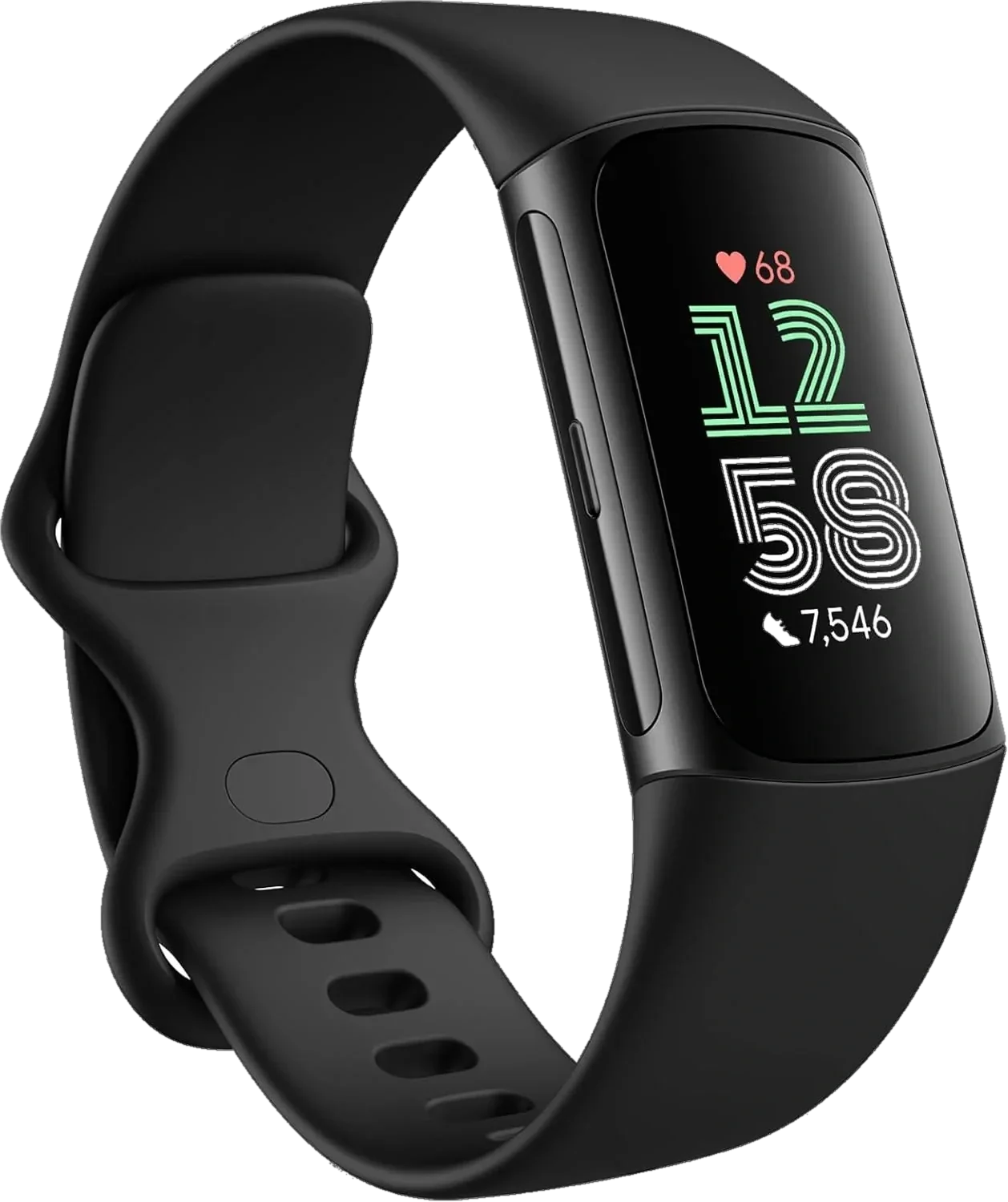
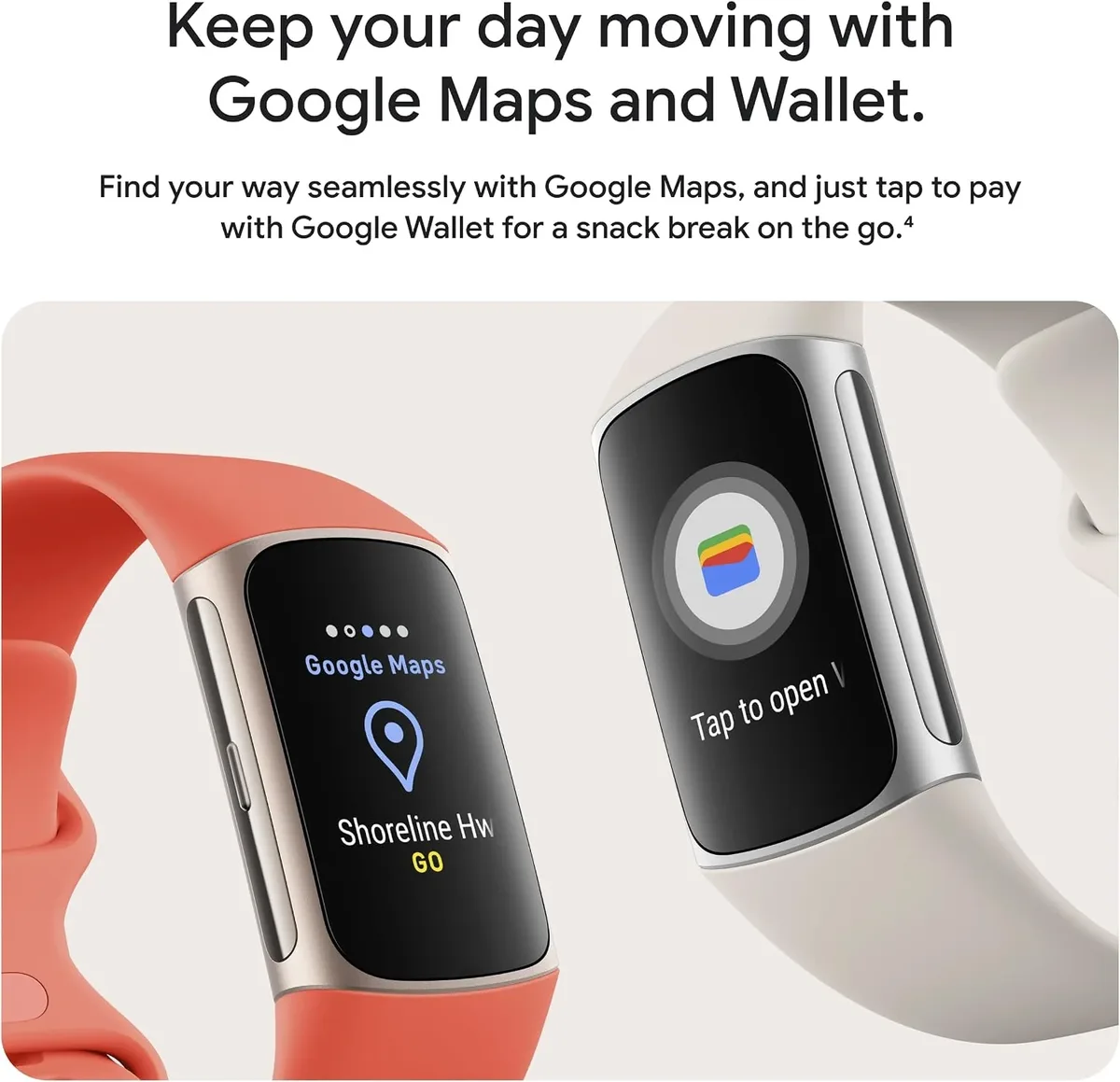
The Charge 6 is the easiest recommendation here if you run or ride outdoors and want to record the route without carrying your phone just for GPS. It has built-in GPS, an AMOLED screen, continuous heart-rate tracking, and more than 40 exercise modes. It also adds features that make it feel closer to a small smartwatch, including Google Maps directions, Google Wallet, and YouTube Music controls.
Google rates battery life at up to seven days. That is a best-case manufacturer estimate, not a promise for every setup. Always-on display use and SpO₂ tracking can mean more frequent charging, and GPS workouts will also affect battery life.
- Built-in GPS is a meaningful advantage for outdoor exercise.
- AMOLED display is easy to check during the day.
- Google Maps and Wallet add useful everyday functions.
- ECG and EDA features are available, subject to regional and app requirements.
- It sits at the higher end of this group, so its extra features need to matter to you.
- The supplied listing advertises a three-month Google Health Premium trial; the plan is sold separately afterward, so check the current offer and renewal terms before activating it.
- GPS, always-on display, and SpO₂ use can shorten battery life.
Choose it if: you run, walk, or cycle outdoors and want route recording without relying on your phone's GPS. If you only need steps, basic heart-rate trends, and sleep estimates, you may not get enough extra value from the Charge 6 to justify its higher price.
Check the Fitbit Charge 6 listing2. Amazfit Helio Strap: for people who would rather skip the screen
Amazfit Helio Strap
A low-distraction band that puts its emphasis on training, recovery, and the data you review in the Zepp app.
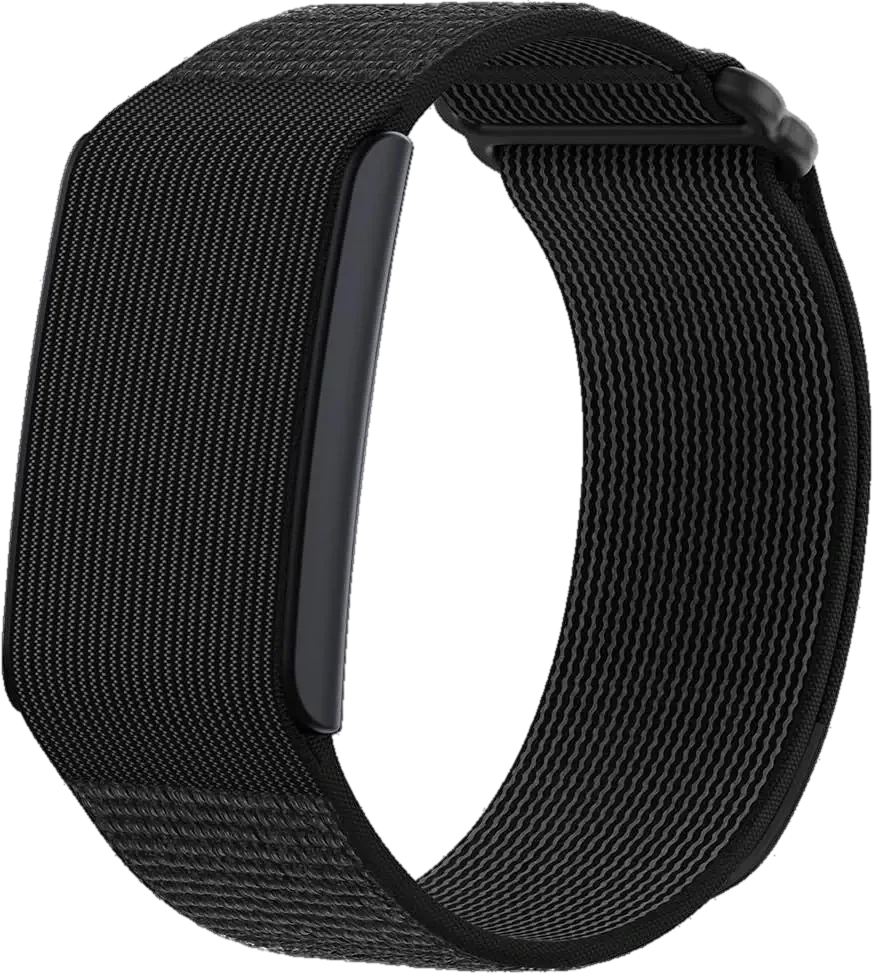
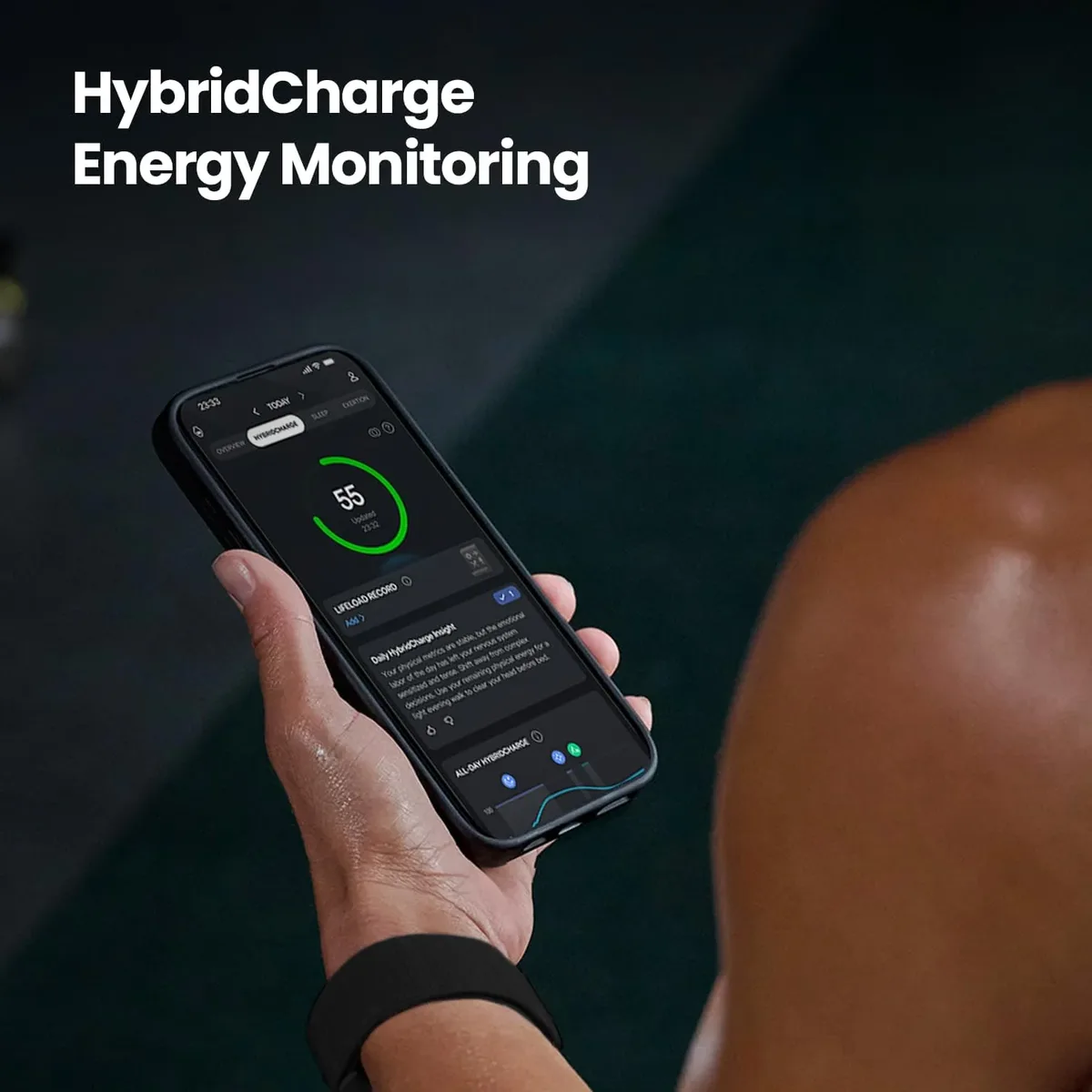
The Helio Strap is not trying to be a smaller smartwatch. There is no screen, so you will not glance at your wrist to check the time, read a notification, or see your step count. Instead, it continuously collects activity and health-related data for you to review in the Zepp app.
Its appeal is the training side. Amazfit highlights training load, recovery time, VO₂ max estimates, strength-movement recognition, and a HYROX mode. The official product page currently lists 50+ sports modes, while the supplied retailer description lists 27; because those descriptions do not match, the exact mode count is not a useful reason to choose it.
Amazfit rates typical battery life at up to 10 days. The strap is rated 5 ATM and supports Android 7.0 or later and iOS 15.0 or later through the Zepp app. It has no built-in GPS, so it is not the right choice if you want the band itself to record an outdoor route independently.
- No display to distract you or light up at night.
- Training and recovery features go beyond basic step counting.
- Core Zepp app tracking does not require a paid subscription.
- Works with both iPhone and Android.
- You must use your phone to review your data.
- No built-in GPS for phone-free route recording.
- It is more specialized than a typical everyday fitness band.
Choose it if: you train regularly, pay attention to recovery trends, and prefer not to wear a screen. If you want a watch-like experience or quick access to notifications, the Charge 6, Galaxy Fit3, or Smart Band 11 will feel more familiar.
Check the Amazfit Helio Strap listing3. Samsung Galaxy Fit3: a simple Android band, with an important catch
Samsung Galaxy Fit3
A simple AMOLED fitness band for Android users who want everyday tracking without paying smartwatch prices.
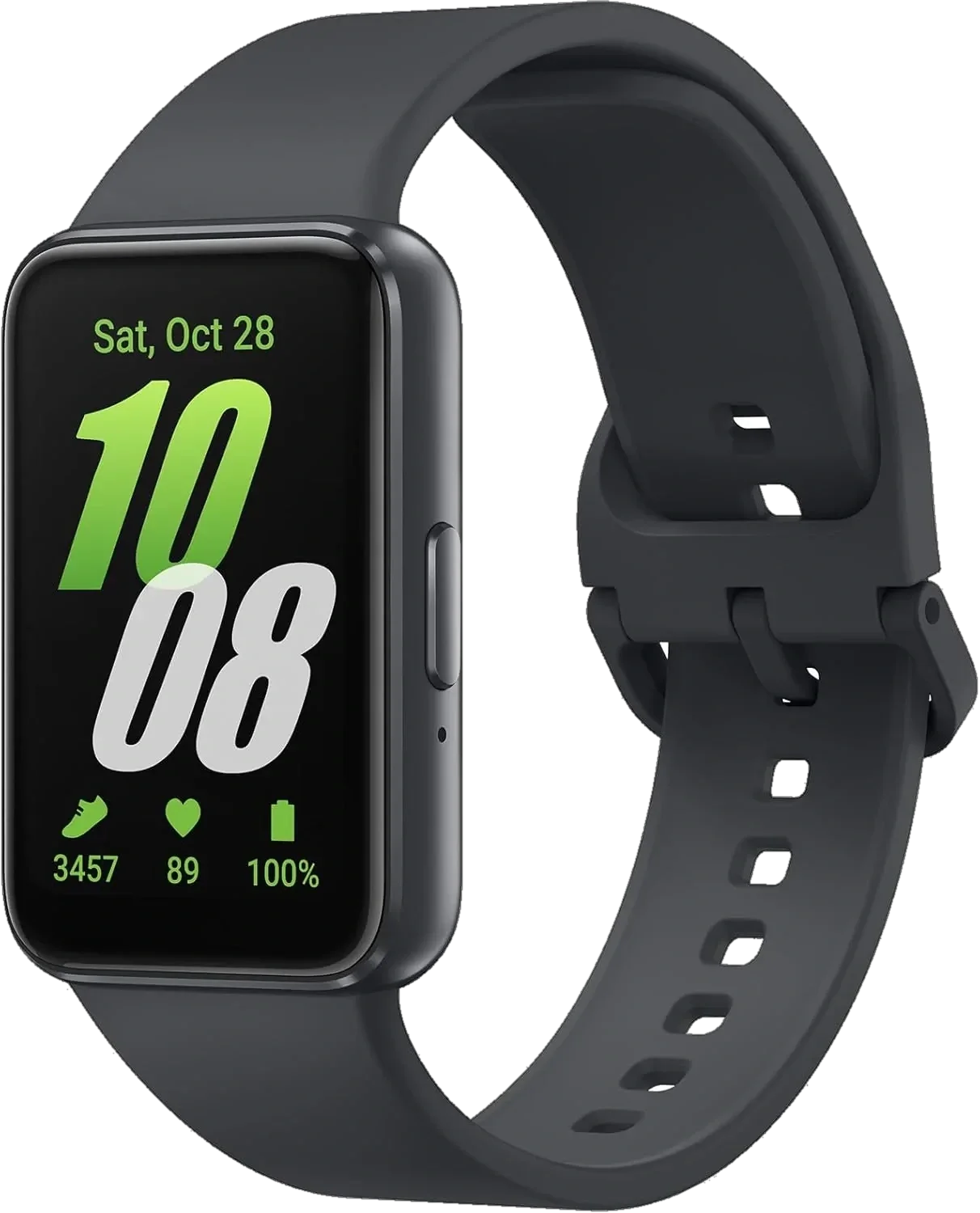
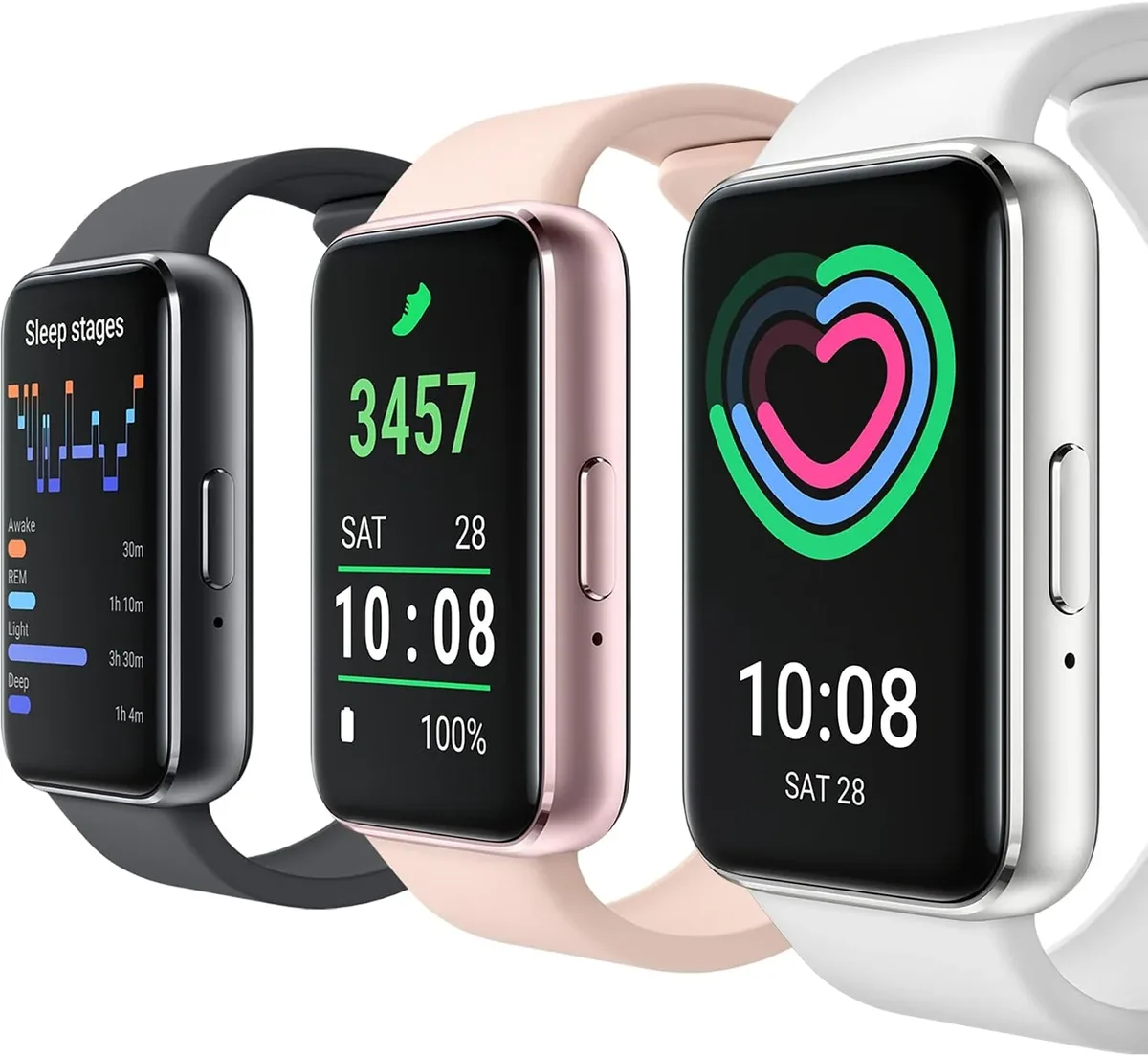
The Galaxy Fit3 is an inexpensive way to get a proper color screen and basic activity tracking. Samsung lists heart-rate measurement, stress measurement, blood-oxygen measurement, sleep monitoring, automatic workout detection, and phone notifications among its features.
Samsung rates the 208 mAh battery for up to 13 days on a charge. The retailer listing says 14 days, but we use Samsung's official figure for this comparison. Actual battery life depends on how often you use the display, notifications, health monitoring, and workouts.
There are two details to check before buying. First, Samsung says the Galaxy Fit3 is compatible with Android phones only; it does not work with an iPhone. Second, the exact listing supplied for this guide is an international model and explicitly states that it has no US manufacturer warranty and does not support Samsung Pay. That is a limitation of this listing, so check the seller and terms rather than assuming every regional Fit3 package is identical.
- A straightforward set of everyday features without smartwatch-level pricing.
- A 1.6-inch AMOLED display is useful for at-a-glance information.
- Core health and activity features cover everyday use.
- Samsung quotes up to 13 days of battery life.
- Android only; not suitable for iPhone owners.
- The supplied international listing has no US manufacturer warranty.
- No built-in GPS, ECG, or body-composition measurement.
Choose it if: you use Android, want a conventional fitness band, and are comfortable with the warranty terms on the exact listing. If you use an iPhone or want a US-backed manufacturer warranty, look at the Xiaomi or Fitbit instead.
Check the Samsung Galaxy Fit3 listing4. Xiaomi Smart Band 11: the most balanced everyday band
Xiaomi Smart Band 11
A lightweight band with a large AMOLED screen, broad phone support, and battery settings that suit different routines.
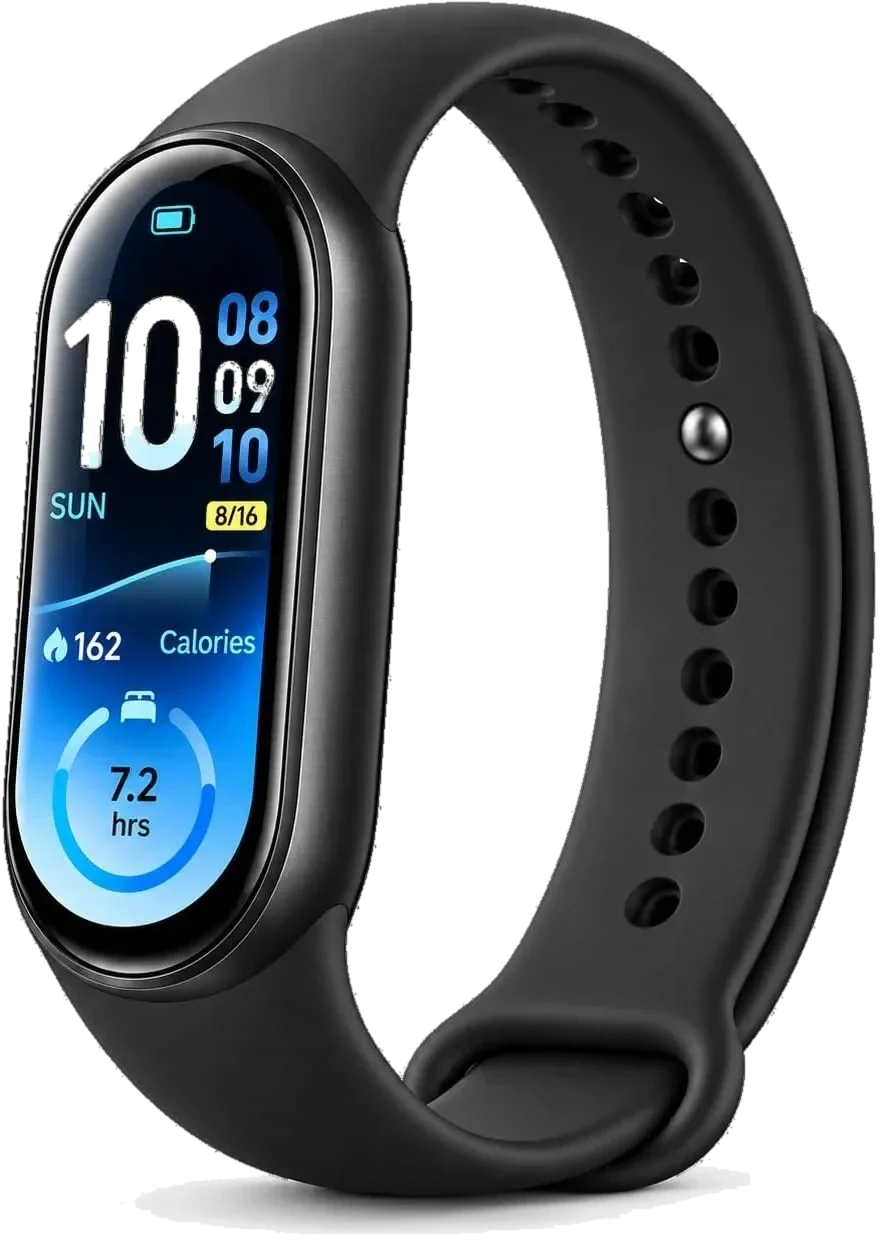
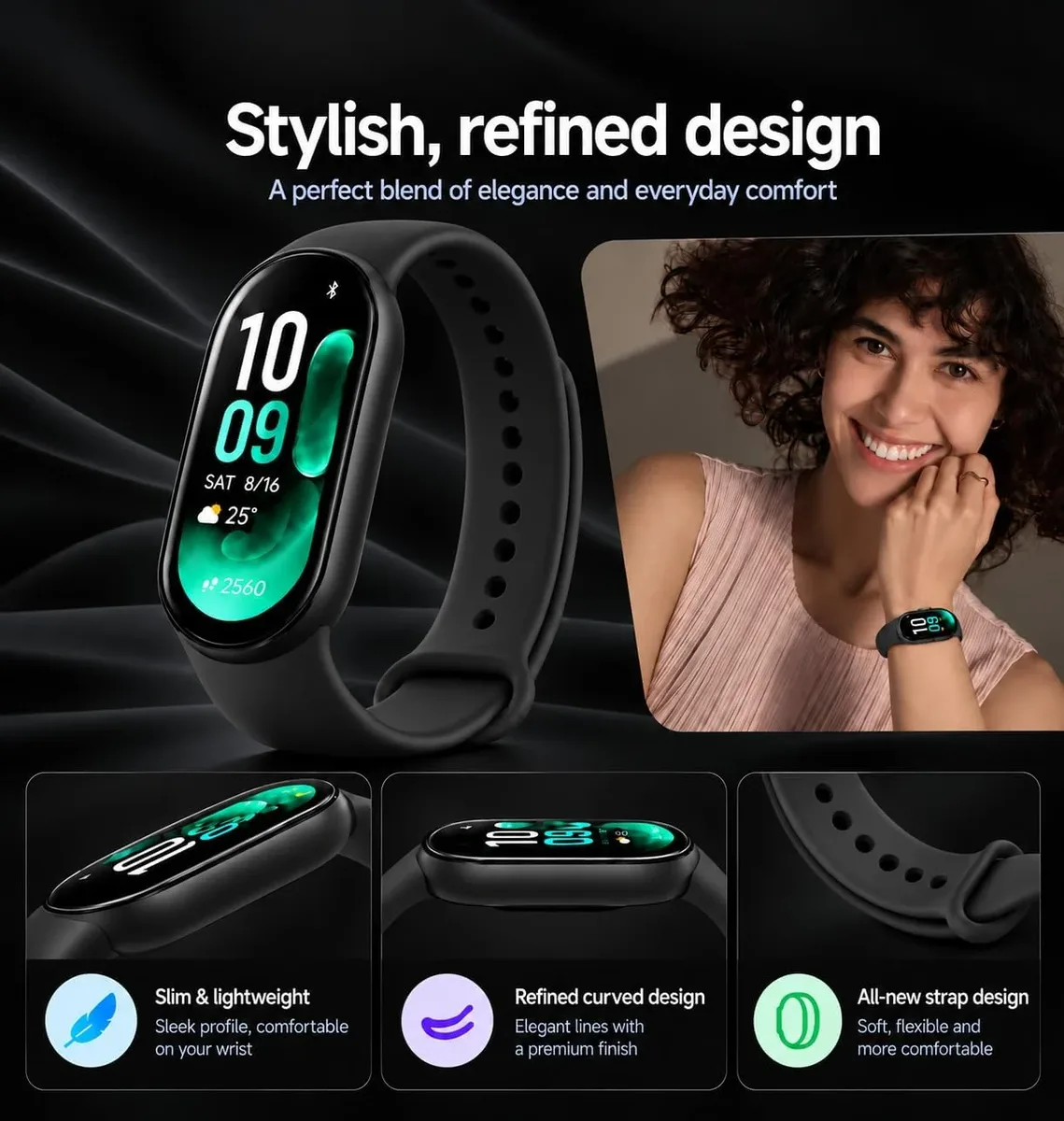
The Smart Band 11 sits between the entry-level Samsung band and the more feature-rich Fitbit in this comparison. It has a 1.72-inch AMOLED display, weighs about 15.58 g without the strap, and supports more than 150 sports modes. It also works with both iOS and Android through the Mi Fitness app, which makes it a more flexible option if you do not want to be tied to one phone ecosystem.
The battery claim needs a closer look. Xiaomi publishes three scenarios: up to 21 days in light-use mode, around 10 days under standard-use conditions, and around six days with the always-on display enabled. The 21-day figure is not the right expectation if you plan to keep the screen on and use continuous health monitoring. For most buyers, the standard-use estimate is the more useful number.
The band is rated 5 ATM and has no built-in GPS. It can cover everyday activity and pool-related use within Xiaomi's water-resistance guidance, but it is not a standalone route tracker. Xiaomi also makes clear that health measurements are for personal wellness reference, not medical diagnosis.
- Large, bright AMOLED display.
- Works with both iPhone and Android.
- Very light without the strap.
- Battery estimates are provided for light, standard, and AOD use.
- No built-in GPS for phone-free route recording.
- The 21-day figure requires a light-use setup.
- Sleep and health readings are estimates, not clinical measurements.
Choose it if: you want a comfortable everyday band with a large screen and support for either major phone platform. It is the most balanced choice here if built-in GPS is not a requirement.
Check the Xiaomi Smart Band 11 listingWhat matters most when choosing a budget fitness tracker?
1. Built-in GPS or connected GPS?
This is the clearest difference between these four products. The Fitbit Charge 6 has built-in GPS, so it can record an outdoor route without relying on your phone's GPS. The Helio Strap, Galaxy Fit3, and Smart Band 11 do not have built-in GPS. Some connected workout features may use a paired phone, but you need to carry that phone with you.
If you regularly run outdoors and prefer leaving your phone at home, this feature alone may justify choosing the Fitbit. If most of your activity happens indoors, around the neighborhood, or in the gym, it may not matter enough to pay extra.
2. A screen is more useful than it sounds—but not essential
A screen makes it easy to check the time, steps, heart rate, and notifications without opening an app. The Charge 6, Galaxy Fit3, and Smart Band 11 all provide that convenience. The Helio Strap takes the opposite approach: it collects information quietly and sends it to the Zepp app.
Think about how you use a tracker during the day. If you often check your wrist, a screen-free design may become frustrating. If you prefer fewer notifications and only review your training data after a workout, the Helio Strap's approach may suit you.
3. Read battery claims in context
Battery-life figures are not directly comparable unless the test conditions are the same. GPS, always-on display, continuous monitoring, frequent notifications, and long workouts all use more power. Xiaomi is particularly clear about its three scenarios, while the other manufacturers publish maximum estimates that can vary with settings.
It is better to choose a tracker based on the features you will leave switched on than to buy one for its biggest advertised number.
4. Check the app and phone requirements before ordering
A fitness band is only useful if its companion app works with your phone. Fitbit uses the Google Health app, Amazfit uses Zepp, Samsung uses Samsung Health, and Xiaomi uses Mi Fitness. The minimum operating-system versions differ, and some connected functions may require a compatible phone or account.
In this group, the Galaxy Fit3 is the one to rule out if you use an iPhone. The other three list support for both iOS and Android, subject to the stated version requirements.
5. Do not treat wellness metrics as medical readings
Heart rate, blood oxygen, sleep stages, stress scores, and recovery estimates can be useful for spotting patterns, but wrist-based readings are affected by fit, movement, skin contact, and software. They are not a substitute for a medical device or a diagnosis. If you need a clinical measurement, use the appropriate medical equipment and professional advice.
Which of these four should you buy?
Choose Fitbit Charge 6 if built-in GPS is important, you want a screen, and you will use its Google-connected features.
Choose Amazfit Helio Strap if you prefer a screen-free band and care more about training and recovery information than notifications or on-wrist stats.
Choose Samsung Galaxy Fit3 if you use Android, want the lowest-cost screen-based option, and have checked the international listing's warranty terms.
Choose Xiaomi Smart Band 11 if you want a large screen, broad iPhone and Android compatibility, and a balanced everyday tracker without built-in GPS.
If none of those trade-offs sounds right, it may be worth stepping up to a GPS-focused running watch or a more advanced smartwatch rather than paying for a fitness band that does not cover your main need.
Frequently asked questions
Which of these budget fitness trackers has built-in GPS?
The Fitbit Charge 6 is the only model in this comparison with built-in GPS. The Amazfit Helio Strap, Samsung Galaxy Fit3, and Xiaomi Smart Band 11 do not have their own GPS receiver. Connected-phone features are different from built-in GPS because you need to carry a compatible phone.
Which fitness tracker works with an iPhone?
Fitbit Charge 6, Amazfit Helio Strap, and Xiaomi Smart Band 11 support iPhone use when the phone meets the required iOS version. Samsung Galaxy Fit3 is Android-only and is not compatible with iPhone.
Is the Fitbit Charge 6 worth paying more for?
It can be, if you want built-in GPS, an AMOLED display, and Google-connected features. If you mainly need basic activity and sleep tracking, the less expensive Xiaomi or Samsung band may be enough.
Does the Amazfit Helio Strap have a screen?
No. The Helio Strap is screen-free. You review its activity, health, training, and recovery information in the Zepp app on a compatible phone.
Does the Xiaomi Smart Band 11 really last 21 days?
Xiaomi's 21-day figure is for a light-use test scenario. Its published estimate is around 10 days for standard use and around six days with the always-on display. Your results depend on settings and how often you use the band.
Can I swim with these fitness trackers?
The Fitbit Charge 6, Amazfit Helio Strap, and Xiaomi Smart Band 11 are rated 5 ATM, with manufacturer guidance for shallow-water use. Samsung lists IP68 for the Galaxy Fit3. These ratings are not interchangeable, and water resistance can decline with wear. Follow each manufacturer's instructions and avoid assuming that a water-resistance rating makes a device suitable for every water activity.
Are fitness tracker heart-rate and sleep readings accurate?
They can be useful for general trends, but results vary with the device, fit, activity, and wearer. None of these consumer bands should be used to diagnose a health condition or replace clinical measurements.
The bottom line
Buy for the feature you will actually use.
The Fitbit Charge 6 is the practical choice for phone-free GPS workouts. The Amazfit Helio Strap is for people who want training data without a screen. The Samsung Galaxy Fit3 keeps the entry price low for Android users, while the Xiaomi Smart Band 11 is the most flexible everyday option for people who want a display and broad phone support.
Before you check out, confirm the current price, phone compatibility, seller, and warranty. Those details will have a bigger effect on whether you are happy with the purchase than a feature you may never turn on.