
A thick yoga mat can make kneeling, stretching and floor workouts more comfortable, especially on tile or hardwood. But more padding is not always better: a very soft or tall mat can make standing poses and balance work feel less stable. This comparison looks at four mats with different thicknesses and materials, from a 6–8 mm TPE mat to a full 1-inch NBR exercise mat.
Four thick yoga mats at a glance
| Model | Thickness | Material | Size | Best suited to |
|---|---|---|---|---|
| Amazon Basics Extra Thick | 1/2 in / 12.7 mm | NBR foam | 74 × 24 in | General floor exercise and extra padding |
| Gaiam Essentials Fitness Mat | 10 mm / about 0.39 in | NBR foam | Official page: 72 × 23.6 in | Stretching, Pilates and lower-impact floor work |
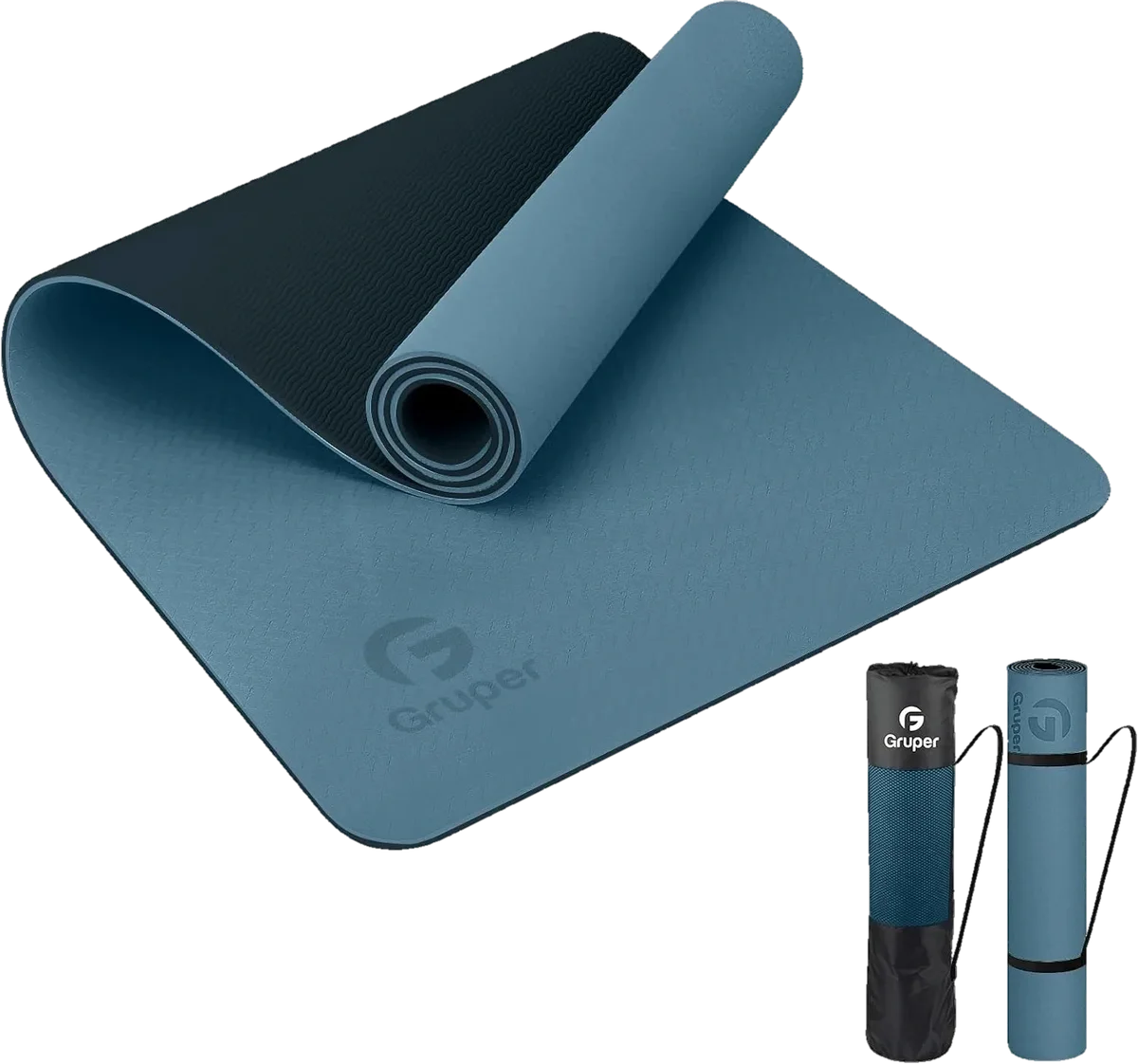
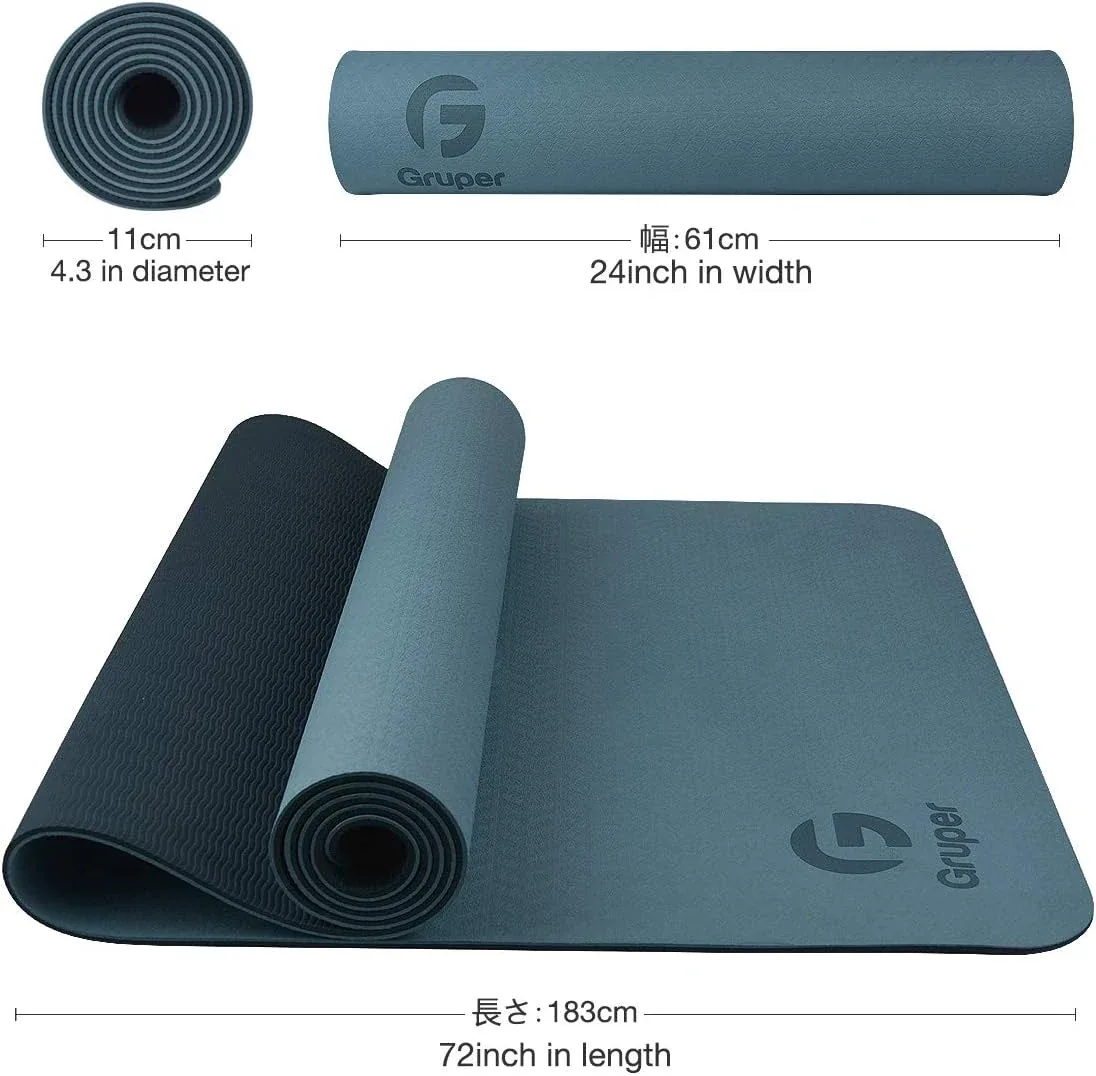
| Gruper TPE Mat | 6 or 8 mm | TPE | 72 × 24 in | More floor feedback with modest cushioning |
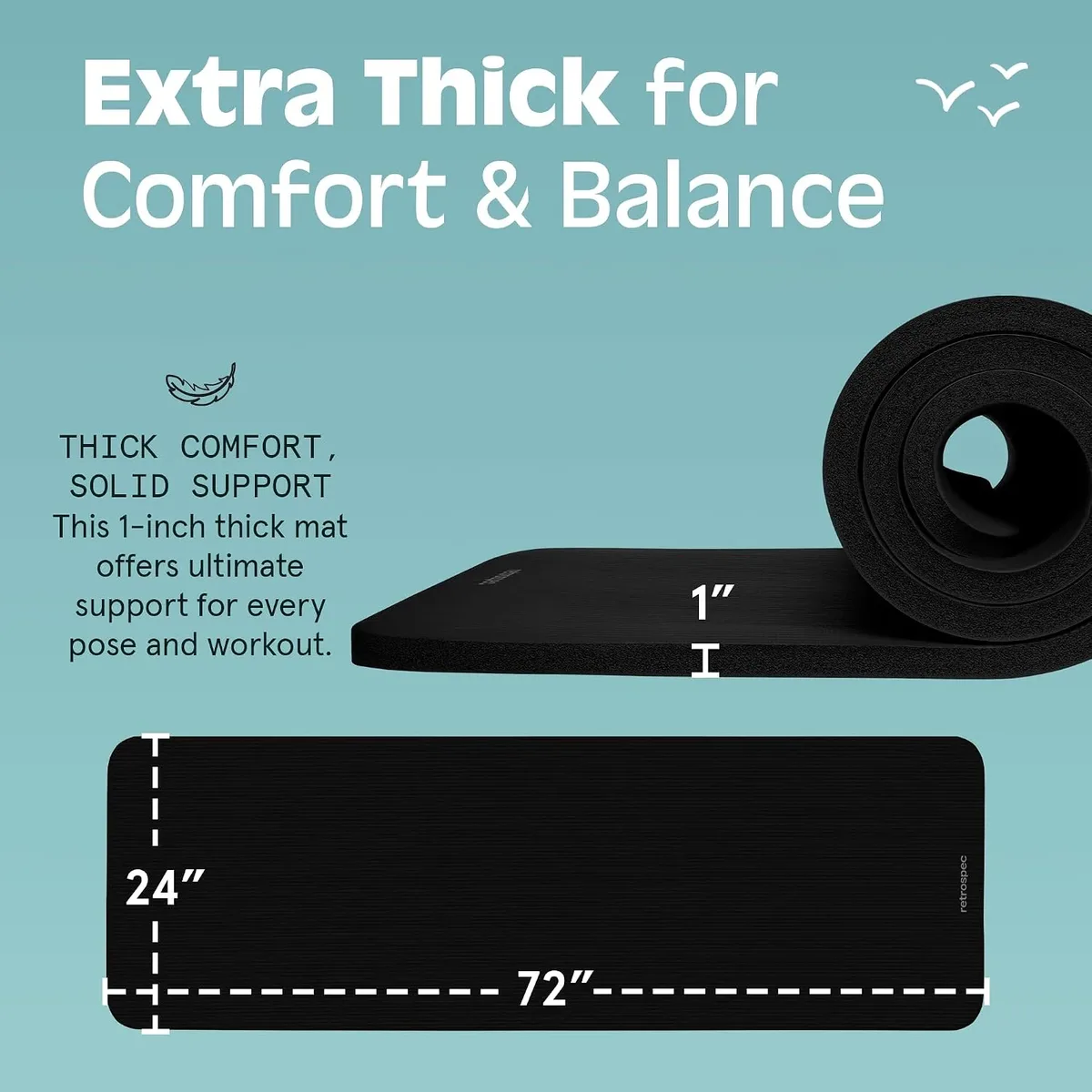
| Retrospec Solana | 1 in / 25.4 mm | NBR foam | 72 × 24 in | Seated, kneeling and floor-based exercise |
These products are not direct substitutes. The Gruper is the thinnest of the four and is included as a firmer option for people who want a little more padding without the feel of a thick foam exercise mat. Dimensions and options can vary by color or listing revision, so check the exact variant before ordering.
How thick should a yoga mat be?
Thickness changes how close you feel to the floor. A thinner mat generally gives more direct feedback under your feet and can make standing balance easier. A thicker mat adds a buffer for knees, elbows, hips and the spine during floor-based movements. The trade-off is that very soft foam can compress unevenly under one foot or hand, making some poses feel less steady.
- About 3–6 mm: A common range for yoga practice where balance and floor contact matter.
- About 8–13 mm: More cushioning for mixed home workouts, Pilates, stretching and kneeling exercises.
- About 25 mm / 1 inch: A very cushioned exercise mat for seated or floor-based work; it can feel unstable for standing balance poses.
Material, grip and care: what to look for
NBR foam
NBR is a synthetic foam used in many thick exercise mats. It tends to feel soft and cushioned, which can be useful for floor workouts. Its softness and thickness can also make balance work feel less direct. Follow the manufacturer’s cleaning instructions and allow a new mat to air out if it has a noticeable packaging odor.
TPE
TPE is a different type of elastomer material. In the Gruper listing supplied for this comparison, the mat has textured surfaces on both sides and comes in 6 mm or 8 mm options. TPE should not automatically be described as environmentally superior or odor-free; those claims require specific evidence about materials, manufacturing and disposal.
“Non-slip” does not mean slip-proof
Grip depends on the mat’s top texture, the floor underneath, moisture, pressure and the type of movement. A mat that stays put on one surface may move on polished wood or tile. Test the mat on the floor where you plan to use it, and do not assume a marketing label guarantees traction when sweaty.
The four mats, explained
1. Amazon Basics Extra Thick Exercise Yoga Mat: a cushioned middle ground
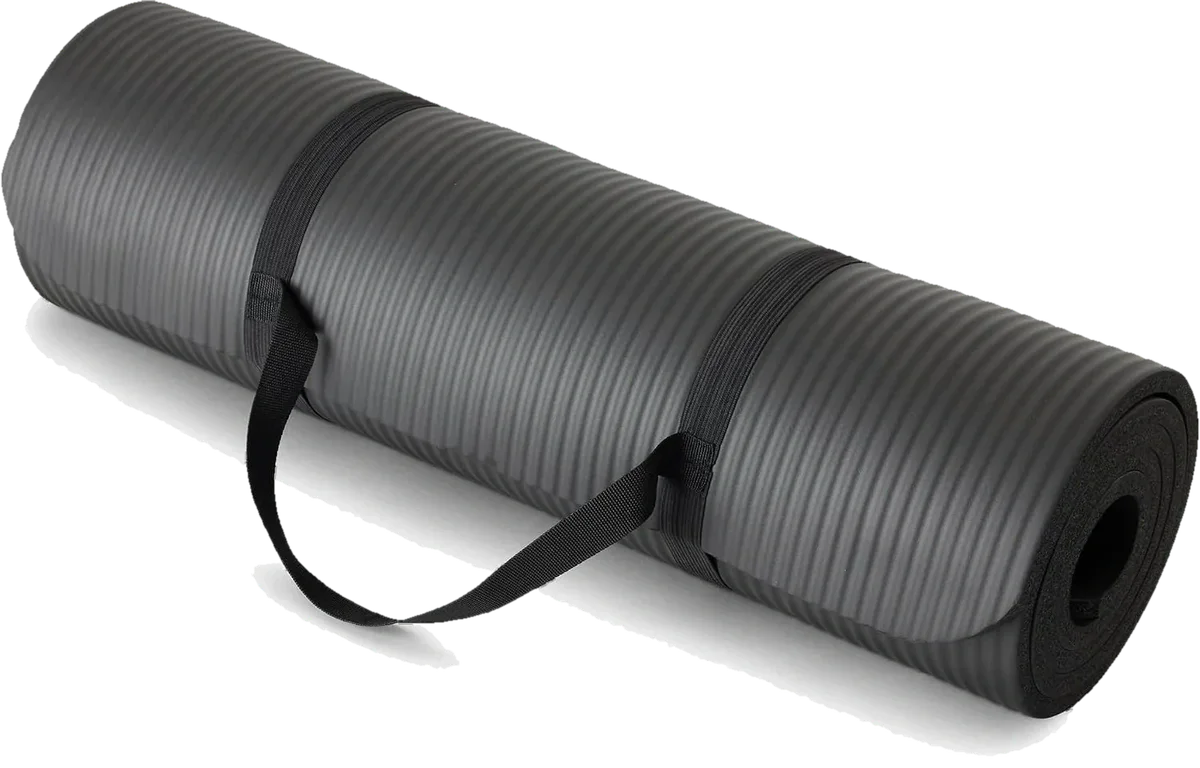
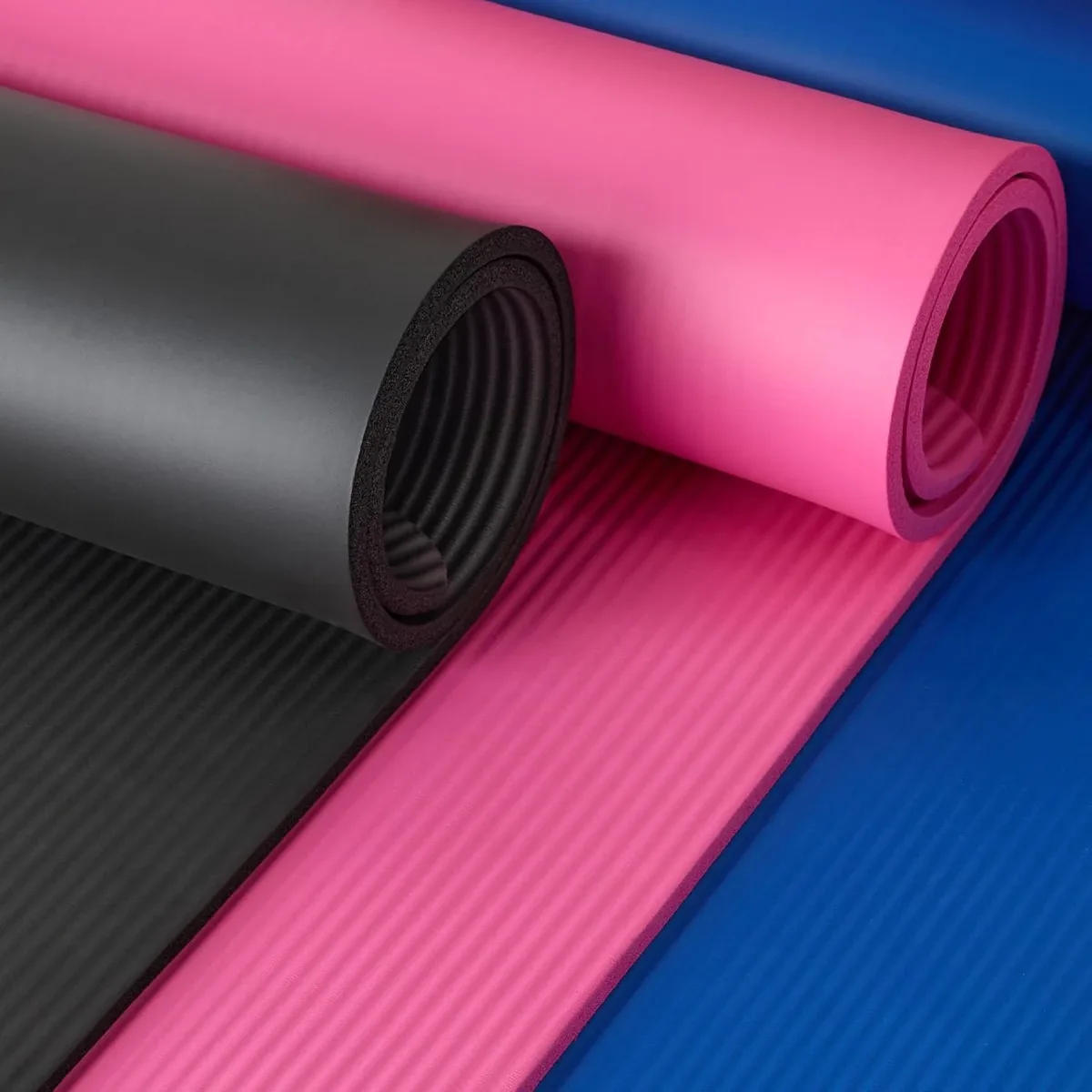
1/2-inch NBR foam · 74 × 24 in · carrying strap
The supplied Amazon Basics listing describes a half-inch NBR foam mat measuring 74 by 24 inches. It includes an elastic carrying strap and a textured surface intended to add traction. At 12.7 mm, it is thicker than a typical yoga mat but not as tall as the 1-inch Retrospec Solana.
- What stands out: A generous 74-inch length and substantial cushioning for floor exercises.
- Material: NBR foam, according to the supplied product listing.
- Included accessory: Elastic strap for keeping the rolled mat together.
- Best fit: Home workouts, stretching and kneeling work where a little extra padding is welcome.
Trade-off: The supplied listing feedback is mixed on grip and long-term durability. Some users value the cushioning, while others report slipping or surface wear. Check how the mat behaves on your own floor and avoid using shoes or sharp objects on foam surfaces unless the manufacturer permits it.
Check current Amazon listing →2. Gaiam Essentials 10 mm Fitness Mat: a moderate-cushion option
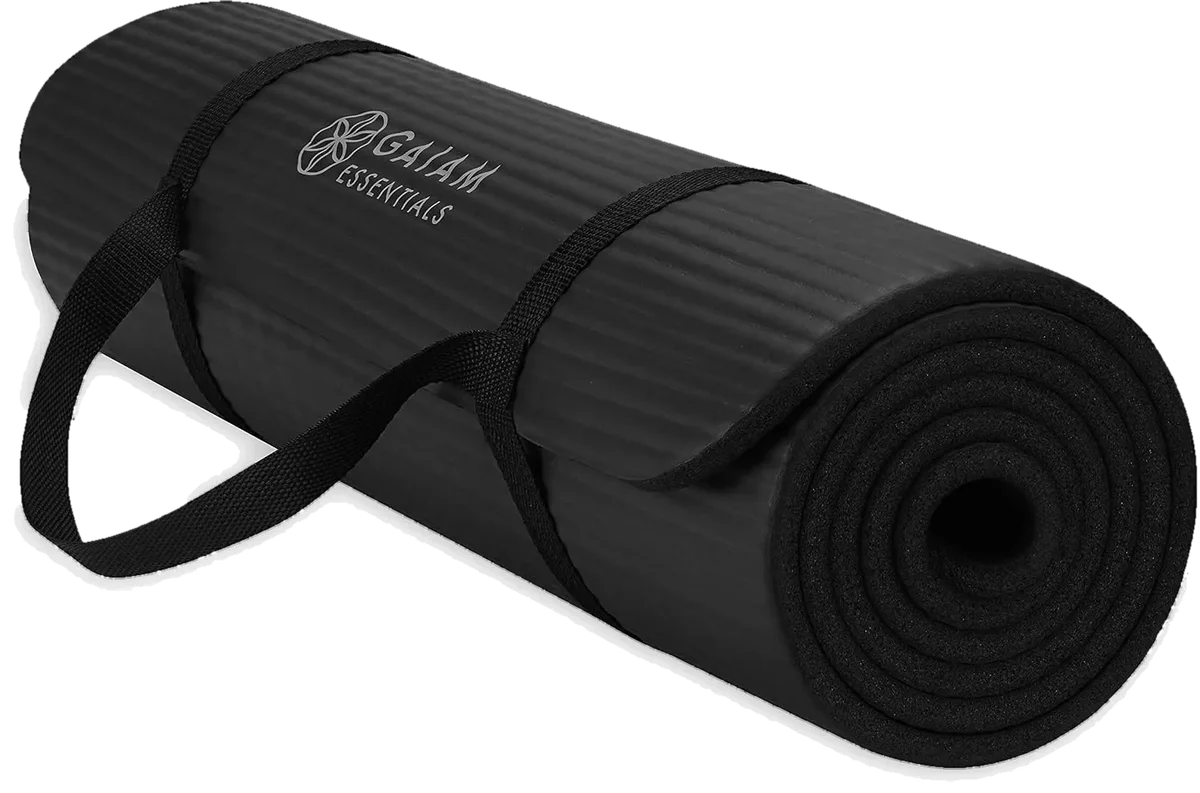
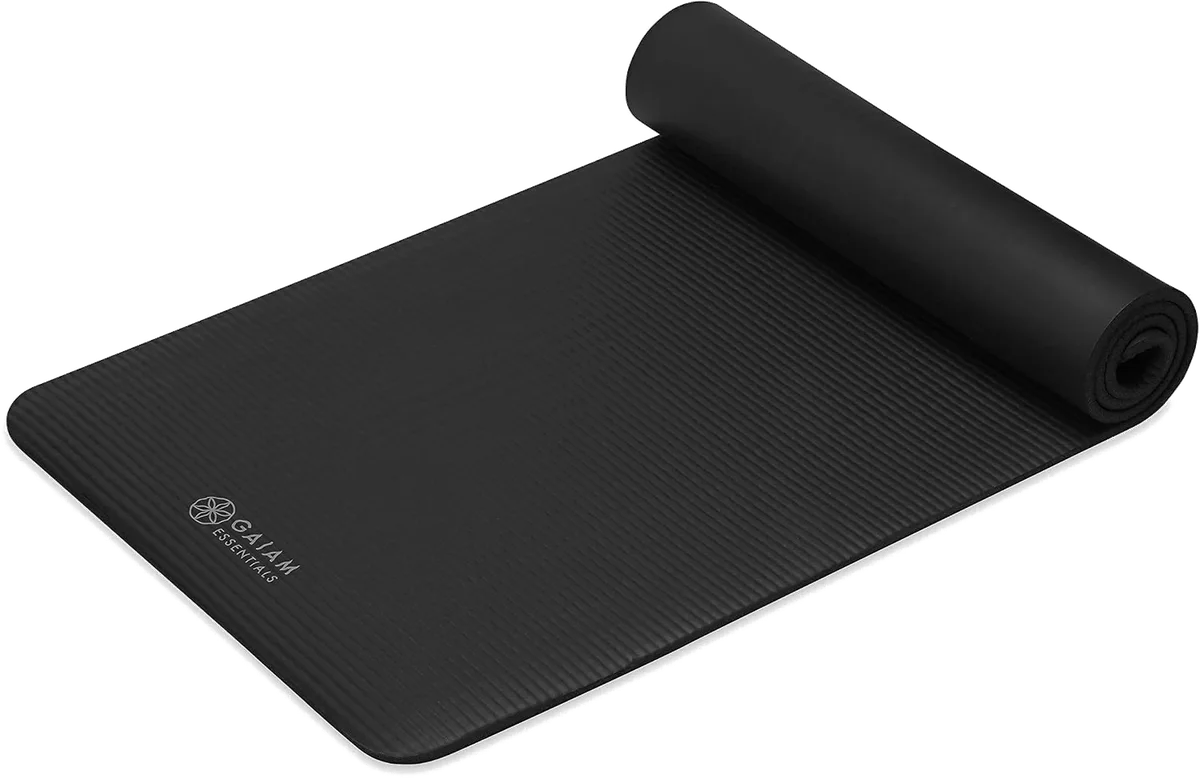
10 mm NBR foam · approximately 72 × 24 in · nylon carry strap
Gaiam’s current product page lists its Essentials Fitness Mat at 10 mm thick, made from NBR foam, with a textured ridge surface and a nylon carry strap. The official dimensions are 72 by 23.6 inches. The supplied retailer material contains a different length in one field, so use the current selected color and model listing to confirm the size before purchase.
- Thickness: 10 mm, a moderate cushion level for floor work and stretching.
- Material: NBR foam.
- Surface: Raised ridges intended to improve traction.
- Best fit: Pilates, stretching, core work and lower-impact home exercise.
Trade-off: Retailer feedback supplied for this comparison includes praise for cushioning as well as mixed reports about odor, wear and grip. If the mat has a strong smell when opened, ventilate it according to Gaiam’s care guidance. A 10 mm foam mat may also feel softer underfoot than a thinner mat during balance poses.
Check current Amazon listing →3. Gruper TPE Yoga Mat: the firmer option for more floor feedback
TPE · 6 mm or 8 mm · 72 × 24 in · strap and storage bag
The supplied Gruper listing offers a 6 mm standard option and an 8 mm thicker option, both measuring 72 by 24 inches. It lists TPE construction, textured surfaces and a carrying strap and storage bag. The 6 mm version weighs about 2.6 lb; the 8 mm version about 3.1 lb, according to the supplied product information.
- 6 mm: Better suited to users who want a closer connection to the floor for standing practice.
- 8 mm: Adds a little more padding for kneeling and mixed routines.
- Included: Carrying strap and storage bag.
- Care: The supplied instructions recommend a damp cloth or mild detergent, drying flat and avoiding prolonged direct sun. The mat is designed for barefoot use; shoes and pet claws may damage it.
Trade-off: Retailer feedback is mixed on grip. The double-textured surface is a useful design feature, but it cannot guarantee the same traction on every floor or under every moisture condition. Choose 6 mm if balance and floor feedback matter most; choose 8 mm if you want a little more cushion.
Check current Amazon listing →4. Retrospec Solana 1-inch Mat: maximum cushioning for floor work
1-inch NBR foam · 72 × 24 in · nylon carrying strap
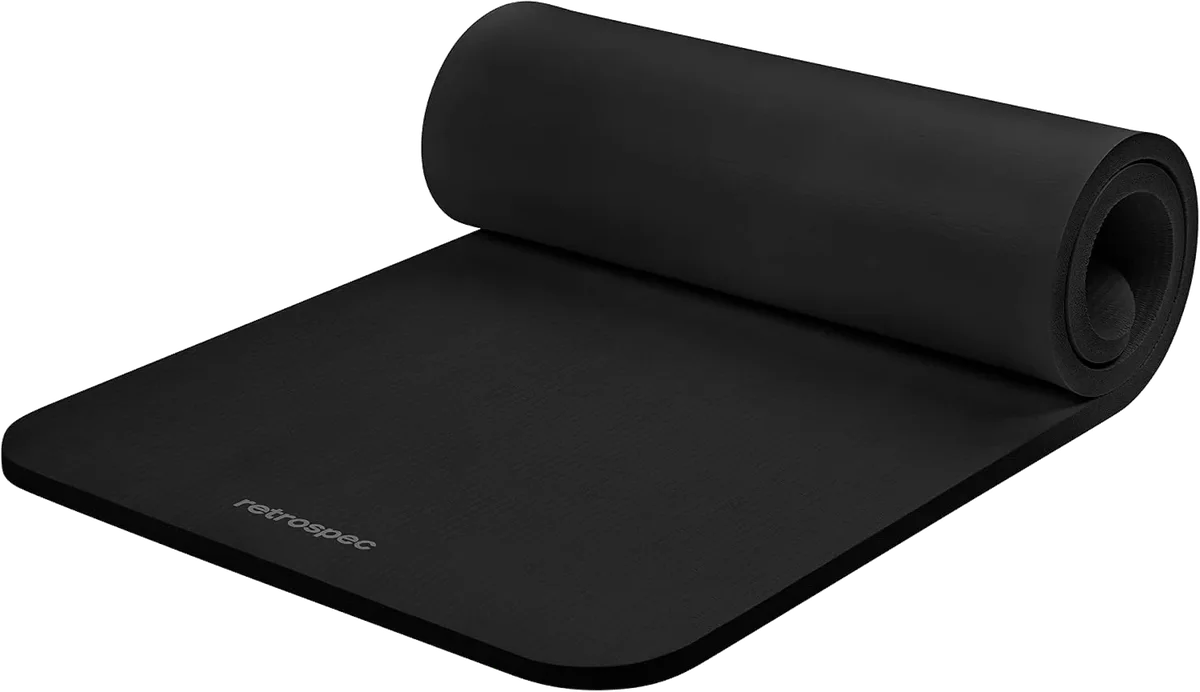
At one inch thick, the Retrospec Solana is the most heavily cushioned mat in this comparison. Retrospec lists a 72-by-24-inch size, dense NBR foam, a ribbed surface and a carrying strap. The manufacturer recommends wiping it with water and a small amount of gentle soap, then hanging it to dry; it should not be submerged.
- Thickness: 1 inch / 25.4 mm, substantially thicker than the other three options.
- Material: Dense NBR foam.
- Best fit: Seated stretches, kneeling exercises, Pilates-style floor work and workouts on hard floors.
- Care: Wipe clean with gentle soap and water; do not submerge.
Trade-off: The thick, soft surface can make single-leg balance and standing yoga poses feel less stable. The supplied retailer feedback also includes mixed comments about durability and odor. Retrospec’s current product page displays a California Proposition 65 warning relating to acrylonitrile; California buyers should read the manufacturer’s notice and decide whether the product is appropriate for them. A warning is a disclosure, not a personalized assessment of exposure or risk.
Check current Amazon listing →View Retrospec’s official Solana specifications and care instructions
Which thick yoga mat should you choose?
- For a longer mat with substantial padding: Amazon Basics lists a 74-inch length and 1/2-inch thickness. Check the grip and surface condition on your floor.
- For a moderate cushion level: Gaiam’s 10 mm NBR mat is a practical middle ground for stretching, Pilates and floor workouts.
- For standing yoga and balance: Gruper’s 6 mm TPE option is the closest to a conventional mat thickness among these four. The 8 mm version adds some padding.
- For the most cushioning: Retrospec Solana’s 1-inch foam is best viewed as a floor-exercise mat rather than the best choice for every yoga flow.
If you are also building a small home workout setup, our guide to 10 lb dumbbells for home workouts compares grip sizes, coatings and pair-weight details.
Frequently asked questions
Is a thicker yoga mat always more comfortable?
Not necessarily. More foam can cushion knees and elbows during floor exercises, but a very soft surface can make balance poses feel less stable. Comfort depends on the exercise, the floor and your preference.
Is a 1-inch yoga mat good for standing yoga?
It may not be the best choice for balance-focused practice. The thick foam can compress under one foot and make small adjustments feel less predictable. It is more naturally suited to seated, kneeling and floor-based exercises.
Is NBR or TPE better for a yoga mat?
Neither is universally better. NBR foam is commonly used for thicker, softer exercise mats. The Gruper TPE option in this comparison is thinner and firmer. Choose based on cushioning, floor contact, grip, care instructions and how you practice.
How do I stop a new yoga mat from smelling?
Follow the manufacturer’s instructions. Many foam mats can be unrolled and aired in a well-ventilated area. Avoid strong cleaners, solvents or prolonged sun exposure unless the manufacturer says they are suitable. If an odor is strong, causes symptoms or does not fade, contact the seller or manufacturer.
Do non-slip yoga mats work on hardwood floors?
They may, but traction depends on the mat’s underside, the floor finish, dust and moisture. Clean the floor and mat, place it flat and test it before doing dynamic movements. “Non-slip” is not a guarantee for every surface.
Can a thick mat help with knee pain?
Extra padding may make some floor exercises feel more comfortable, but a mat does not treat the cause of pain or an injury. If an exercise causes persistent or worsening pain, stop and seek individualized advice from a qualified health professional.
Bottom line: The thickest mat is not automatically the best. Choose Gruper 6 mm for more direct floor contact, Gaiam 10 mm for moderate cushioning, Amazon Basics 1/2 inch for a longer padded surface, or Retrospec Solana 1 inch for floor-based comfort where standing balance is not the priority.