
The Fitbit Charge 6, Fitbit Air, and Fitbit Inspire 3 all track everyday activity, heart rate, and sleep, but they are built around three different ways of wearing a tracker. Charge 6 gives you a screen and built-in GPS. Fitbit Air removes the screen altogether. Inspire 3 keeps things simple with a small color display and a longer advertised battery life.
The right choice comes down to what you want on your wrist. If you run outdoors and want to leave your phone behind, the Charge 6 has a clear advantage. If you would rather not have another screen to check, Air is the more discreet option. And if you want a familiar fitness band for everyday steps, sleep, and activity, Inspire 3 remains a practical alternative.
If you are still deciding whether Fitbit is the right brand for you, our broader budget fitness tracker comparison also looks at the Amazfit Helio Strap, Samsung Galaxy Fit3, and Xiaomi Smart Band 11.
This is a specification-led buying guide based on current Google product information and the supplied retailer listings. We have not independently tested GPS accuracy, heart-rate accuracy, sleep tracking, or long-term durability. Features, app requirements, prices, and trial offers can change by region and retailer.
The short answer
Which Fitbit makes the most sense?
Fitbit Charge 6 vs Fitbit Air vs Inspire 3: at a glance
The table below focuses on the differences that are most likely to affect everyday use. Battery life is the manufacturer's maximum estimate, not a promise of what every owner will get.
| Feature | Fitbit Charge 6 | Fitbit Air | Fitbit Inspire 3 |
|---|---|---|---|
| Design | Traditional fitness band | Screenless tracker | Compact fitness band |
| Display | AMOLED touchscreen | No display | Color AMOLED |
| GPS | Built-in GPS + GLONASS | Connected-phone GPS | Connected-phone GPS |
| Battery claim | Up to 7 days | Up to 7 days | Up to 10 days |
| Weight | 30 g | 5.2 g tracker / 12 g with band | 17.69 g |
| Water resistance | Up to 50 m / 5 ATM design rating | Water resistant up to 50 m | Water resistant up to 50 m |
| Phone support | iOS 16.4+ / Android 11+ | iOS 16.4+ / Android 11+ | iOS 16.4+ / Android 11+ |
| Best for | Outdoor workouts and on-wrist controls | Comfort and screen-free tracking | Simple daily tracking and sleep |
All three use the Google Health app and require a compatible phone and Google Account. Some features have additional device, operating-system, country, or subscription requirements. Check the current Google support information before buying.
1. Fitbit Charge 6: the one to choose for built-in GPS
Fitbit Charge 6
A screen-based tracker with the most useful upgrade for people who exercise outside: GPS built into the device.
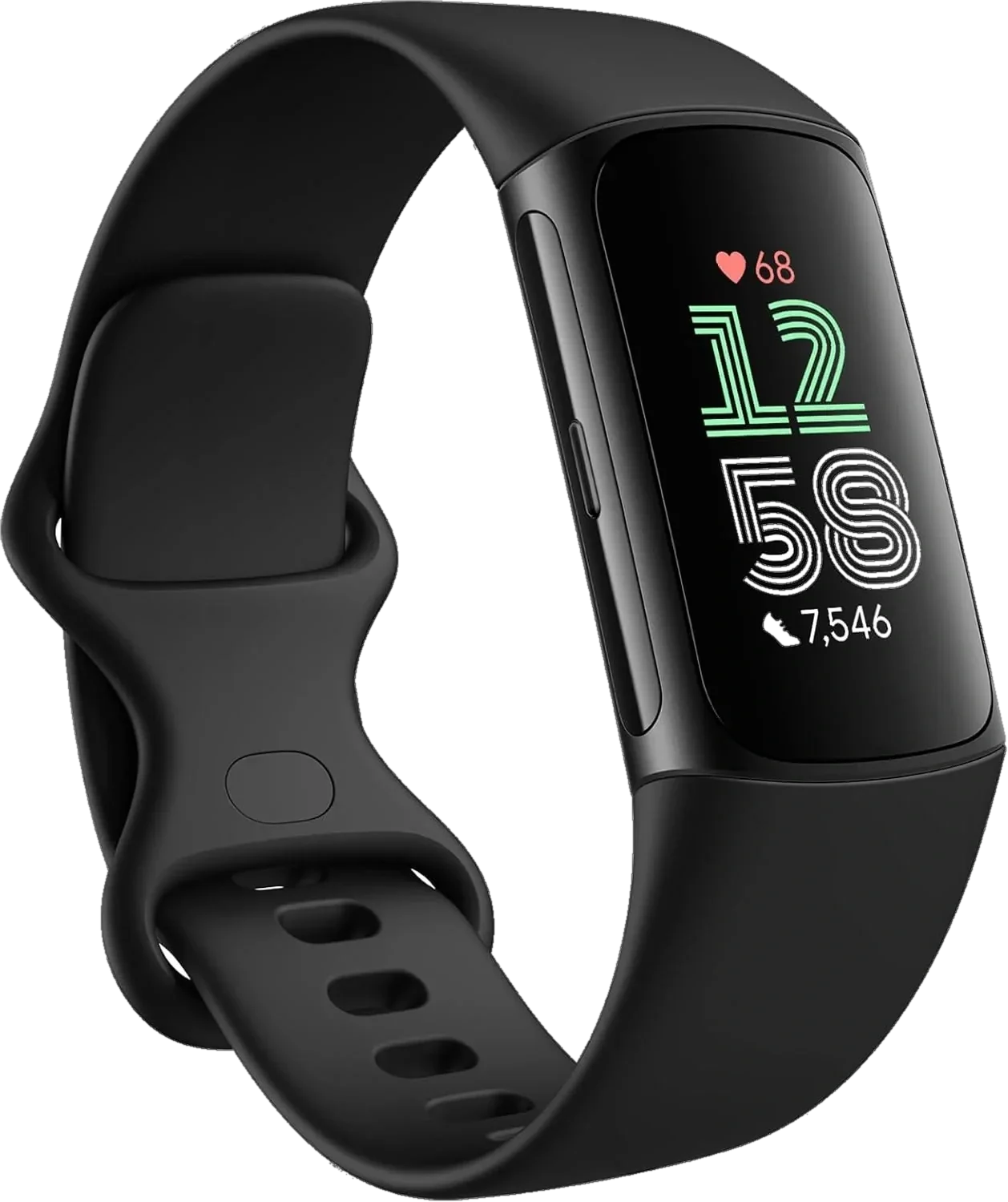
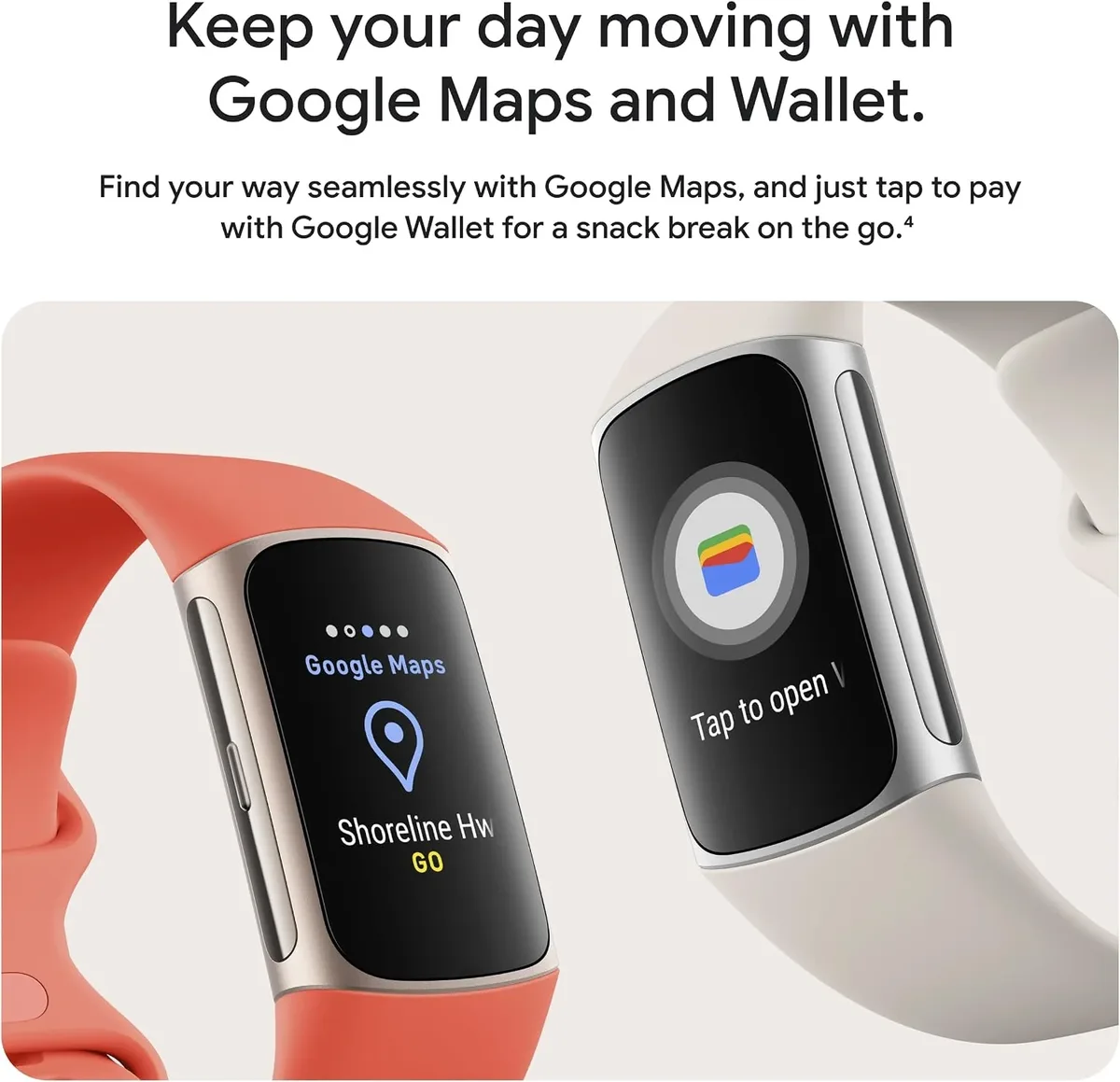
The Charge 6 is the easiest of these three to recommend to someone who runs, hikes, or cycles outdoors and wants route data without carrying a phone just to provide GPS. It has built-in GPS and GLONASS, so it can record location information on its own. Depending on the workout and settings, Fitbit devices may also use a nearby phone's GPS to conserve battery.
It is also the most feature-packed model in this comparison. The AMOLED display makes it easy to check time, workout information, and notifications at a glance. Google Maps directions, Google Wallet, and YouTube Music controls add convenience if you already use those services. For training, Charge 6 offers more than 40 exercise modes, continuous heart-rate tracking, Active Zone Minutes, and sensors that work with the ECG and EDA Scan apps where those features are supported.
The trade-off is that the Charge 6 is the largest and heaviest of the three, at 30 grams. Its battery is rated for up to seven days, but GPS sessions, the always-on display, and SpO2 monitoring can mean more frequent charging. If you mainly want to track steps and sleep, you may be paying for features you rarely use.
- Built-in GPS for outdoor routes without a phone.
- AMOLED screen and useful on-wrist controls.
- Google Maps, Wallet, and YouTube Music features.
- Broad exercise and health-tracking feature set.
- Heavier than Air and Inspire 3.
- GPS and always-on features can shorten battery life.
- Some advanced features depend on app, region, or plan.
- May be more tracker than a casual user needs.
Choose the Charge 6 if: you want a display, built-in GPS, and the broadest set of workout and connected features in this group. If GPS is not important, the other two may be better value.
Check the Fitbit Charge 6 listing2. Fitbit Air: the screenless option for all-day wear
Fitbit Air
A tiny tracker built around comfort and quiet monitoring, rather than a display full of stats and notifications.
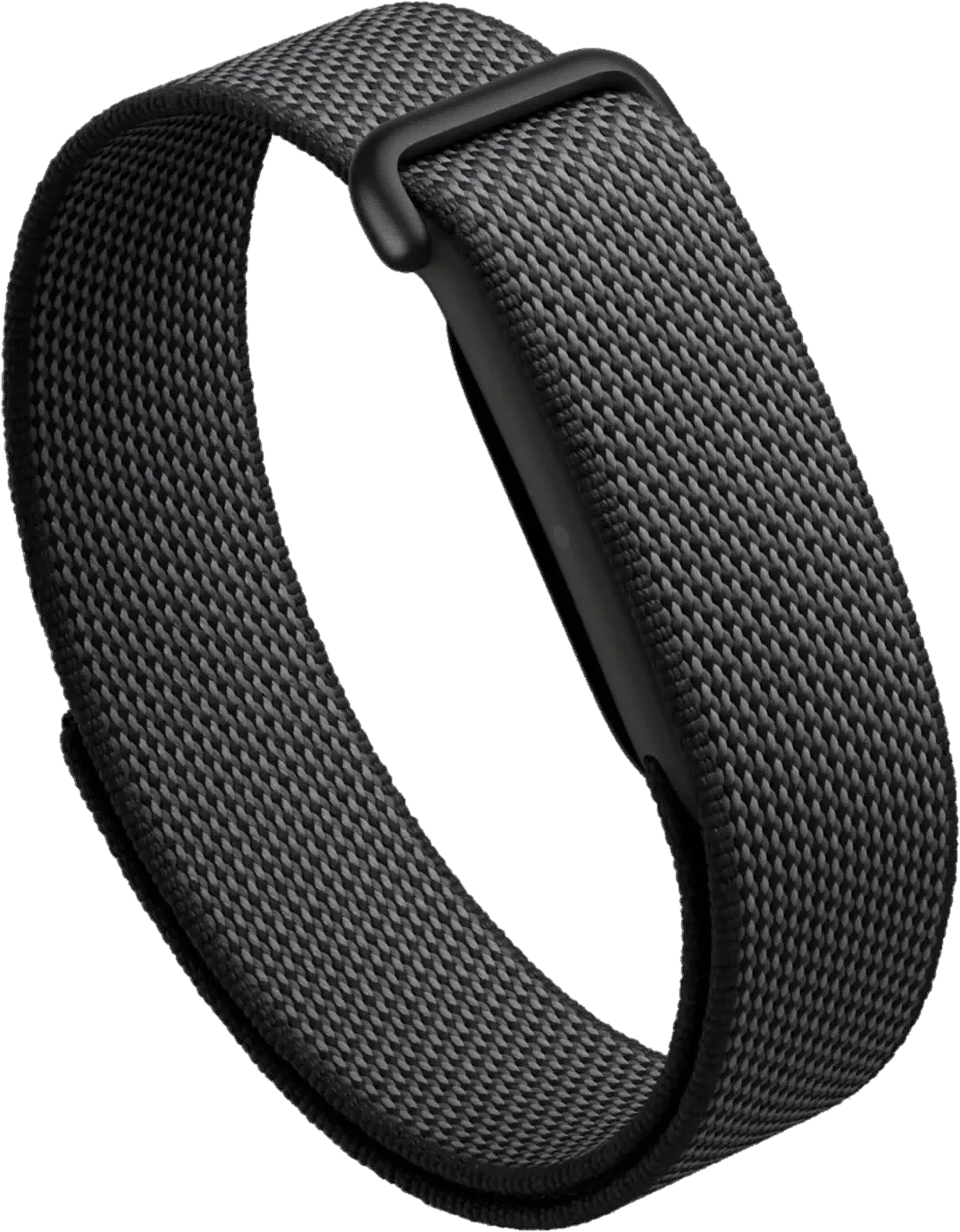
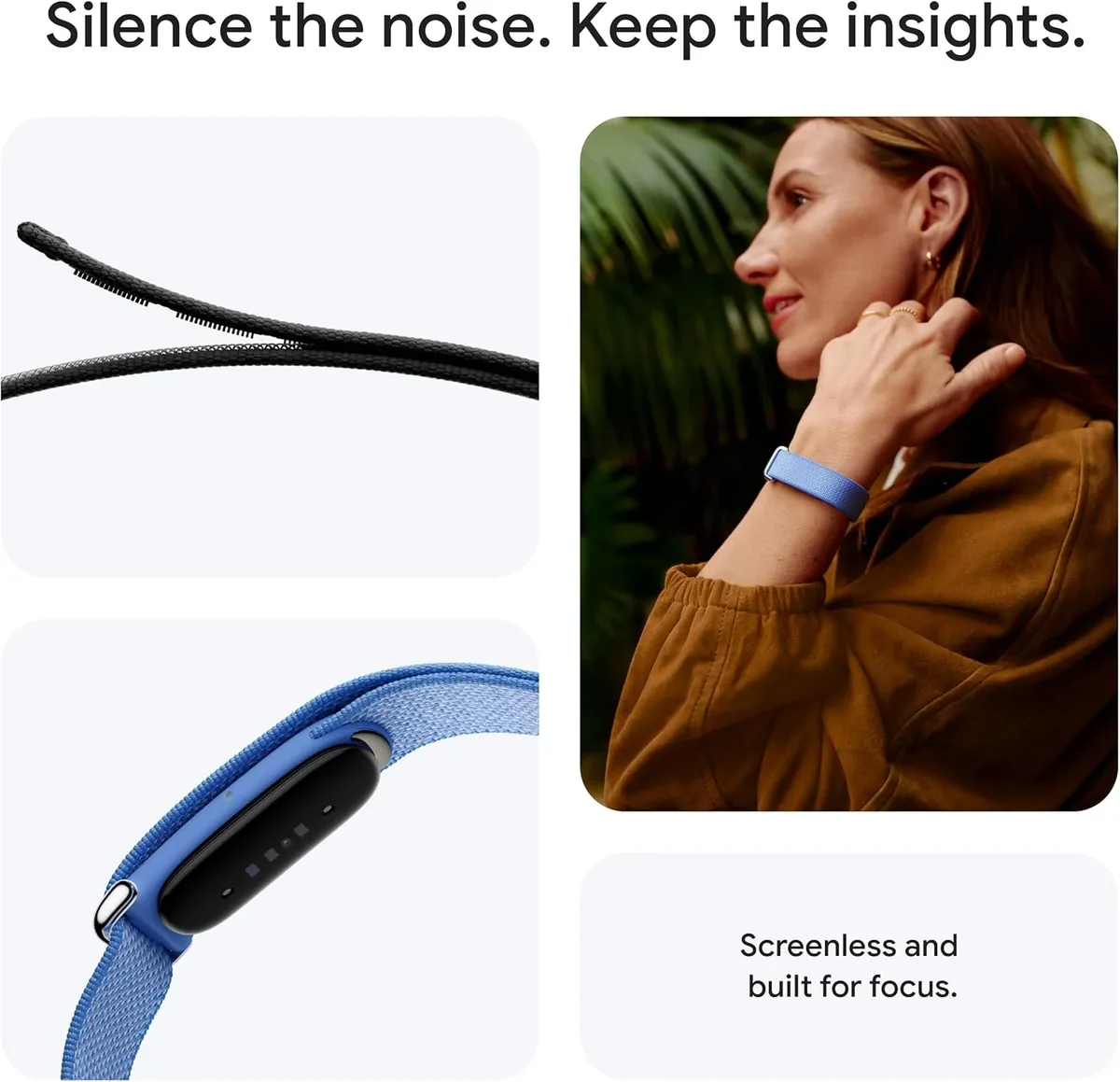
Fitbit Air is the most different-looking option here. Instead of a watch-like screen, it uses a small sensor module in a lightweight band. You do not check the time, read notifications, or scroll through workout stats on your wrist. You open the Google Health app when you want to see your information.
That sounds limiting if you like seeing your steps or heart rate throughout the day. But it makes sense if you want something discreet that you can wear through work, exercise, and sleep without another screen asking for your attention. Google lists the sensor at 5.2 grams on its own and 12 grams with the band, which helps explain why Air is designed for near-constant wear.
Air tracks heart rate, sleep stages and duration, resting heart rate, heart-rate variability, SpO2, and skin-temperature variation. Google also describes heart-rhythm monitoring with AFib alerts, subject to country and eligibility restrictions. It has no built-in GPS; outdoor route data uses the GPS on a connected phone. If you regularly run without your phone, that is an important reason to choose Charge 6 instead.
Battery life is rated for up to seven days. Google says a five-minute quick charge can provide up to a day of battery life, with a full charge taking about 90 minutes. Those are manufacturer estimates, and monitoring settings and usage will affect the result.
One detail worth checking is the band. Fitbit Air is sold with different band styles and sizes, and some alternatives are sold separately. The supplied listing describes a one-size adjustable band, but Google also lists different sizing for textile and silicone versions. Check the exact band included with the listing rather than assuming every Air package fits the same way.
- Very light, screen-free design.
- Comfort-focused form for day and night wear.
- Up to seven days of advertised battery life.
- Fast charging can add a day of use in five minutes.
- No display for time, stats, or notifications.
- No built-in GPS; a phone is needed for route tracking.
- Advanced coaching features require Google Health Premium.
- Band style and fit vary by version.
Choose Fitbit Air if: comfort and a distraction-free design matter more to you than checking information on your wrist. It is a better match for all-day and overnight tracking than for someone who wants a traditional fitness watch.
Check the Fitbit Air listing3. Fitbit Inspire 3: a simple band with a longer battery claim
Fitbit Inspire 3
A small color-screen tracker for people who want the basics close at hand without stepping up to the Charge 6.
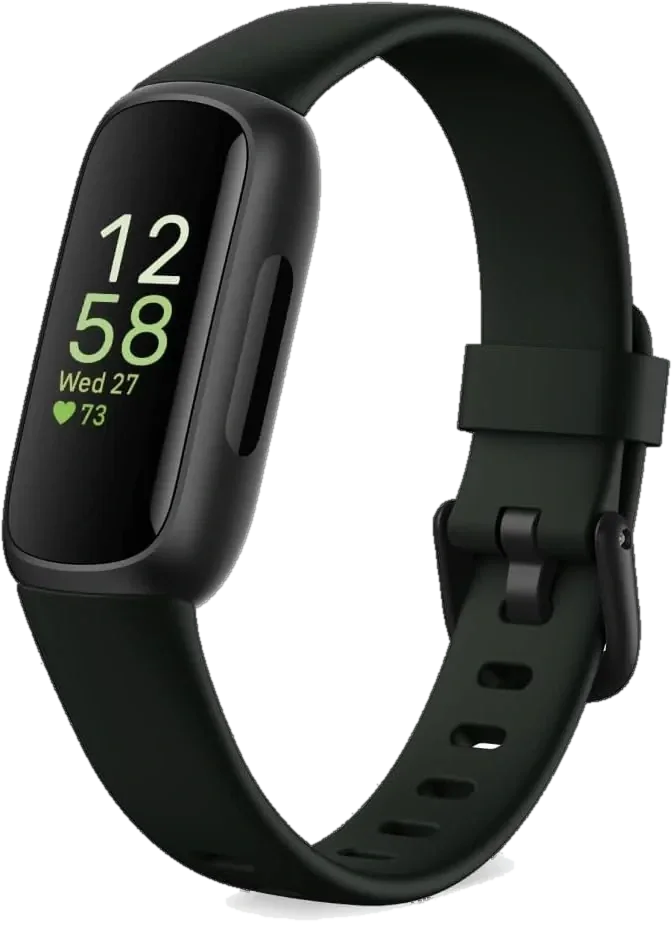
Inspire 3 is the familiar fitness-band choice. It has a small color AMOLED display, a lightweight 17.69-gram body, and the everyday features most casual users are likely to use: steps, heart rate, sleep, activity minutes, and reminders to move.
It also has a longer advertised battery life than the other two. Google rates it for up to 10 days, although continuous monitoring, display settings, notifications, and workout use will affect how close you get to that figure. If you do not want to charge a tracker every few days, that extra headroom may be useful.
Inspire 3 does not have built-in GPS. It can use your phone's GPS for connected outdoor tracking, so you will need to bring your phone if you want a route recorded. That is fine for walks and casual workouts, but less convenient if you prefer to exercise without carrying a phone.
The display is smaller than the one on a smartwatch, and that is part of the point: Inspire 3 is designed to be a compact tracker, not a full smartwatch replacement. If you have trouble reading small text or want to interact with maps and apps on your wrist, the Charge 6 is the more capable option.
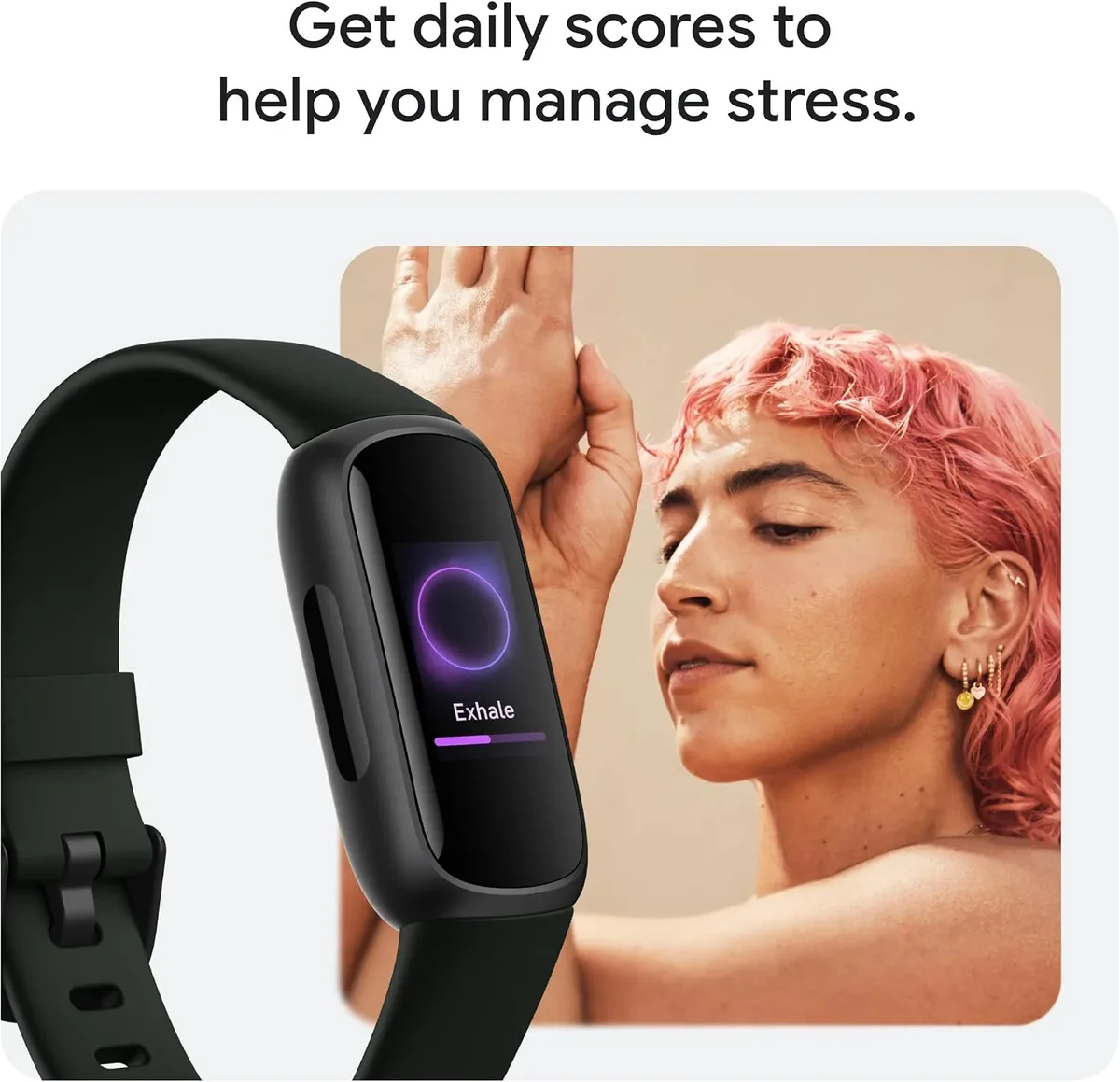
Inspire 3 includes 24/7 heart-rate tracking, sleep scores, a Stress Management Score, Active Zone Minutes, more than 40 exercise modes, automatic exercise tracking, and reminders to move. It also supports features such as SpO2, skin-temperature variation, menstrual health tracking, and irregular heart-rhythm notifications where available. Some insights, coaching, and health-related notifications have eligibility, country, or subscription restrictions. SpO2 and other wellness readings are not medical measurements and should not be used to diagnose or treat a condition.
- Up to 10 days of advertised battery life.
- Lightweight design with a color display.
- Useful everyday activity and sleep features.
- Works with compatible iPhones and Android phones.
- No built-in GPS.
- Small display may be harder to read for some people.
- Fewer connected features than Charge 6.
- Some advanced insights depend on Google Health Premium or regional availability.
Choose Inspire 3 if: you want a straightforward tracker with a screen, light weight, and a longer battery estimate. It is the sensible middle ground if Air feels too minimal and Charge 6 feels like more than you need.
Check the Fitbit Inspire 3 listingGPS is the biggest practical difference
If you only remember one thing from this comparison, make it the GPS distinction. Charge 6 has built-in GPS and GLONASS. Fitbit Air and Inspire 3 use your phone's GPS for location-based workout tracking. That means the two smaller trackers can still record a route when your phone is with you, but they are not the same as taking a GPS-equipped band out on its own.
For gym sessions, walking around the neighborhood, or tracking general daily movement, connected GPS may be perfectly adequate. For running or cycling without a phone, Charge 6 is the clear choice.
Do all three Fitbit trackers need a subscription?
No subscription is needed simply to wear the device and collect its basic activity data. All three pair with the Google Health app, but some advanced coaching, personalized recommendations, and premium insights require Google Health Premium.
The supplied product listings advertise trial access, but the duration and eligibility terms are not identical across every offer. Google also states that some promotions are limited to eligible new or returning members, require a valid payment method, and renew automatically unless canceled. Check the offer shown at activation, including the renewal date and price, before starting a trial.
This matters most with Fitbit Air, which is designed to work alongside Google's coaching experience. If you do not plan to pay for Premium, make sure the standard tracking features are enough for what you want from the band.
Phone compatibility, water resistance, and health-data limits
Google currently lists Android 11 or later and iOS 16.4 or later for setup and use of these Fitbit products through the Google Health app. Some connected features, such as certain phone notifications, may have additional Android requirements. If you use an older phone, check compatibility before ordering.
All three are rated for water resistance up to 50 meters, but that does not mean they are waterproof in every situation. Water resistance can decline with wear or damage. Google advises drying the band after it gets wet, and the Charge 6 is not intended for high-velocity or high-temperature water activities. Follow the care guidance for the exact band you buy.
Heart rate, sleep, blood oxygen, skin-temperature variation, and heart-rhythm features are intended to support general wellness. Availability varies by country and feature, and some functions have age or eligibility restrictions. These devices are not substitutes for medical equipment or professional advice.
Which Fitbit should you buy?
Pick Fitbit Charge 6 if you run or cycle outdoors and want built-in GPS, a screen, and the widest set of connected features.
Pick Fitbit Air if you want the lightest, least distracting design and are happy to check all your data in the phone app.
Pick Fitbit Inspire 3 if you want a simple screen-based band, everyday tracking, and the longest advertised battery life of the three.
At list price, Charge 6 sits above the other two, while Fitbit Air and Inspire 3 are positioned closer together. Retail discounts can change the value equation, so compare the current listing and included band before you decide. If the Inspire 3 is heavily discounted, it can be a good buy for basic tracking. If Air is similarly priced, choose it only if you genuinely prefer the screenless design.
Frequently asked questions
Which Fitbit has built-in GPS?
Fitbit Charge 6 is the only one of these three with built-in GPS and GLONASS. Fitbit Air and Inspire 3 use GPS from a connected phone for supported outdoor workouts.
Is Fitbit Air better than Inspire 3?
Neither is better for everyone. Air is much lighter and has no screen, which suits people who want quiet, all-day tracking. Inspire 3 has a small display and a longer advertised battery life, making it easier to check basic stats without opening the app.
Does Fitbit Air have a screen?
No. Fitbit Air is screenless. You review activity, sleep, and health information in the Google Health app on a compatible phone.
Does Fitbit Inspire 3 have GPS?
Inspire 3 does not have built-in GPS. It can use a connected phone's GPS for supported location-based workouts.
Which one lasts longest on a charge?
Google rates Inspire 3 for up to 10 days, while Charge 6 and Fitbit Air are rated for up to seven days. Actual battery life depends on settings, monitoring, GPS use, and other factors.
Can I use these Fitbit trackers with an iPhone?
Yes. Google lists iOS 16.4 or later for all three. They also require a compatible Android phone running Android 11 or later. Check the current Google Health app requirements before buying.
Do Fitbit health readings replace medical devices?
No. These trackers provide wellness information and estimates. Some heart-rhythm features have specific eligibility and regional limits, and none of the devices should be used to diagnose or treat a medical condition.
The bottom line
Choose the Fitbit you will actually use
Charge 6 is the most capable tracker here, but its built-in GPS is the feature that makes the extra cost worthwhile. Fitbit Air is a more personal choice: its appeal is the comfort of wearing a tracker without having another screen on your wrist. Inspire 3 is the straightforward option for people who want a small display, familiar fitness tracking, and a longer battery estimate.
Start with the way you exercise and whether you want a screen. Once you know those two things, the choice is much easier.