
A first hike is easier when you plan for the trail you are actually taking. New hikers often underestimate footwear fit, changing weather, water needs, navigation, and how much gear they can comfortably carry. These ten beginner hiking mistakes cover the decisions that matter most on a day hike—and explain when a product is useful, when it is overkill, and what to check before buying.
10 beginner hiking mistakes to avoid
1. Choosing hiking boots by appearance instead of fit
Waterproof boots are not automatically the best choice for every hike. On a maintained, dry trail, trail runners or hiking shoes may be lighter and more comfortable. Boots can make sense on rougher ground, in wet conditions, or when you are carrying a heavier pack. Whatever you choose, look for secure heel hold, enough room for your toes on descents, and traction suited to the surface.
Try footwear on with the socks you plan to hike in. Walk downhill if you can, check for heel lift and pressure points, and do not take a brand-new pair on a long route. A small hot spot early in a hike can become a painful blister later.
2. Wearing cotton when the weather is cool or wet
Cotton holds moisture and can stay damp against your skin. In cool, windy, or changeable conditions, a synthetic or merino-wool base layer is usually a more practical choice because it moves moisture and dries more readily. In hot, dry weather, clothing decisions may be different; match your layers to the climate rather than following one rule for every trail.
Bring an extra layer even if you expect to stay warm while walking. You can cool down quickly when you stop, reach an exposed ridge, or get caught in wind.
3. Using a windbreaker as a rain jacket
A windbreaker may block a breeze, but that does not make it waterproof. For sustained rain, look for a rain shell with a waterproof and breathable membrane, sealed seams, an adjustable hood, and closures that help keep water out. Check that it fits over the insulating layer you may need underneath.
Also separate rain protection from warmth. A lightweight shell can keep rain and wind off you, but it is not an insulated winter coat.
4. Carrying a pack that is too large—or too uncomfortable
A short day hike rarely calls for a large backpacking pack. Choose capacity based on the water, food, layers, first-aid supplies, and other essentials you need for that route. A comfortable fit matters more than a long feature list: shoulder straps should sit well, the pack should not swing around, and a sternum strap or hip belt should help stabilize the load when appropriate.
Do not remove safety essentials just to make the pack lighter. Instead, leave behind duplicate clothing, unnecessary gadgets, and items that do not match the route or forecast.
5. Guessing how much water to bring
There is no single water amount that works for every hiker. Heat, humidity, elevation, pace, body size, route length, and refill points all affect what you need. Check whether reliable water is available along the route and carry enough for the planned outing plus a sensible margin.
Never assume a clear stream is safe to drink. If you plan to refill from natural water, bring a filter or purification method suited to the likely contaminants and follow the product instructions.
6. Checking the weather only for the nearest town
Conditions can change with elevation, exposure, and time of day. Check the forecast for the trail area and, where possible, the elevation you will reach. Pay attention to wind, precipitation, temperature, and storm timing—not just the chance of rain.
Carry weather protection even when the forecast looks favorable. If conditions become more severe than your experience or equipment can handle, turn around. Reaching the planned destination is never more important than getting back safely.
7. Relying on a phone signal for navigation
Cell service can disappear, a phone battery can drain, and wet or cold conditions can make a touchscreen difficult to use. Download an offline map before leaving, carry a charged power bank, and know how to read the route. For unfamiliar or remote trails, bring a paper map and compass and learn the basics before you need them.
Tell someone which trail and route you plan to take. Navigation tools are useful, but a person at home should also know where to start looking if you do not return as expected.
8. Buying an overnight tent for a day hike
A tent is not part of a normal day-hike kit. It becomes relevant when you are planning an overnight trip, and that is a different gear decision. Compare the complete packed weight, capacity, season rating, rain protection, setup, and the amount of space you need for sleeping and storing gear.
Do not judge a tent by a headline such as "ultralight" or a waterproof-coating number alone. The poles, stakes, repair kit, footprint, and packed accessories can add meaningful weight.
9. Starting too fast and trying to match experienced hikers
Begin at a pace that lets you speak in short sentences without gasping. Take brief breaks before you are exhausted, eat during longer outings, and adjust your plan if the trail is steeper or slower than expected. A steady pace is usually more sustainable than trying to keep up with someone who knows the route.
10. Leaving without sharing your route and return time
Tell someone where you are going, which trailhead you will use, when you expect to return, and what they should do if they do not hear from you. If your plan changes and you have service, update them. On more remote routes, consider a communication device suited to the area and your level of experience.
A practical day-hike checklist
The National Park Service's Ten Essentials are a useful baseline. Adapt them to the route, weather, season, and how far you will be from help.
- Navigation: map, compass, and/or a reliable offline map.
- Sun protection: sunglasses, sunscreen, and a hat.
- Insulation: an extra layer appropriate to the forecast and elevation.
- Illumination: a headlamp with charged batteries, even for a planned day hike.
- First aid: a small kit and any personal medication.
- Fire: only where appropriate and legal, with safe knowledge and supplies.
- Repair tools: a small repair item or multi-tool suited to the trip.
- Nutrition: enough food for the planned time plus a reserve.
- Hydration: enough water and a treatment method if you plan to refill from natural sources.
- Emergency shelter: an emergency blanket or lightweight shelter appropriate to the conditions.
Four hiking gear examples: what the details tell you
The products below are examples from the listings reviewed for this guide, not a mandatory shopping list. Prices and Amazon review figures are reference snapshots, not live quotes. TestedWise has not field-tested these products; the notes combine listed specifications with buyer-feedback themes.
| Product | Price snapshot | Key details | Most relevant use | Important trade-off |
|---|---|---|---|---|
| Timberland White Ledge Mid | $119.95 | Waterproof leather, seam-sealed build, EVA midsole, rubber lug outsole | Wet or rougher day hikes where a mid boot suits your feet | Some buyers report sole separation, leaks, and narrow fit |
| The North Face Antora | $130 | Seam-sealed DryVent 2L shell, waterproof/breathable, adjustable hood | Rain and wind protection over a base or insulating layer | Not insulated; some buyers report zipper or construction issues |
| Maelstrom 40L pack | $35.90 | 40 L, about 2.18 lb, 210D ripstop nylon, included rain cover | Longer day trips or carrying bulkier layers and supplies | Often more capacity than a short day hike needs; mixed durability feedback |
| Clostnature 1-person tent | $67.99 | 3-season, PU 5,000 mm coating, aluminum poles, 2.97 lb minimum trail weight | Budget solo overnight trips | About 4–4.2 lb complete weight; reports of leaks and zipper or pole-attachment issues |
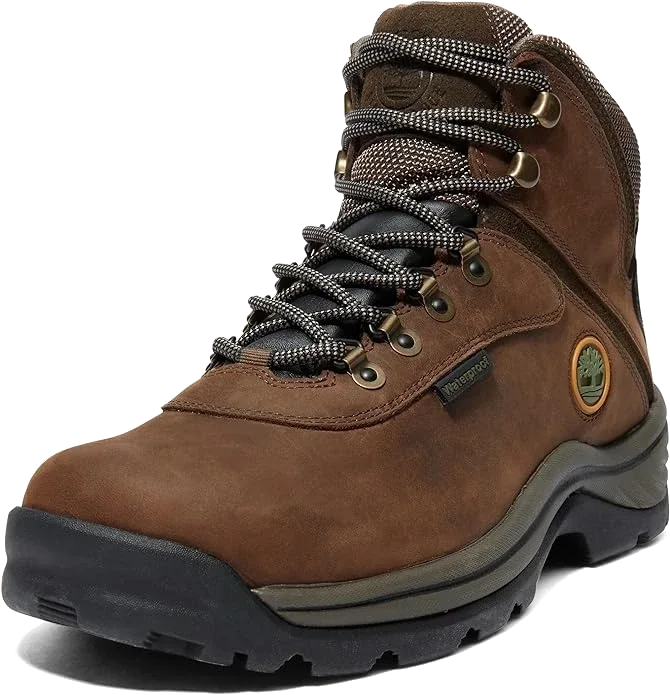
Timberland Men's White Ledge Mid Waterproof Hiking Boots
Price snapshot: $119.95 · mid-height leather hiking boot
The White Ledge Mid is built around a waterproof Premium Timberland Leather upper, seam-sealed construction, a fully gusseted tongue, and a rubber lug outsole. It also has an EVA footbed and midsole, plus a ReBOTL fabric lining made with at least 50% recycled plastic. Those features make it a plausible option for hikers who prefer the feel and coverage of a traditional mid-height boot.
The Amazon listing showed 4.5 out of 5 from about 67,928 ratings. Positive feedback often mentions comfort and a relatively easy break-in. The critical reviews are more consequential for a hiking purchase: some buyers report soles separating from the upper, waterproofing failing, and wide sizes feeling too narrow. A waterproof label is a design claim, not a guarantee that every pair will remain dry indefinitely.
- Worth considering if: you prefer a leather mid boot and want a gusseted tongue, seam-sealed construction, and lugged outsole.
- Check before buying: try the exact size and width with hiking socks, test downhill toe room, and inspect the sole bond and seams before taking the boots on a long trip.
- Fit note: the product information appears under more than one model and listing reference. Confirm that the selected item is the men's White Ledge Mid, and check the exact size and width on the seller page.
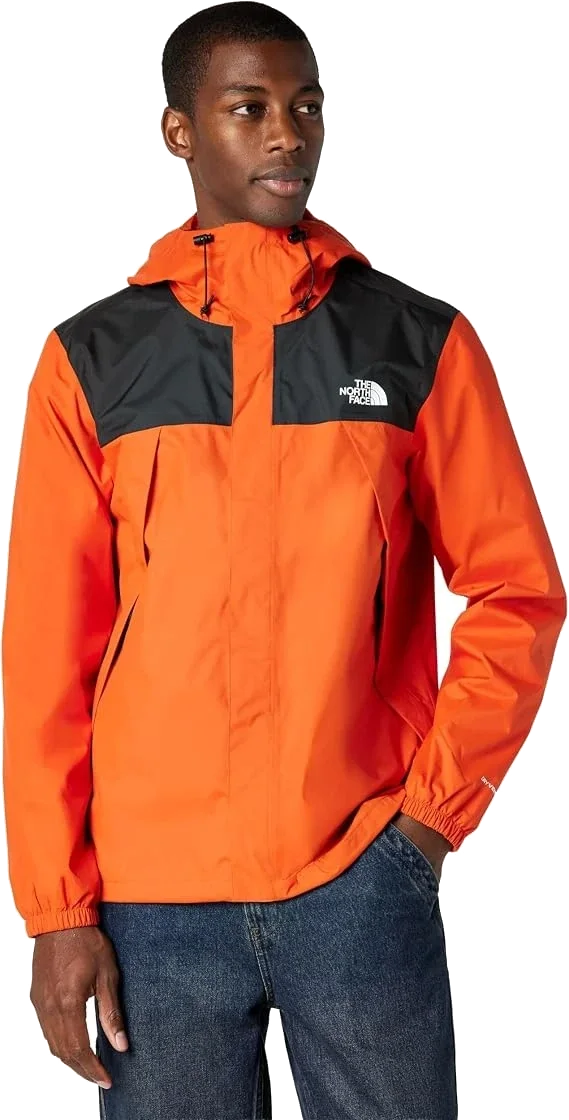
The North Face Men's Antora Waterproof Jacket
Price snapshot: $130 · lightweight rain shell
The Antora is a rain shell, not an insulated jacket. Its seam-sealed DryVent 2L construction is designed to be waterproof, windproof, and breathable, with a non-PFC DWR finish. The listed details include an adjustable three-piece hood, a storm flap over the front zip, encased-elastic cuffs, an adjustable hem, and secure-zip hand pockets. The body fabric is listed as recycled nylon, with recycled polyester in the lining.
The Amazon listing showed 4.7 out of 5 from about 2,498 ratings. Buyers commonly praise weather protection, light weight, and a fit that leaves room for a layer underneath. The main caveats are that it will not keep you warm on its own, and some critical reviews mention thin-feeling fabric or zipper and seam problems. If you hike in cold weather, plan the insulating layer separately.
- Worth considering if: you need a packable layer for rain and wind and expect to wear it over a base layer or fleece.
- Check before buying: sleeve length, room through the arms and shoulders, hood adjustment, and the exact size range. The listing offers standard sizes and big sizes from 2X to 5X.
- Layering tip: leave enough room for the fleece or midlayer you expect to wear underneath.
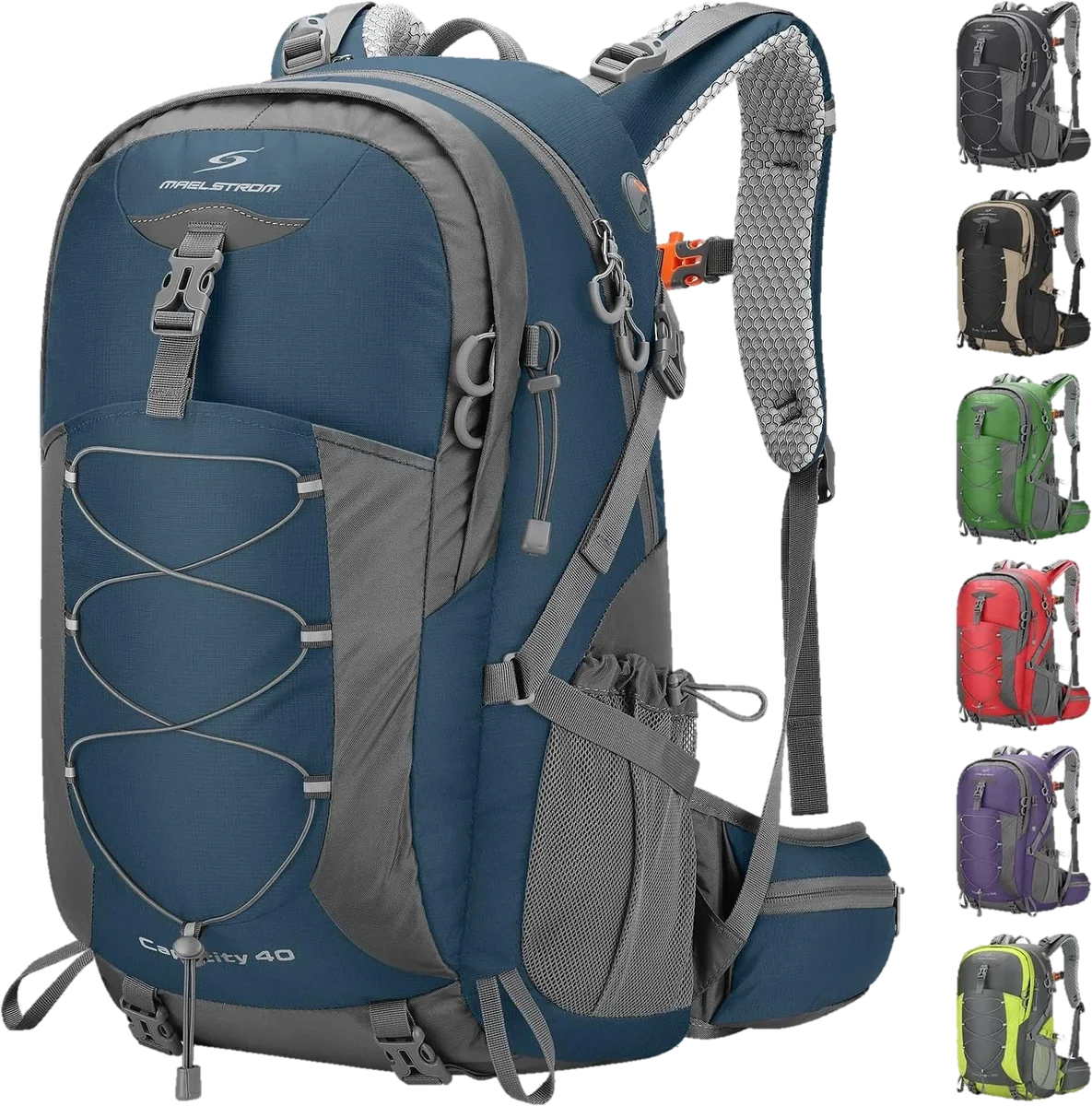
Maelstrom 40L Hiking Backpack
Price snapshot: $35.90 · 40-liter hiking backpack
This pack offers a lot of organization for the price. The listing gives a 40-liter capacity, a weight of about 2.18 lb, and dimensions of approximately 23.62 × 12.99 × 8.86 inches (H × W × D). It uses 210D ripstop nylon described as water-resistant and includes a rain cover stored in a lower pocket. Other features include a padded breathable back, adjustable shoulder and chest straps, a chest-buckle whistle, multiple zip pockets, a wet-item compartment, trekking-pole attachments, and a sleeve and hose opening for a hydration reservoir.
The Amazon listing showed 4.5 out of 5 from about 3,581 ratings. Buyers often like the storage layout, comfort, and value. The critical feedback deserves attention: reviewers report stitching and seams coming apart, zippers failing, and straps or clips breaking after limited use. These are not proof that every pack will fail, but they are relevant concerns if you plan to depend on it far from a trailhead.
- Worth considering if: you need extra room for a longer day out, bulky layers, travel, or a larger load.
- Probably too much pack if: your first hikes are short and you only need water, food, a light layer, and basic safety items. A 40L bag can encourage overpacking.
- Water note: the fabric is described as water-resistant; use the included rain cover in sustained rain and protect electronics or spare clothing separately.
- Before a longer trip: load it at home, adjust the straps, check the seams and zippers, and walk with the weight you expect to carry.
- Warranty: the listing states one year of coverage; confirm the current terms and seller support before relying on it.
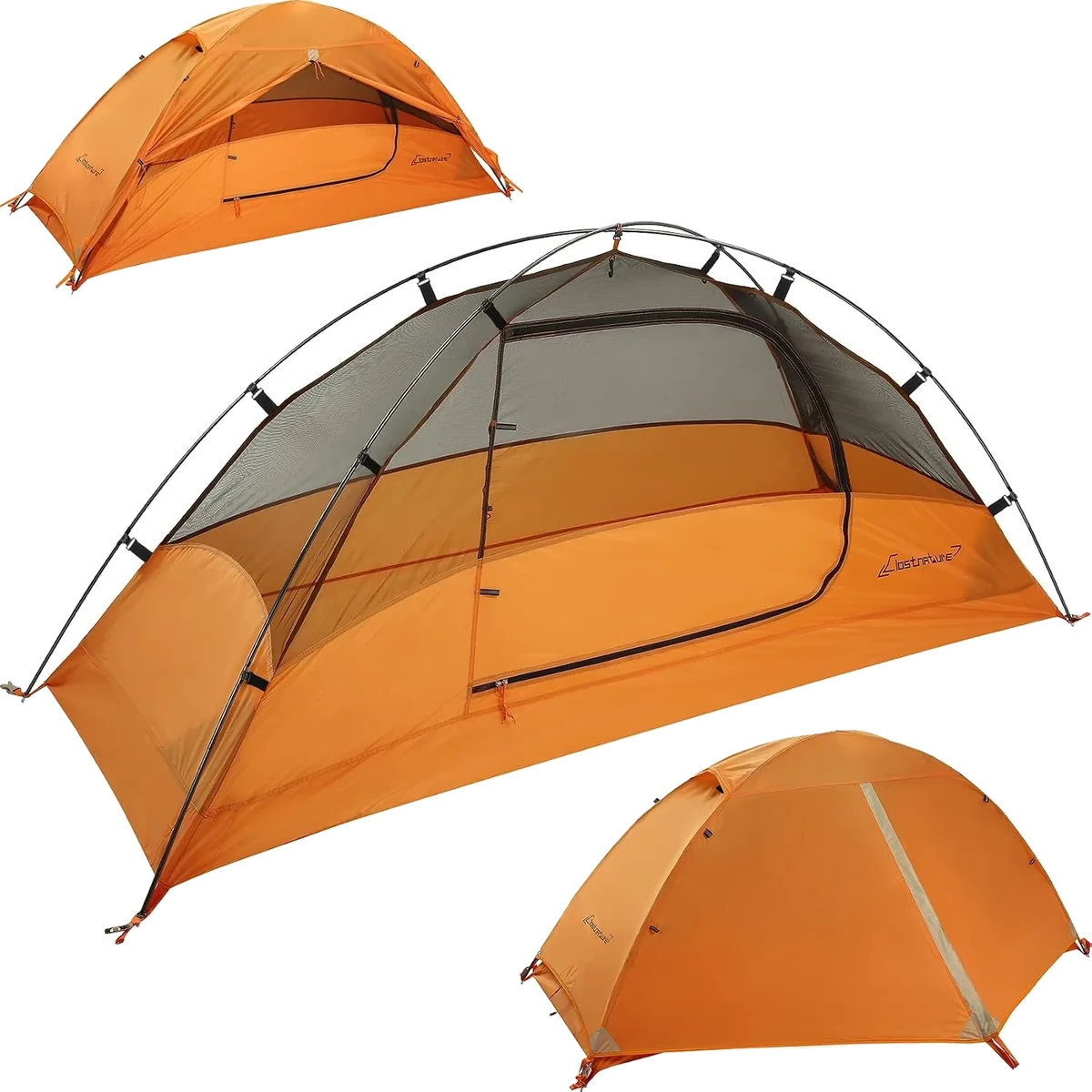
Clostnature 1-Person Lightweight Backpacking Tent
Price snapshot: $67.99 · 3-season solo tent
The Clostnature is a freestanding, one-person tent with two aluminum poles, a mesh inner tent, a polyester rainfly and bathtub floor, and a listed PU 5,000 mm waterproof coating. Its interior measures about 7 ft 3 in by 2 ft 8 in, with roughly 3 ft of peak height. The package is listed as including a carry bag, inner tent, flysheet, poles, guylines, 14 aluminum stakes, and a pole-repair kit.
Pay attention to the weight wording. The listing gives a minimum trail weight of 2.97 lb for the fly, inner tent, and poles, but lists a complete weight of 4 lb in one specification and 4.2 lb in its product Q&A. For planning, use the heavier complete-kit figure unless the seller confirms exactly what is included in the lighter number. That is manageable for a budget solo tent, but it is not especially light by backpacking standards.
The Amazon listing showed 4.5 out of 5 from about 1,544 ratings. Buyers often praise quick setup, compact packing, and value. Critical feedback mentions rain getting through seams or fabric, oversized pole grommets or attachment problems, and zippers failing early. A 5,000 mm PU coating rating does not guarantee that every seam, zipper, or assembled tent will stay dry in every storm.
- Worth considering if: you want an affordable solo shelter for occasional three-season overnight trips and can accept a roughly 4 lb complete kit.
- Check before buying: the exact package contents, packed weight, stake count, and warranty terms. The listing states a one-year warranty; check the current terms with the seller.
- Before the first trip: pitch it in your yard, inspect the pole attachments and zippers, and test the rainfly and seams in controlled conditions. Do not make its first test a remote overnight hike.
- Not needed for: an ordinary day hike. Leave the tent at home unless you are actually staying overnight.
How to decide what you actually need
For a short, familiar day hike, start with footwear that fits, weather-appropriate layers, water, food, navigation, a small first-aid kit, and a pack that carries those items comfortably. A waterproof boot, a 40-liter bag, and an overnight tent are not automatic upgrades.
For wet weather, a rain shell such as the Antora may be useful, but pair it with insulation when temperatures call for warmth. For a longer route or a colder season, you may need more capacity and extra layers. For an overnight trip, shelter weight and weather protection become important—and you should practice setting up the tent before leaving home.
Frequently asked questions
Do beginners need hiking boots?
Not always. Trail runners or hiking shoes can work on maintained trails if they fit well and provide suitable traction. Mid-height boots may suit rougher ground, wet conditions, or hikers who prefer more coverage. Choose for fit and terrain, not appearance alone.
How much water should I bring on a beginner hike?
Plan around the weather, route length, effort, elevation, and reliable refill points. Carry enough for the outing plus a margin, and use an appropriate treatment method before drinking from natural sources. There is no single amount that fits every hiker.
How big should a day-hiking backpack be?
Choose a pack that comfortably holds the essentials for your route. A 40L pack can be useful for longer days, cold-weather layers, or bulky supplies, but it is often more capacity than a short day hike requires. A larger pack can also make it tempting to carry unnecessary weight.
Is the Maelstrom 40L backpack waterproof?
The Maelstrom listing describes the 210D nylon fabric as water-resistant and includes a separate rain cover. Treat those as two layers of protection, not as a guarantee that the bag is fully waterproof. Use dry bags or other protection for items that must stay dry.
Is the Clostnature one-person tent really ultralight?
Its minimum trail weight is listed at 2.97 lb, but the complete package is listed at 4 to 4.2 lb. That is a reasonable budget shelter weight for some solo trips, but hikers focused on reducing pack weight may prefer a lighter tent. Compare complete packed weights rather than marketing labels.
Will the North Face Antora keep me warm?
It is a waterproof rain shell, not an insulated jacket. It can help block rain and wind, but you need an appropriate base layer and insulating layer for cold conditions.
Should I bring a tent on my first day hike?
Usually not. A tent is overnight equipment. For a day hike, focus on navigation, water, food, weather protection, illumination, first aid, and an emergency layer or shelter appropriate to the route.
Bottom line: The best way to avoid beginner hiking mistakes is to match your plan and gear to the actual trail. Get footwear that fits, bring layers and rain protection suited to the forecast, carry enough water, know your route, and tell someone when you expect to return. Buy specialized gear when the trip calls for it—not just because a product listing says you might need it.
Sources and product information
- National Park Service: The Ten Essentials
- National Park Service: Hike Smart safety guidance
- Clostnature: 1-person Crux backpacking tent specifications
- Maelstrom: 40L hiking backpack specifications
- Timberland: Men's White Ledge Mid Waterproof Hiking Boot
- The North Face: Men's Antora Jacket
Product specifications were checked against manufacturer information and the product listings reviewed for this guide. Prices and review figures are snapshots and may change. TestedWise has not independently field-tested these products.