
Buying Guide · Home & Kitchen
Best Smart Thermostats for Central HVAC & Heat Pumps: 5 Models Compared
The most important smart-thermostat feature is not the screen or app. It is whether the thermostat works with your exact heating and cooling system. These five options cover adaptive scheduling, room sensors, large displays, simple controls, and budget Alexa integration.
Affiliate disclosure: This article contains affiliate links. TestedWise may earn a commission if you purchase through them, at no additional cost to you. Read the full disclosure.
Smart thermostats are easy to shop for and surprisingly easy to buy incorrectly. Product pages lead with learning schedules, voice assistants, sensors, and energy-saving features. Those are useful only after you know whether the thermostat supports your furnace, air conditioner, heat pump, wiring, and any auxiliary equipment.
This comparison focuses on standard 24-volt central HVAC systems and ducted heat pumps. It does not treat 120/240-volt electric baseboard thermostats, proprietary communicating systems, or every multi-zone setup as interchangeable. Before you order, identify the system type and check the manufacturer's compatibility tool using the wires and terminals at your existing thermostat.
Quick picks
- Best overall for multi-room comfort: ecobee Smart Thermostat Premium.
- Best adaptive scheduling: Google Nest Learning Thermostat (4th Gen).
- Best large-screen feature set: Honeywell Home X8S.
- Best straightforward touchscreen: Sensi Touch 2.
- Best budget Alexa option: Amazon Smart Thermostat.
The five thermostats at a glance
| Model | C-wire position | Notable feature | Best fit |
|---|---|---|---|
| ecobee Premium | 24VAC; PEK included for compatible no-C installs | SmartSensor, occupancy and air-quality features | Multi-room comfort and broad smart-home use |
| Nest Learning 4th Gen | Not required in most homes; sometimes needed | Adaptive schedule and included temperature sensor bundle | Google Home and learning features |
| Honeywell Home X8S | C wire required | Large display, IAQ monitoring, doorbell integration | Feature-rich wall control |
| Sensi Touch 2 | C wire always required | Simple touchscreen and optional room sensors | Standard 24V systems with C wire |
| Amazon Smart Thermostat | C wire required; adapter may work | Basic Alexa app and schedule control | Budget Alexa-first homes |
The table is a shortlist, not a substitute for the wiring chart. The same thermostat may support one heat-pump configuration and reject another with extra auxiliary stages, dual fuel, multiple transformers, or proprietary controls.
Five smart thermostats compared
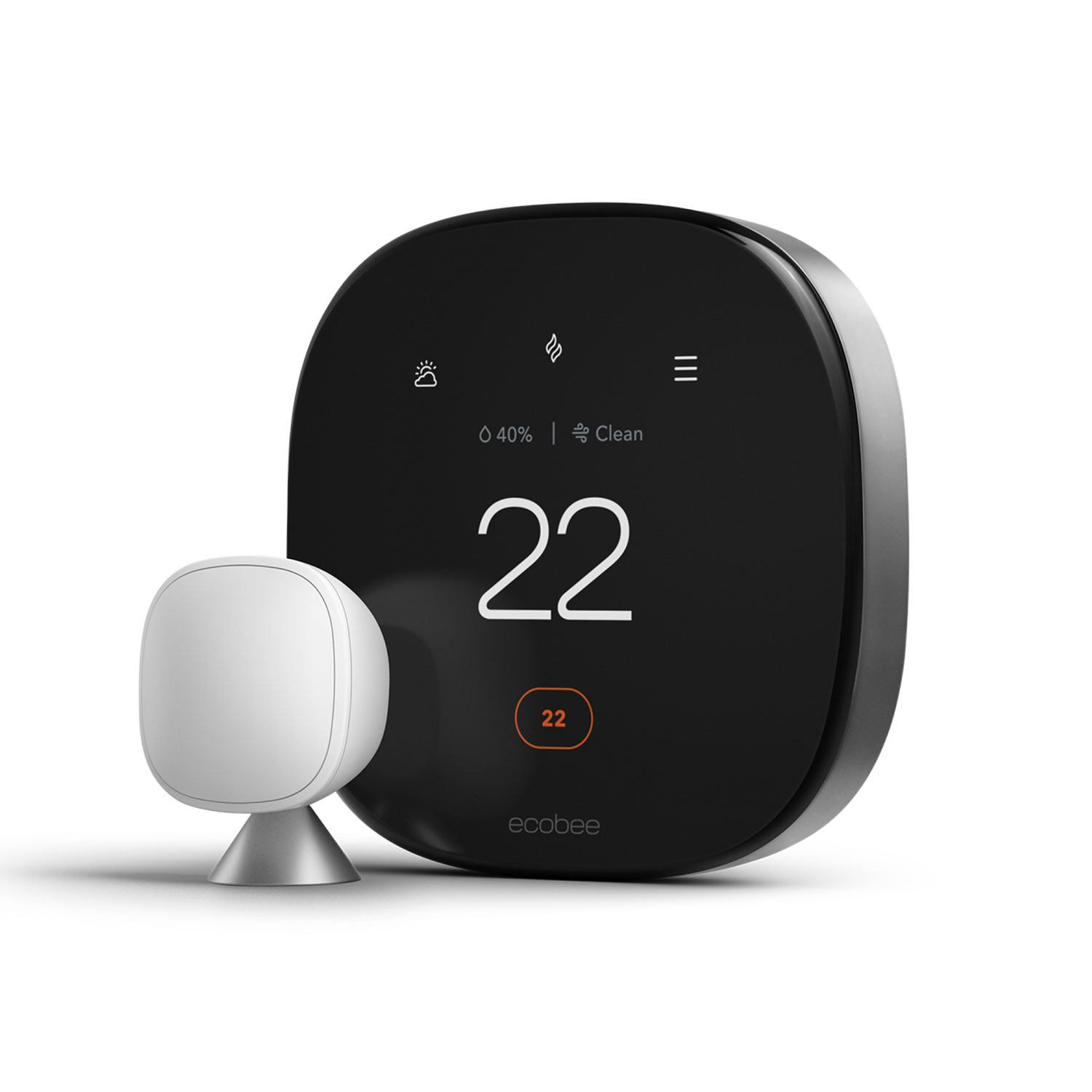
Best overall for multi-room comfort
1. ecobee Smart Thermostat Premium
The Premium is the most complete option here if you want more than a programmable temperature control. The package includes an ecobee SmartSensor, and the thermostat adds occupancy sensing, humidity monitoring, air-quality information, and broad smart-home support including Apple HomeKit, Alexa, and SmartThings.
It works with most 24VAC systems. ecobee lists support for conventional 2H/2C systems and heat pumps with auxiliary heat, and the Power Extender Kit is included for compatible installations without a dedicated C wire. The kit is not universal: check the compatibility checker before assuming it will solve a wiring issue.
The trade-off is complexity and price. Some of the security and monitoring features are tied to ecobee's paid services, and a buyer who only wants a reliable weekly schedule may not use the Premium's extra sensors or smart-home features.
- Good for: Homes with rooms that heat unevenly, people who want a remote sensor, and multi-platform smart-home users.
- Why it makes the list: It combines a room sensor, PEK option, broad 24VAC compatibility, and a useful feature set.
- Trade-off: It costs more than a basic thermostat, and some security features are subscription-based. Amazon listings may show the earlier EB-STATE6-01 part number; ecobee's current replacement suffix is EB-STATE6P-01.
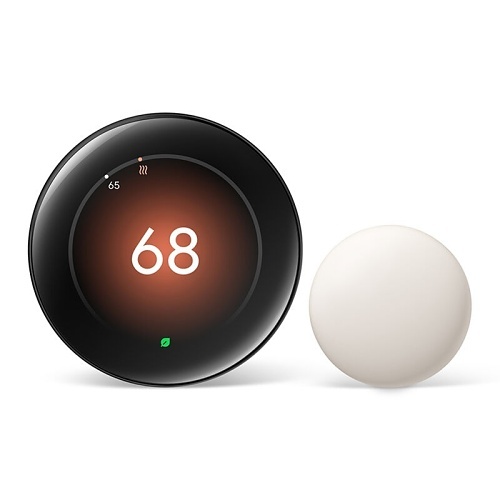
Best for adaptive scheduling and Google Home
2. Google Nest Learning Thermostat (4th Gen)
The fourth-generation Nest is the strongest fit for someone who wants a thermostat that learns routines and is already using Google Home. The current bundle used for this comparison includes a second-generation Nest Temperature Sensor, which can help the system respond to a room that is warmer or cooler than the thermostat location.
Google says the 4th-gen model works with most 24V systems, including gas, electric, oil, forced air, heat pumps, and radiant systems. A C wire is not required in most homes, but Google notes that a small number of installations need a C wire or Nest Power Connector to keep power stable. Use Google's compatibility checker rather than treating 'no C wire required' as a guarantee.
The limitation is that the Google Home app is required for setup and the product is most appealing if you are comfortable with Google's ecosystem. It is not a universal solution for line-voltage baseboard or proprietary communicating systems.
- Good for: People who want adaptive scheduling, a polished display, and Google Home integration.
- Why it makes the list: The C-wire flexibility and included temperature sensor make it a strong mainstream option.
- Trade-off: Some installations still need a C wire or power connector, and setup is centered on Google Home.

Best large-screen feature set
3. Honeywell Home X8S Smart Thermostat
The X8S is the feature-rich touchscreen option. Honeywell combines a large customizable display with indoor air-quality monitoring and video-doorbell integration through the First Alert app. That makes it interesting for a household that wants the thermostat to act as a visible home-control point rather than a small wall display.
The X8S is designed for 24VAC systems and requires a C wire. Honeywell's installation compatibility guide lists conventional forced-air and heat-pump systems, while also excluding 120–240V electric baseboard heat. The exact stage support and accessories should be checked in the current installation manual for the specific model number.
The main caution is availability and bundle variation. Honeywell's own store showed the black X8VMC8B/U as backordered during this review, and other X8S SKUs bundle a wireless indoor sensor. Confirm the exact SKU, included sensor, and C-wire arrangement before checkout.
- Good for: People who want a large touchscreen, indoor air-quality information, and doorbell integration.
- Why it makes the list: It offers a noticeably different feature set from the simpler app-first thermostats.
- Trade-off: A C wire is required, and availability and included sensor bundles vary by SKU.

Best straightforward touchscreen thermostat
4. Sensi Touch 2 Smart Thermostat (ST76)
The Sensi Touch 2 is a more focused choice. It gives you a color touchscreen, app scheduling, usage information, and support for common 24V heating and cooling systems without trying to turn the thermostat into a home-security hub. Optional Sensi room sensors can help with temperature balancing, but they are a separate purchase.
The wiring detail is important: Copeland says the Sensi Touch 2 always requires a C wire, including for basic operation. That makes it a poor match for a home that lacks a common wire and cannot use a supported adapter or new conductor. Check the compatibility chart for your exact heat-pump or multi-stage configuration.
For a buyer who wants a simple app-controlled thermostat and already has a C wire, that limitation may not matter. For a buyer who is trying to avoid wiring work, it should be one of the first things checked.
- Good for: A standard 24V HVAC setup with a C wire and a preference for a simple touchscreen/app experience.
- Why it makes the list: It keeps the feature set practical and supports optional room sensors.
- Trade-off: A C wire is always required; the room sensors are optional accessories.

Best budget choice for an Alexa-first home
5. Amazon Smart Thermostat (S6ED3R)
Amazon's thermostat is the budget-focused option for a household already using Alexa. It handles standard schedules and app-based temperature changes without the larger screens, room-sensor bundles, or learning features of the more expensive products. The model number is S6ED3R, and the package includes the thermostat, wall plate, and installation hardware.
Amazon's compatibility guidance is unusually specific: the thermostat works with most 24V systems, but it only supports air-to-air and geothermal heat pumps. It does not work with a heat pump paired with a backup gas or oil furnace (a dual-fuel system). It also requires a C/common wire, although a compatible C-wire adapter can sometimes be used.
This is a sensible low-cost choice only when the HVAC system and Alexa ecosystem fit. It is not the best option for a home that relies on Apple Home, Google Home, advanced zoning, or a dual-fuel heat pump.
- Good for: A basic 24V system in an Alexa-centered home.
- Why it makes the list: It covers the core scheduling and remote-control job at a lower feature level.
- Trade-off: C wire required, limited heat-pump compatibility, and a narrower smart-home ecosystem.
Check HVAC compatibility before comparing features
Most mainstream smart thermostats in this guide are designed for 24VAC central HVAC equipment. They are not universal replacements for every wall thermostat. If your home uses electric baseboard heat at 120 or 240 volts, a millivolt wall heater, a proprietary communicating system, or a complex zone panel, stop and use the manufacturer's compatibility checker or an HVAC professional before buying.
Heat pumps deserve extra attention. A basic single-stage heat pump is not the same wiring problem as a heat pump with auxiliary electric heat, emergency heat, or a gas furnace as backup. Some thermostats support dual fuel; others do not. Amazon specifically says its Smart Thermostat does not work with a heat pump that has a backup gas or oil furnace. Do not assume that a thermostat that says 'heat pump compatible' supports every heat-pump arrangement.
Also check the number of heating and cooling stages. A thermostat may support a single-stage furnace and air conditioner but not a multi-stage system with additional auxiliary heat. The model's compatibility chart—not a retailer's short bullet list—is the document to trust.
What to know about the C wire
The C wire is the common side of the low-voltage power circuit. Many smart thermostats need a steady source of power for Wi-Fi, displays, and sensors. Some models can share power through the existing control wires in many homes; others require a dedicated C wire or a manufacturer-approved adapter.
In this group, ecobee includes a Power Extender Kit for compatible 24VAC systems, Google says the fourth-generation Nest works without a C wire in most homes but may need one in limited cases, Honeywell X8S requires a C wire, Sensi Touch 2 always requires one, and Amazon requires a C/common wire unless a compatible adapter can be used. Those differences are large enough to change the installation cost.
If you are not sure what wires are behind your thermostat, read C-Wire Explained: How to Check Smart Thermostat Compatibility Before Buying before ordering. Do not identify a C wire by color alone; the terminal label and the connection at the HVAC control board matter.
For the next part of the decision, see checking heat-pump and multi-stage HVAC compatibility.
Frequently asked questions
Do smart thermostats work with heat pumps?
Many do, but the exact heat-pump type and number of stages matter. Check whether the thermostat supports auxiliary heat, emergency heat, and dual-fuel configurations if your system uses them.
Do smart thermostats need a C wire?
It depends on the model. The Sensi Touch 2 and Honeywell X8S require one; Amazon requires a C/common wire or a supported adapter; ecobee includes a Power Extender Kit for compatible systems; Nest Learning 4th Gen works without one in most homes but may need one in limited cases.
Can I use one of these thermostats with electric baseboard heat?
Usually not. These products are designed primarily for low-voltage 24VAC systems. Electric baseboard systems commonly use 120 or 240 volts and need a thermostat designed for line-voltage control.
Are room sensors worth buying?
They can help when bedrooms or upper floors run warmer or cooler than the thermostat location. A sensor does not create a separate HVAC zone; it helps the thermostat decide which room reading to prioritize. Check whether the sensor is included or sold separately.
Will a smart thermostat automatically lower my energy bill?
It can make schedules and setbacks easier to manage, but savings depend on your climate, insulation, HVAC efficiency, occupancy, and settings. A thermostat cannot compensate for an oversized system, poor ductwork, or a schedule that is never configured.
Can I install a smart thermostat myself?
Some standard 24VAC replacements are suitable for careful DIY installation, but unfamiliar wiring, dual transformers, zone panels, line-voltage systems, or heat-pump auxiliary controls are good reasons to call an HVAC technician. Turn off HVAC power before removing a thermostat and follow the exact installation manual.
Sources & further reading
- ecobee Smart Thermostat Premium product specifications
- ecobee Power Extender Kit compatibility and installation information
- Google Nest Learning Thermostat 4th Gen specifications and wiring compatibility
- Google Nest thermostat compatibility guidance
- Honeywell Home X8S official product specifications and bundle options
- Sensi Touch 2 HVAC compatibility and C-wire guidance
- Amazon Smart Thermostat model S6ED3R product information
- Amazon Smart Thermostat C-wire adapter instructions
- Amazon Smart Thermostat compatibility: C wire and dual-fuel restrictions
- Amazon listing: ecobee Smart Thermostat Premium (ASIN B09XXS48P8)
- Amazon listing: Google Nest Learning Thermostat 4th Gen (ASIN B0D5BBYRJM)
- Amazon listing: Honeywell Home X8S (ASIN B0FJMS2JT3)
- Amazon listing: Sensi Touch 2 ST76 (ASIN B0BKH83KF9)
- Amazon listing: Amazon Smart Thermostat (ASIN B08J4C8871)
Content reviewed: Nov 19, 2026