
Buying Guide · Home & Garden
Best Electric Pressure Washers for Cars, Patios & Driveways: 5 Models Compared
A compact electric pressure washer can handle seasonal cleanup without the fuel, exhaust, and maintenance of a gas machine. The catch is that advertised PSI numbers are not always directly comparable, and the right nozzle matters as much as the machine.
Affiliate disclosure: This article contains affiliate links. TestedWise may earn a commission if you purchase through them, at no additional cost to you. Read the full disclosure.
The short answer
For light cleanup around a small home, the Greenworks 1600 PSI is the least complicated starting point. The RYOBI RY141820VNM adds a little more pressure while staying compact. The Sun Joe SPX3000 is a versatile general-purpose model with multiple nozzles and dual detergent tanks. The Greenworks GPW2101A adds a longer hose and telescoping handle. The Westinghouse ePX3500 advertises the highest maximum pressure in this group, but its peak figures should not be compared directly with models that publish rated pressure.
For most homeowners, a corded electric washer is enough for patio furniture, outdoor bins, vehicles, and occasional hard-surface cleaning. If your main job is a large concrete driveway with years of embedded grime, the water flow and surface-cleaner attachment may matter more than a headline PSI number.
Five electric pressure washers compared
| Model | Published pressure / flow | Standout feature | Best fit |
|---|---|---|---|
| Greenworks GPW1602 | 1,600 PSI; 1.2 GPM | Light-duty, compact setup | Small patios, outdoor furniture, and quick rinsing |
| RYOBI RY141820VNM | 1,800 PSI; 1.2 GPM | Compact body, 20 ft hose, turbo nozzle | Everyday homeowner jobs |
| Sun Joe SPX3000 | 2,030 PSI; 1.2 GPM | Five quick-connect tips and dual detergent tanks | Buyers who want several cleaning options |
| Greenworks GPW2101A | 2,100 PSI; 1.2 GPM | 25 ft hose and telescoping handle | More reach around vehicles and patios |
| Westinghouse ePX3500 | Up to 2,500 max PSI; up to 1.76 max GPM | Compact anti-tipping design and onboard soap tank | Buyers prioritizing compact storage and higher advertised peak output |
Important comparison note: Pressure-washer listings mix rated, working, and maximum figures. The Westinghouse ePX3500 figures above are advertised maximums. Do not treat them as equivalent to a rated PSI or rated GPM figure from another manufacturer. See PSI vs. GPM: what actually matters before comparing numbers.
The five electric pressure washers

Best for light-duty jobs
1. Greenworks 1600 PSI Electric Pressure Washer
The 1600 PSI Greenworks is a sensible choice when the work is mostly rinsing outdoor furniture, cleaning garden tools, washing bins, or freshening up a small patio. Its published flow rate is 1.2 GPM. That is a residential light-duty profile, not a substitute for a high-flow gas washer.
The appeal is restraint. You do not need a large machine for every weekend job, and a smaller electric washer is easier to store and bring out for quick cleanup. It is also easier to avoid damaging a surface when you start with a lower-pressure setup and a wide spray pattern.
- Good for: small outdoor areas, furniture, bins, and light dirt.
- Why it makes the list: a lower-output option for people who do not need a heavy-duty washer.
- Trade-off: slower on large concrete areas or heavy, embedded grime.

Best compact everyday option
2. RYOBI RY141820VNM 1,800 PSI Electric Pressure Washer
RYOBI publishes 1,800 PSI and 1.2 GPM for this corded model. It has a 20-foot hose, a 13-amp motor, and three included quick-connect nozzles: 15-degree, soap, and turbo. Its compact 16-pound body is easier to move and store than a full-size wheeled unit.
This is a good fit for a homeowner who wants a familiar brand and a simple setup for cars, patio furniture, windows, and small decks. The turbo nozzle can speed up some jobs, but it is not the nozzle to start with on paint, soft wood, or delicate trim.
- Good for: routine vehicle and patio cleanup, small decks, and outdoor furniture.
- Why it makes the list: useful accessories in a relatively compact package.
- Trade-off: 1.2 GPM is still modest for large, heavily soiled hard surfaces.

Best accessory flexibility
3. Sun Joe SPX3000 Electric Pressure Washer
The SPX3000 is a long-running residential model with a 14.5-amp motor, a published 2,030 PSI maximum working pressure, and 1.2 GPM flow. Its most practical feature is the accessory setup: five quick-connect spray tips and two detergent tanks let you switch between different cleaning tasks without relying on one fixed spray pattern.
That flexibility is useful if you wash a vehicle one weekend and patio furniture the next. The two detergent tanks are also convenient when you want to keep separate cleaning solutions ready. The trade-off is that it is still a corded, relatively low-flow electric washer. It will not behave like a commercial machine on a large driveway.
- Good for: mixed household jobs where nozzle choice and detergent flexibility matter.
- Why it makes the list: a versatile accessory package and a familiar model with broad use cases.
- Trade-off: the hose and cord still limit reach; plan where the machine and outlet will sit before starting.

Best for extra hose reach
4. Greenworks GPW2101A 2,100 PSI Electric Pressure Washer
The GPW2101A is a 13-amp corded model with a published 2,100 PSI maximum and 1.2 GPM flow. The 25-foot hose gives it more reach than the 20-foot setups in this comparison, and the telescoping handle makes it easier to move around the work area.
It is worth considering if the washer will be used around a car, driveway edge, patio, and garden path where moving the unit every few minutes gets annoying. The longer hose helps, but it does not change the underlying flow rate. Large concrete jobs still take time.
- Good for: regular homeowner cleanup where hose reach is useful.
- Why it makes the list: longer hose and a more substantial handle design than the smallest models.
- Trade-off: the published 2,100 PSI is a maximum figure; it is not a promise of faster cleaning on every surface.
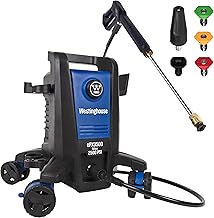
Best compact high-output design
5. Westinghouse ePX3500 Electric Pressure Washer
The ePX3500 is marketed with up to 2,500 max PSI and up to 1.76 max GPM. It has an anti-tipping design, an onboard soap tank, a pro-style wand, and a five-nozzle set. Its compact vertical form is a different approach from a larger wheeled pressure washer.
The key is to read the word max. Peak pressure and peak flow are not the same as rated working output, and they should not be used as a shortcut for ranking the ePX3500 above every washer with a lower headline number. Consider it if the compact design and accessory package suit your storage and cleaning routine, then compare the exact rated specifications in the manual.
- Good for: buyers who want a compact machine with a broad accessory set.
- Why it makes the list: distinctive anti-tipping form and higher advertised peak figures.
- Trade-off: verify rated pressure and flow before comparing it with other models.
PSI, GPM, and advertised maximums
PSI describes pressure. GPM describes how much water flows through the machine. Pressure helps loosen soil; flow helps carry the loosened material away. A washer with a high PSI number but low flow can still feel slow on a broad surface.
Be careful with product listings. Some manufacturers publish maximum or peak PSI and GPM, while others emphasize rated or working output. A maximum figure may be measured under a different condition from a rated figure. It is not a fair comparison to put one product's maximum PSI beside another product's rated PSI and call the first machine more powerful.
You may see the phrase cleaning units, calculated by multiplying PSI by GPM. It can be a rough shorthand, but it is not a complete, standardized test of cleaning performance. Nozzle design, water temperature, detergent, surface, distance, and the operator's technique all affect the result. For a fuller explanation, see Pressure Washer PSI vs. GPM: What Actually Matters?
Match the washer to the surface
| Job | What to prioritize | Practical starting point |
|---|---|---|
| Car paint and wheels | Wide spray pattern, controllable distance, soap option | Start with a 40° or 25° tip and keep the nozzle moving; avoid blasting chips, seals, sensors, and trim |
| Patio furniture and outdoor bins | Light-to-moderate pressure and easy handling | Use a wide fan tip and test a hidden area first |
| Decking and fences | Control, nozzle choice, and distance | Start farther away with a wide tip; high pressure can raise wood fibers or damage soft boards |
| Concrete and pavers | Flow rate, surface-cleaner compatibility, and time | For broad areas, a compatible surface-cleaner attachment can produce more even passes than a narrow wand |
| Windows and delicate trim | Low force and a wide spray | Use caution and follow the window or siding manufacturer's guidance; do not direct a concentrated jet at seals |
There is no universal PSI setting for every car, deck, or driveway. Surface age, coating condition, wood species, paint quality, and nozzle angle all matter. Start with the least aggressive setup that can do the job.
Setup and safety before you pull the trigger
- Use a grounded outdoor outlet with GFCI protection and follow the washer's electrical instructions. Keep plugs and connections out of standing water.
- Use a water supply that meets the manufacturer's flow and pressure requirements. A starved inlet can cause poor performance or damage.
- Wear eye protection and closed-toe shoes. Keep children, pets, and bystanders away from the spray area.
- Never aim the wand at a person or animal. High-pressure water can cause serious injection injuries even when the wound looks small.
- Do not use a pressure washer from a ladder. The reaction force can throw you off balance.
- Do not use a zero-degree tip on a vehicle, wood, siding, or other delicate surface. Start with a wider tip and test first.
- Relieve pressure and disconnect power before changing accessories or performing maintenance, as directed by the manual.
For the next part of the decision, see pressure washer nozzle angles and surface safety.
Frequently asked questions
Is 1,600 PSI enough for a driveway?
It can rinse loose dirt and handle small areas, but it may be slow on a large driveway with embedded grime. Flow rate and a compatible surface-cleaner attachment matter too. For heavy concrete work, consider a higher-flow machine or renting a more capable unit.
Can I use an electric pressure washer to wash my car?
Yes, if you use a wide spray pattern, keep a safe distance, and avoid directing concentrated pressure at paint chips, seals, sensors, and trim. A foam cannon or soap nozzle can help with pre-washing, but follow the vehicle and washer instructions.
Is a higher PSI always better?
No. Too much pressure can damage wood, paint, soft stone, and seals. The goal is enough force to remove the soil without damaging the surface.
What matters more, PSI or GPM?
Neither number tells the whole story. PSI helps loosen dirt; GPM supplies the water to rinse it away. Compare rated figures where possible, then consider nozzle choice, surface, and accessories.
Are electric pressure washers suitable for commercial work?
Some higher-output electric units can handle demanding residential tasks, but the models in this guide are compact homeowner machines. For long daily use, large areas, or commercial cleaning, compare professional-grade equipment and its duty-cycle specifications.
Sources and model checks
- Consumer Reports: pressure washer testing and buying advice
- Popular Mechanics: pressure washer comparison and use cases
- Amazon: Greenworks 1600 PSI
- Amazon: RYOBI RY141820VNM
- Amazon: Sun Joe SPX3000
- Amazon: Greenworks GPW2101A
- Amazon: Westinghouse ePX3500
Sources & further reading
Content reviewed: Nov 19, 2026