
Buying Guide · Home & Kitchen
Best Cordless Leaf Blowers for Small Yards & Heavy Leaves: 5 Models Compared
Battery leaf blowers range from compact patio sweepers to powerful machines that can move damp leaf piles. The right choice depends on airflow, battery package, noise, handling, and how much yard you actually need to clear.
Affiliate disclosure: This article contains affiliate links. TestedWise may earn a commission if you purchase through them, at no additional cost to you. Read the full disclosure.
A cordless leaf blower can be a genuinely useful replacement for a gas blower, but not every battery model is built for the same job. A 340-CFM tool that clears a deck quickly is not a fair substitute for a 700-CFM blower on a lawn covered in damp leaves. The reverse is also true: buying the largest blower in the aisle can leave you carrying more weight and paying for power you rarely use.
We selected five models that cover different yard sizes and battery-platform decisions. The comparison uses the manufacturers' published maximum airflow and air-speed figures, the exact battery kit included in the listed package, and independent product-testing context. We have not physically tested these blowers, so the recommendations are use-case matches rather than a claim that one machine won a TestedWise lab test.
Quick picks
- Most power in a handheld kit: EGO POWER+ LB7654.
- Best battery package for longer sessions: RYOBI RY404100 with two 4Ah batteries.
- Best balance for a medium yard: DEWALT DCBL722P1.
- Best compact 18V option: Makita XBU03SM1.
- Best for a small patio or driveway: CRAFTSMAN CMCBL700D1.
The five models at a glance
| Model | Max airflow | Max air speed | Kit battery | Best use |
|---|---|---|---|---|
| EGO LB7654 | 765 CFM | 200 MPH | 5.0Ah + charger | Heavy leaves and larger yards |
| RYOBI RY404100 | 730 CFM | 190 MPH | Two 4.0Ah batteries + charger | Longer cleanup sessions |
| DEWALT DCBL722P1 | 450 CFM | 125 MPH | 5.0Ah + charger | Medium yards and existing 20V users |
| Makita XBU03SM1 | 459 CFM | 116 MPH | 4.0Ah + charger | Compact, lighter cleanup |
| CRAFTSMAN CMCBL700D1 | 340 CFM | 90 MPH | 2.0Ah + charger | Patios, decks, and small areas |
These are maximum manufacturer figures, not a standardized head-to-head test. Nozzle shape, battery charge, speed setting, and test method affect the numbers. Read the CFM and MPH figures together, then compare the battery that is actually included in the package you plan to buy.
Five cordless leaf blowers compared
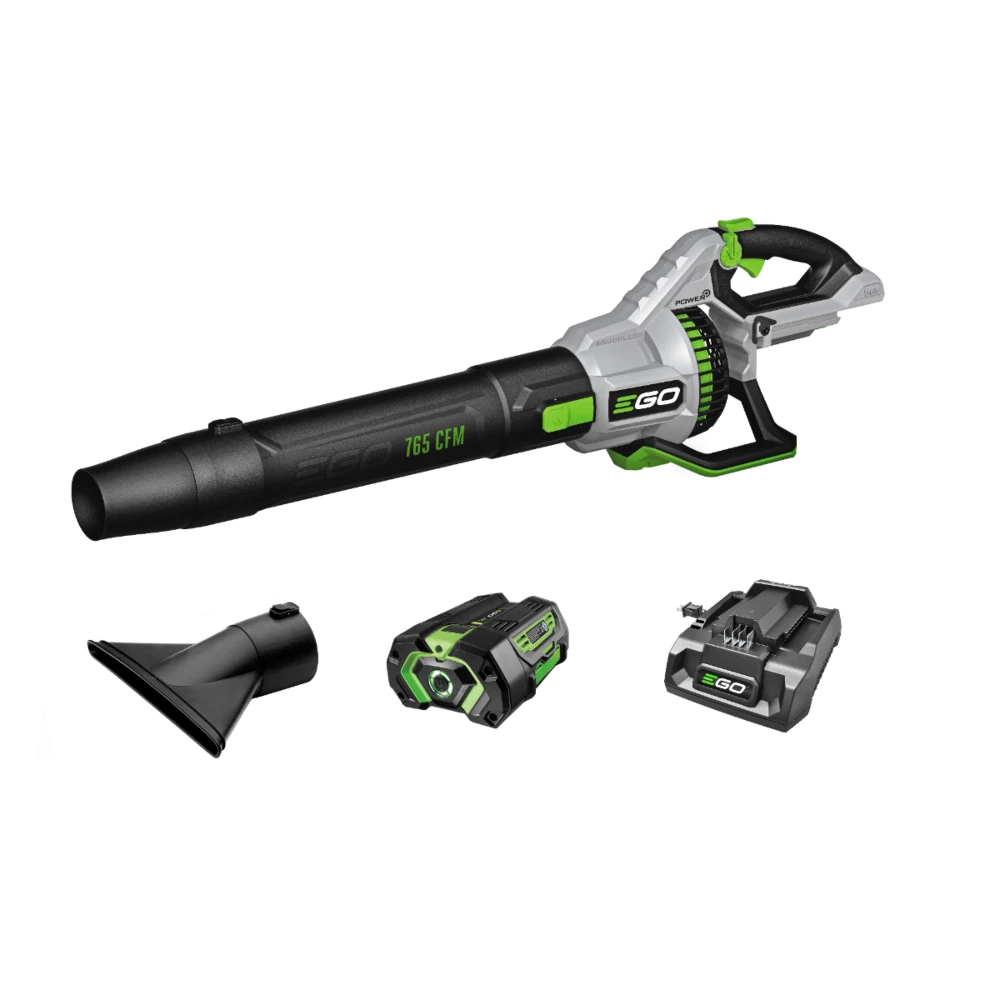
Best for heavy leaves and larger yards
1. EGO POWER+ LB7654 765 CFM Blower Kit
The LB7654 is the high-output choice in this comparison. EGO rates it at up to 765 CFM and 200 MPH, and this kit includes a 5.0Ah battery and charger. That combination makes it the strongest fit here for moving thick piles, damp leaves, and debris that a small 20V blower would push around rather than clear.
The important runtime caveat is that the catalog separates settings: with the 5.0Ah battery, EGO lists up to 150 minutes on low, 25 minutes on high, and 15 minutes on turbo. Those are maximum figures, and real runtime varies with charge level, load, and technique. If you plan to run the blower at full power for a long session, budget for a second battery or a larger pack rather than assuming one included battery will last all afternoon.
- Good for: Large leaf piles, damp debris, and users who want the strongest handheld airflow in this group.
- Why it makes the list: The 765-CFM/200-MPH rating and the included 5.0Ah battery make it a genuinely high-output kit.
- Trade-off: It is a larger, heavier, more expensive setup than a patio-cleanup blower; turbo use drains the battery much faster than low-speed use.

Best kit for extended runtime
2. RYOBI 40V HP Brushless Whisper Series RY404100
The RY404100 is an unusual value proposition because the kit includes two 4.0Ah 40V batteries and a charger. Ryobi rates the blower at 730 CFM and 190 MPH and advertises up to two hours of runtime using the two-battery kit. That is a useful package for a larger yard where stopping to recharge would be frustrating.
The Whisper Series design is marketed as 86% quieter than gas. That is a relative comparison, not a guarantee that the blower is quiet enough for every neighborhood or local ordinance. It is still a powerful outdoor tool, and hearing protection is sensible for extended use.
- Good for: People who want high airflow and a two-battery kit without buying a second battery separately.
- Why it makes the list: The included pair of 4Ah batteries is a meaningful package advantage, not a minor accessory.
- Trade-off: The kit is bulky and the two-hour figure depends on the operating mode; full-power use will be much shorter.

Best all-around option for a medium yard
3. DEWALT 20V MAX XR Brushless DCBL722P1
DEWALT's DCBL722P1 is a more moderate 20V option, rated at up to 450 CFM and 125 MPH. The P1 kit includes a 5.0Ah battery and charger, so the buyer is not left comparing a tool-only price with a complete kit from another brand. Its brushless motor and manageable output make it a sensible everyday choice for driveways, sidewalks, patios, and a medium-sized yard.
The published 62-dBA figure is useful when comparing products, but noise measurements are only comparable when the distance and test method are the same. It is not silent, and local restrictions may apply even to battery-powered blowers.
- Good for: A medium yard, routine leaf cleanup, and buyers already using DEWALT 20V tools.
- Why it makes the list: It balances airflow, a brushless motor, and a complete 5Ah kit without moving into the highest-output class.
- Trade-off: 450 CFM is not the same as the 700-plus CFM class for heavy, wet piles; use a rake or a stronger blower when leaves are soaked or compacted.

Best lightweight and quieter-feeling kit
4. Makita 18V LXT Brushless XBU03SM1
Makita's XBU03SM1 is a good example of why a higher voltage number does not automatically mean a better blower. This 18V LXT kit is rated at 459 CFM and 116 MPH, includes a 4.0Ah battery and charger, and is listed at about 60 dB(A) with a compact handheld format. It is a better match for frequent lighter cleanup than for clearing a deep pile of wet oak leaves.
The benefit is control and handling, not maximum force. Makita lists the kit at about 6 pounds with its battery and 60 dB(A) sound pressure measured to ANSI B175.2. If you already own Makita 18V LXT batteries, check whether a tool-only listing makes more sense. If you do not own the platform, compare the complete kit price and battery capacity before deciding.
- Good for: Small-to-medium yards, patios, and buyers who value a compact tool and a quieter published rating.
- Why it makes the list: Its 459-CFM rating is close to the DEWALT's, while the kit stays in Makita's broad 18V battery system.
- Trade-off: It is not the right pick for the heaviest wet leaves or a large property that needs sustained high output.

Best budget option for small cleanup jobs
5. CRAFTSMAN V20 CMCBL700D1 340 CFM Kit
The CMCBL700D1 is the entry-level option: 340 CFM, 90 MPH, a 2.0Ah battery, and a charger in the box. It is designed for patios, decks, garages, grass clippings, and quick cleanup after mowing—not for clearing a large lawn covered in wet leaves.
The 2.0Ah battery makes this a short-session tool compared with the 4Ah and 5Ah kits above. CRAFTSMAN describes the motor as brushed and the trigger as dual-speed; the product page does not provide a directly comparable full-power runtime figure. Treat it as a small-area cleanup tool, not a bargain substitute for a 700-CFM blower.
- Good for: A small yard, driveway, deck, or quick cleanup where a short session is enough.
- Why it makes the list: It provides a complete, lower-cost kit for a clearly defined light-duty job.
- Trade-off: Short runtime and modest airflow make it a poor fit for wet leaves, large yards, or long sessions.
How to choose the right cordless leaf blower
Start with the surface and the kind of debris
For a patio, deck, garage, or short driveway, a compact blower in the 300-to-450-CFM range may be enough. It can move dry leaves, grass clippings, and light debris without the bulk of a high-output machine. For a lawn with mature trees, thick leaf fall, or damp debris, a 600-to-750-CFM-class blower is a more sensible starting point. These are practical shopping ranges, not a universal engineering rule: the shape of the yard, leaf type, moisture, and nozzle all matter.
Do not compare voltage alone
20V, 40V, 56V, and 80V labels tell you about a battery platform, not the complete performance of a blower. Motor design, fan geometry, electronics, and battery output all contribute. A well-designed 18V tool can outperform a poorly designed higher-voltage tool in a particular task. Compare the actual CFM and MPH ratings, the battery's watt-hours, and the complete kit price.
Check the battery in the box
Two listings for the same blower may differ by hundreds of dollars because one is tool-only and the other includes a battery and charger. A 2Ah battery is not the same purchase as a 5Ah battery, and a kit with two batteries can be worth more to someone clearing a large property. If you already own compatible batteries, a tool-only version may be the better deal—but verify the exact battery family and generation.
Read runtime claims carefully
Maximum runtime is usually measured at a lower setting or under a light load. Turbo mode is designed for short bursts. A blower that advertises 90 minutes may deliver only a fraction of that when used continuously at maximum output. For long sessions, compare battery watt-hours and the price of a spare pack rather than relying on the headline runtime alone.
Think about noise and handling
Battery-powered does not mean silent. Check the published decibel rating and the test distance, because a figure measured at the operator's ear is not directly comparable with a measurement taken 50 feet away. The weight of the battery, balance of the motor housing, trigger design, and whether the tool has cruise control can matter more than a small difference in airflow. For long jobs, try to handle the tool in person if possible.
For a deeper explanation of the two numbers manufacturers emphasize, read CFM vs. MPH: How to Choose a Cordless Leaf Blower for Your Yard.
When a backpack blower makes more sense
If you clear a large property for an hour or more at a time, a backpack design can distribute the weight across your shoulders and hips instead of asking your arms to support the motor and battery. That can make a noticeable difference even when the maximum CFM is lower than a premium handheld model. The trade-off is a larger harness, more storage space, and a different price and battery package.
EGO lists a 600-CFM backpack model (LB6000 family) with 145-MPH maximum air speed, but its current product page showed the LB6003 kit configuration as coming soon during this review. We therefore did not present it as one of the five easiest current purchases. If you need a backpack blower, verify the exact model, battery size, charger, and stock status before ordering; the bare-tool and kit versions are not interchangeable.
Finally, check local rules before buying. Some cities restrict gas-powered blowers, some regulate blower noise or operating hours, and rules can change by season. Battery power does not automatically exempt a tool from a local noise ordinance. Wear eye protection, avoid directing dust toward people or open windows, and use hearing protection for extended work.
For the next part of the decision, see leaf blower battery runtime and kit costs.
Frequently asked questions
Is CFM or MPH more important in a leaf blower?
Both matter. CFM describes how much air the blower moves; MPH describes how fast that air is moving at the outlet. CFM is useful for judging how much material the blower can move, while air speed helps focus the stream and loosen stubborn debris. Compare the two together and read our CFM vs. MPH guide before choosing based on one headline number.
Can a cordless leaf blower move wet leaves?
A high-output model can move some damp leaves, especially when the pile is not compacted. Wet leaves stuck to grass are much harder to shift. A rake, leaf vacuum, or a stronger blower may still be faster than trying to move soaked material with a small battery tool.
How much CFM do I need for a small yard?
For a small yard with mostly dry leaves and hard surfaces, a model around 300 to 450 CFM may be enough. If the yard has mature trees, wet leaves, or a large lawn, consider a stronger model. Treat those ranges as a starting point, not a substitute for looking at the actual yard and battery package.
Does a bigger battery make a blower more powerful?
A larger battery can provide more stored energy and longer runtime, but it does not automatically raise the blower's rated CFM or MPH. The tool's motor and electronics determine its maximum output. Battery capacity, measured in amp-hours or watt-hours, mainly affects how long you can sustain a given setting.
Are cordless leaf blowers quiet enough for any neighborhood?
No. Some are much quieter than gas models, but they still produce noise. Check the manufacturer's dBA figure, the measurement distance, and local rules about hours and noise limits before buying.
Sources & further reading
- EGO POWER+ 2026 product catalog
- RYOBI 40V HP Brushless Whisper Series RY404100 product information
- DEWALT DCBL722P1 20V MAX XR brushless blower kit product information
- Makita XBU03SM1 18V LXT brushless blower kit product information
- CRAFTSMAN CMCBL700D1 V20 blower kit product information
- Consumer Reports: Leaf blower tests and buying guidance
- NIOSH: Noise and hearing-loss prevention guidance
- Amazon listing: EGO LB7654 blower kit (ASIN B09RNDQCV3)
- Amazon listing: RYOBI RY404100 blower kit (ASIN B09V1R2TRT)
- Amazon listing: DEWALT DCBL722P1 blower kit (ASIN B084YSSJFN)
- Amazon listing: Makita XBU03SM1 blower kit (ASIN B07YYFNF1V)
- Amazon listing: CRAFTSMAN CMCBL700D1 blower kit (ASIN B083X6NRWQ)
Content reviewed: Nov 19, 2026