
Buying guide · Updated November 19, 2026
Best Inflatable Paddle Boards for Beginners & Touring: 5 Models Compared
Five current inflatable SUPs compared by board size, weight capacity, included gear, portability, and how well each shape fits a first-time paddler or longer touring route.
Affiliate disclosure: This article contains affiliate links. TestedWise may earn a commission if you purchase through them, at no additional cost to you. Read the full disclosure.
An inflatable paddle board is easier to store and transport than a hard board, but “inflatable” does not tell you whether a board will feel stable, track straight, or carry the gear you bring. A 10'6" all-around board, an 11-foot higher-capacity board, and a 12'6" touring board can all be good purchases for different paddlers. The trick is matching the shape to your weight, experience, water, and the way you plan to use it.
We compared five current models with different strengths: a complete budget kit, a lightweight 2026 board, a stable all-around design with a long warranty, a higher-capacity performance board, and a longer touring shape. The specifications below come from current manufacturer pages. Capacity figures are not all defined the same way, so we identify whether the maker calls a number a maximum capacity or a recommended weight limit.
Quick comparison
| Board | Dimensions | Weight / capacity | Package notes | Best fit |
|---|---|---|---|---|
| Retrospec Weekender | 10'6" × 32" × 6" | 17.5 lb / 275 lb recommended | Complete starter kit | Budget all-around paddling |
| BOTE Breeze Aero 11'6" | 11'6" × 34" × 6" | 22 lb / 315 lb capacity | Complete package with PFD | Wider, more stable platform |
| Bluefin Cruise | 10'8" × 32" × 6" | 150 kg / about 331 lb max user weight | Check regional bundle | Stable all-around use |
| iROCKER All Around 11' 8.0 | 11' × 32" × 6" | 435 lb maximum capacity | Carbon paddle and 3 tethered fins | More load and better glide |
| Retrospec Tour XL | 12'6" × 32" × 6" | 25 lb / 350 lb recommended | Complete touring kit | Longer, straighter paddles |
Capacity labels are manufacturer-specific. A maximum board capacity is not the same as a recommended rider weight. Include your body weight, clothing, water, dry bag, cooler, and any passenger when assessing load.
The five boards
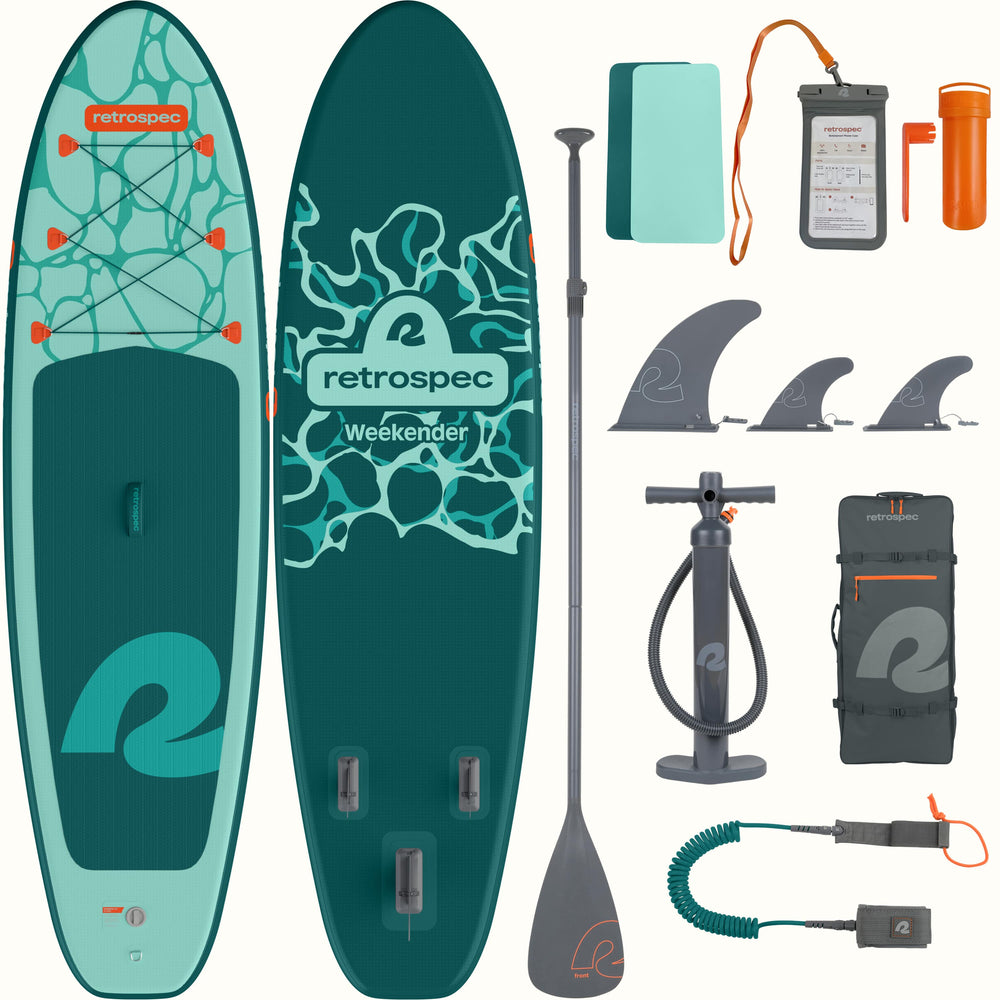
Best budget all-around board for a first season
1. Retrospec Weekender 10'6"
The Weekender is the simplest starting point for someone who wants a complete, easy-to-store inflatable board without stepping straight into a touring shape. Its 10'6" × 32" × 6" dimensions are a familiar all-around format: wide enough to feel reassuring for a new paddler, but short enough to turn and carry more easily than a long touring board.
Retrospec lists the board at 17.5 pounds and a recommended weight capacity of 275 pounds. The distinction between recommended rider weight and maximum load matters. If you regularly bring a dog, cooler, dry bag, or child, do not treat the recommended rider figure as a total-load target. The package includes a paddle, pump, fins, leash, backpack, and repair items, so the entry cost is easier to understand than a board-only listing.
The compromise is glide. A 10'6" all-around shape is convenient for short lake sessions and casual exploring, but it will not cover distance as efficiently as a 12'6" touring board. It is the sensible pick if portability, price, and a complete kit matter more than speed.
- 10'6" × 32" × 6"; about 17.5 lb.
- 275 lb recommended weight capacity.
- Includes paddle, pump, fins, leash, backpack, and repair accessories.
- Two-year manufacturer warranty listed.
View exact Amazon product page · Retrospec Weekender exact model page
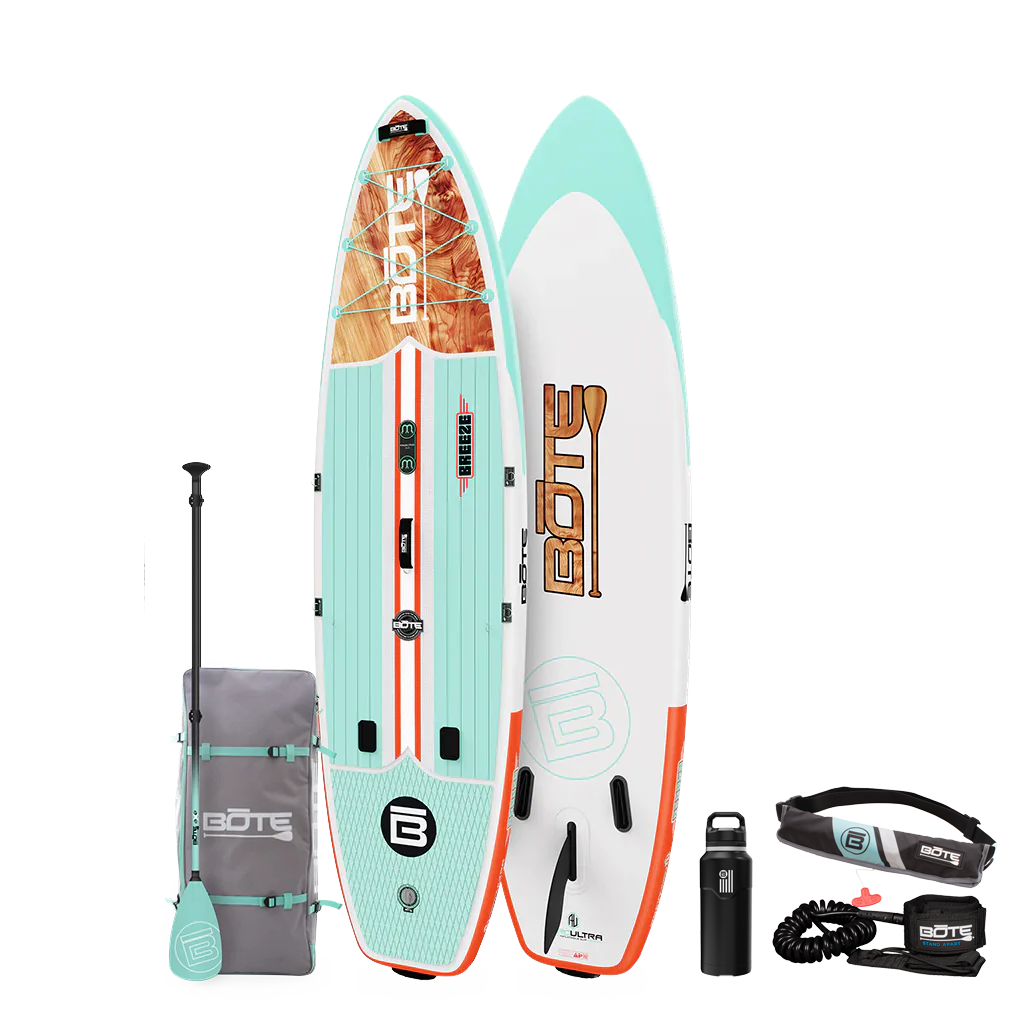
Best for a wider, more stable platform and a complete package
2. BOTE Breeze Aero 11'6" Package
BOTE's Breeze Aero package is the wider, more substantial option in this comparison. Select the 11'6" size on the product page: the manufacturer lists a 34-inch width, 315-pound capacity, and an average board weight of 22 pounds. That extra width gives a more reassuring platform for a paddler who wants stability and room for a small amount of gear.
The package uses BOTE's AeroULTRA inflatable construction and is listed for a 10–15 PSI inflation range. It includes a three-piece adjustable paddle, center fin, hand pump, backpack, coiled leash, belt PFD, repair kit, bottle, and RAC receivers. BOTE lists a two-year warranty. The included PFD is a package item, but it does not remove the need to check fit, local rules, and whether the PFD is appropriate for the waterway.
The trade-off is weight and package complexity. At about 22 pounds, it is heavier to carry than the lightest boards here, and the 34-inch width favors stability over speed. The product page offers both 10'6" and 11'6" sizes; this comparison refers specifically to the 11'6" version. Choose that size only if you want the extra platform and capacity—the shorter version has different specifications.
- 11'6" × 34" × 6"; about 22 lb board weight.
- 315 lb stated capacity; 10–15 PSI recommended inflation range.
- AeroULTRA inflatable construction and two-year manufacturer warranty.
- Package includes paddle, pump, fin, bag, coiled leash, belt PFD, repair kit, bottle, and RAC receivers.

Best all-around option with a longer warranty
3. Bluefin Cruise 10'8"
The Cruise sits between the short all-around boards and the longer touring designs. Its 10'8" × 32" × 6" outline gives a beginner a broad platform while adding a little more waterline than a 10'6" board. Bluefin lists a maximum user weight of 150 kg (about 331 pounds) and a five-year warranty on the current product page.
The package is positioned as a complete kit, with a paddle, pump, backpack, leash, fin, and repair items depending on the current regional bundle. Bluefin's product page can display different currencies and shipping terms by region, so switch to the U.S. store and confirm the contents before checkout.
The board is not as quick over distance as a pointed 12'6" touring shape, but it is a sensible all-around choice if you want a stable platform and a longer warranty. The product page's current model should be used for the specification check; an older Amazon listing may refer to a previous Cruise generation.
- 10'8" × 32" × 6" current Cruise format.
- 150 kg / about 331 lb maximum user weight listed.
- Five-year manufacturer warranty listed on the current page.
- Confirm the U.S. region, shipping terms, and included bundle accessories.

Best for carrying more weight or covering longer distances
4. iROCKER All Around 11' 8.0
The All Around 11' 8.0 is the step-up option for a paddler who has outgrown a basic starter board or needs more capacity for gear. iROCKER lists a 435-pound maximum capacity, a 32-inch width, and a 15-plus PSI operating pressure. The board is six inches longer than a 10'6" all-around shape, which helps it glide farther between strokes and hold a line more easily.
The current package includes a three-piece carbon paddle, manual pump, three tethered fins, coiled leash, carry strap, and repair kit. The tethered fins are a small but practical detail: they are less likely to disappear during setup or transport. iROCKER lists a one- to three-year warranty depending on the item and terms, so check the coverage for the board itself.
This is not automatically the best beginner board. Its extra length and more performance-oriented shape reward a paddler who is comfortable with basic balance and turning. If your priority is maximum initial stability, compare the 10'6" or 11' boards with a wider 34-inch platform.
- 11' × 32" × 6"; 435 lb maximum capacity.
- 15+ PSI recommended operating pressure.
- Includes a three-piece carbon paddle, manual pump, three tethered fins, leash, carry strap, and repair kit.
- Manufacturer lists a one- to three-year warranty depending on the item.
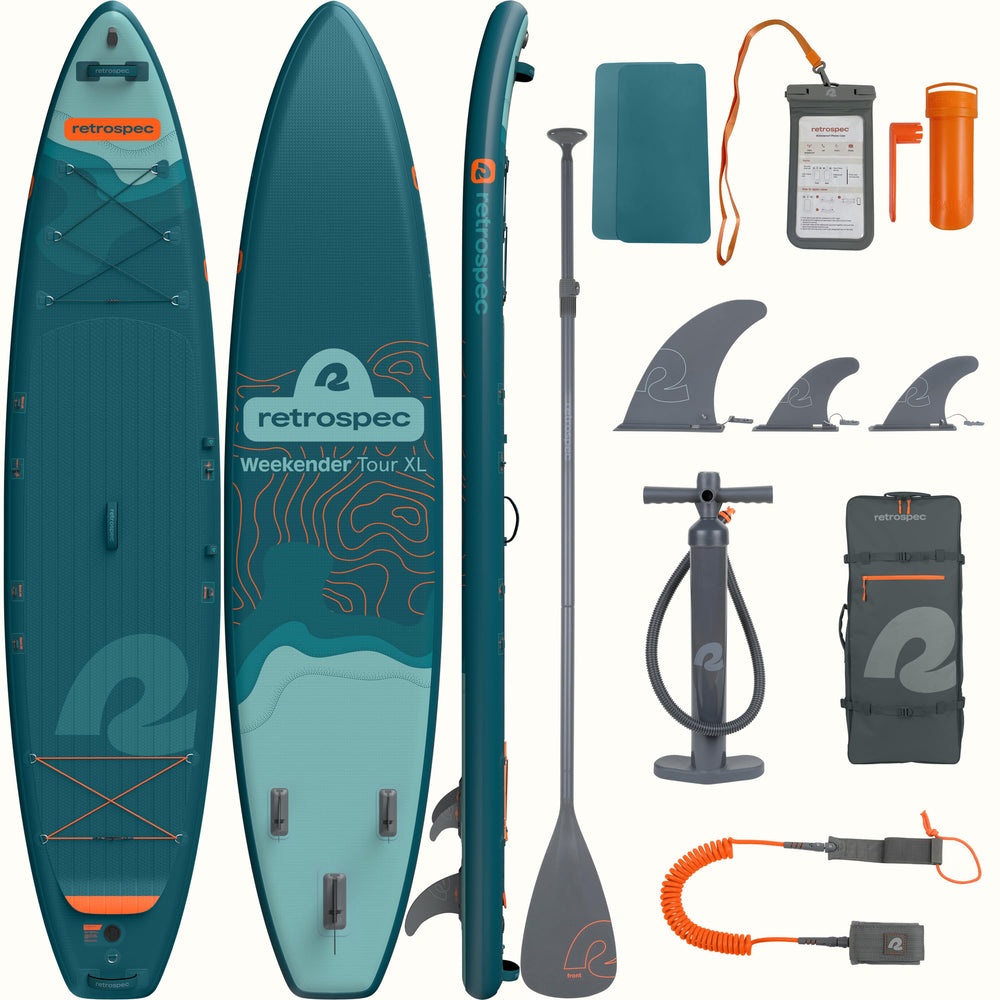
Best for longer paddles and straight-line tracking
5. Retrospec Weekender Tour XL 12'6"
The Tour XL is the clear touring choice in this group. At 12'6" × 32" × 6", it has a longer waterline and a pointed nose designed to track straighter and glide farther with each stroke. That makes it more efficient for longer lake crossings, calm coastal routes, and paddlers who already know they enjoy spending a few hours on the water.
Retrospec lists the board at 25 pounds and a 350-pound recommended weight capacity. The complete bundle includes an adjustable paddle, dual-action pump, three removable fins, leash, backpack, waterproof phone case, and repair kit. The rear kick pad is useful for pivot turns, and the removable rear bungee can free up deck space when you are not carrying much gear.
The longer shape is less nimble in tight spaces and takes more room to store, carry, and turn around on shore. It is not the easiest first board for a nervous beginner, but it is the best match here for someone who values tracking and distance over quick turns.
- 12'6" × 32" × 6"; 25 lb board weight.
- 350 lb recommended weight capacity; 12–15 PSI range.
- Includes paddle, pump, three fins, leash, backpack, waterproof phone case, and repair kit.
- Two-year manufacturer warranty listed.
How to choose the right SUP size
Length changes glide and turning
A 10'6" board is usually easier to turn and manage near shore. An 11-foot board gives a little more waterline and can carry more gear without feeling as long as a touring board. A 12'6" board is built to track straighter and cover distance more efficiently, but it needs more room to turn and is more cumbersome on land. If you mostly paddle short loops on a small lake, you may never use the extra glide of a touring shape.
Width is a major part of beginner stability
Most boards in this comparison are 32 inches wide. That is a common all-around width, but it is not the only thing that determines stability. Board outline, thickness, volume, rail shape, and how much weight sits above the water all matter. A 34-inch board can feel more stable for a beginner or a paddler carrying a dog, while a narrower board can glide more efficiently once balance improves.
Capacity is not a target to ride at every day
Manufacturers may publish maximum capacity, recommended weight capacity, or maximum user weight. Those are not interchangeable. If the board is loaded close to its limit, it can sit lower in the water, feel less responsive, and lose some of the stability that made it attractive. Count gear and passengers, not just the paddler. For a two-person setup, choose a board specifically designed and rated for that use.
For a more detailed sizing walkthrough, see How to Choose the Right Paddle Board Size. If you are still deciding between an inflatable and a hard board, read Inflatable vs. Hard Paddle Boards.
Inflation, stiffness, and accessories
Inflate the board to the pressure printed in its manual, not simply to the maximum number printed on the pump. A board that is underinflated can feel soft and fold more under load. Overinflating beyond the manufacturer's limit can damage seams, valves, or the drop-stitch structure. Use the correct pump, check the pressure gauge, and recheck the valve before launching.
Package contents can change the real cost. The BOTE Breeze Aero package is more complete than a board-only listing: its 11'6" option includes a paddle, pump, fin, bag, coiled leash, belt PFD, repair kit, bottle, and RAC receivers. Retrospec's Tour XL also lists a complete bundle, while Bluefin's package can vary by region. Compare the actual box contents rather than assuming every product photo shows what ships.
Safety and transport
Carry a properly fitted, U.S. Coast Guard-approved wearable personal flotation device and check the rules for the waterway before launching. The Coast Guard treats a paddleboard as a vessel when it is used beyond the narrow limits of a swimming, surfing, or bathing area, which brings applicable boating equipment requirements into play. Federal rules generally require a wearable PFD to be carried for each person; age and local rules can add wear requirements. A leash is not a substitute for a PFD. Choose a leash appropriate to the water conditions; moving water can require different equipment and training than a calm lake.
Check wind, current, water temperature, weather, and your return route before leaving shore. A light breeze can make a long return paddle difficult, and cold water can become dangerous even on a warm day. Keep a phone in a waterproof pouch, tell someone where you are going, and do not paddle beyond your ability or the board's load limits.
After paddling, rinse off salt and grit, dry the board before packing it away, and store it out of prolonged direct heat. A board that is rolled up wet and left in a hot car can develop odor or material problems. Inspect the valve, seams, fin box, and leash attachment points before each trip.
Frequently asked questions
Is a 10'6" paddle board good for beginners?
For many adults, a 10'6" all-around board is a sensible first size. It is manageable on land and stable enough for calm-water practice. The right width and capacity still depend on the paddler's weight, balance, and whether gear or a passenger will be carried.
Is a longer paddle board more stable?
Not automatically. Length helps tracking and glide, while width, outline, volume, and load distribution have a major effect on stability. A long narrow touring board may track well but feel less forgiving side-to-side than a shorter, wider all-around board.
How much PSI should I use?
Use the recommended pressure in the manual for your exact board. The models in this guide list different operating ranges. Do not assume one brand's 15 PSI instruction applies to another board, and never exceed the manufacturer's maximum pressure.
Do I need a PFD on a paddle board?
Check the U.S. Coast Guard requirements for the water you are using and local rules. In many areas outside designated swimming, surfing, or bathing zones, a SUP is treated as a vessel and a wearable PFD is required. Children and specific waterway rules may have additional requirements.
Sources & further reading
- Retrospec Weekender 10'6 exact Amazon product page (ASIN B0DPJQVHP2)
- Retrospec Weekender 10'6 manufacturer product page
- Bluefin Cruise 10'8 current model page
- iROCKER All Around 11' 8.0 exact model page
- Retrospec Weekender Tour XL 12'6 exact model page
- REI stand-up paddle board buying advice
- U.S. Coast Guard paddle sports safety guidance
- BOTE Breeze Aero package — 11'6" model specifications
- U.S. Coast Guard vessel determinations
- Federal PFD carriage requirements, 33 CFR Part 175
Content reviewed: Nov 19, 2026