
Buying guide · Updated November 19, 2026
Best Electric Bikes for Commuting & Weekend Riding: 5 Models Compared
Five current commuter and recreational e-bikes compared by motor, battery, range claims, frame fit, weight, and the ownership details that matter after the first ride.
An electric bike can be a brilliant commuter, but the wrong one can be a 65-pound headache that does not fit your storage space, your route, or the rules where you ride. Motor wattage and the largest range number on the product page are only part of the decision. Frame fit, total weight, braking, battery size, class configuration, and the support available if something breaks matter just as much.
This guide compares five current models with clearly different strengths: two Aventon commuter frames, a configurable value bike from Lectric, a lightweight fitness-oriented Specialized, and a Bosch mid-drive Trek. The specifications below come from the manufacturers' current model pages; we have not presented them as hands-on test results. Claimed range figures are not directly comparable because brands use different test conditions.
Quick comparison
| Model | Drive / battery | Published range | Weight / limit | Best fit |
|---|---|---|---|---|
| Aventon Level 4 REC | 750W hub / 733Wh | Up to 75 mi | 68.5 lb / 300 lb total | Full-featured commuter |
| Aventon Pace 5 REC | 750W hub / 733Wh | Up to 75 mi | 60.5 lb / 330 lb total | Step-through comfort |
| Lectric XPress2 Commuter | 750W hub / 672Wh | Up to 60 mi | About 60 lb without battery / 330 lb payload | Value and configuration options |
| Specialized Turbo Vado SL 2 4.0 | SL 1.2 / 520Wh | Up to 5 hours | About 44 lb | Lightweight fitness commuting |
| Trek Verve+ 3 Lowstep Gen 3 | Bosch mid-drive / 545Wh | Up to 68 mi | Check exact build and size | Upright comfort and mid-drive feel |
Range figures are manufacturer claims, not results from a common test. Weight and payload definitions differ by brand; confirm the exact build, battery, and included accessories before ordering.
The five bikes
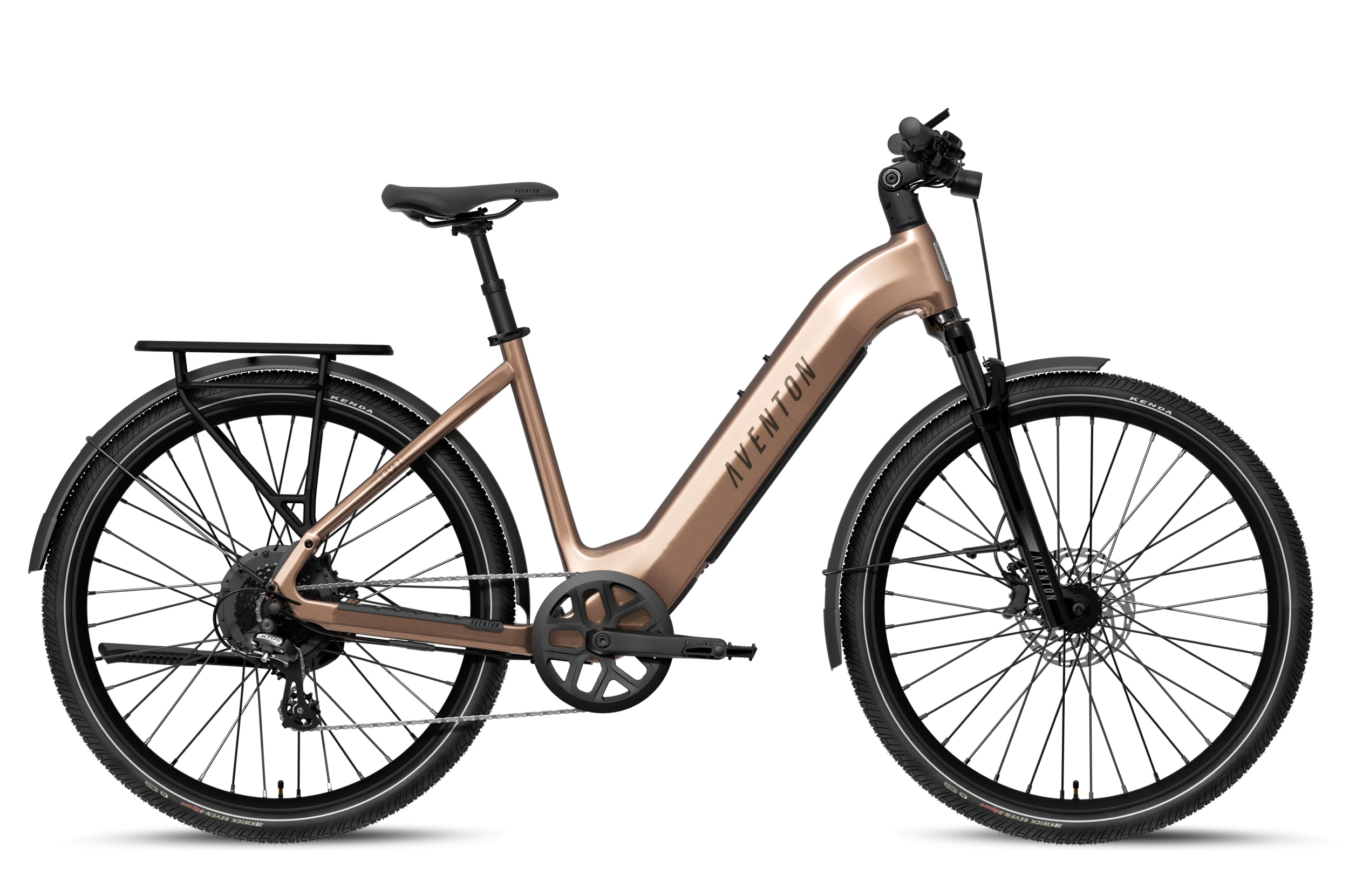
Best equipped for a full weekday commute
1. Aventon Level 4 REC
The Level 4 REC is the most feature-rich commuter in this group. Aventon lists a 750W rear hub motor, a 733Wh battery, and up to 75 miles of range. The package is built around daily utility: a front suspension fork, rear rack, fenders, integrated lights, and connected security features reduce the number of accessories a commuter may need to add after purchase.
The trade-off is weight. At about 68.5 pounds, this is not the bike to choose if you regularly carry an e-bike up a flight of stairs or lift it onto a high vehicle rack. Aventon lists a 300-pound total weight limit, so count the rider, bags, locks, and any other cargo rather than treating that number as rider-only capacity.
Aventon describes the bike as Class 2 and convertible to Class 3. Check the exact configuration and local rules before changing its assisted-speed setting. The claimed 75-mile range is a best-case manufacturer figure, not a promise for a fast, hilly commute with heavy cargo.
- 750W rear hub motor; 733Wh battery; up to 75 miles claimed.
- About 68.5 lb; 300 lb total weight limit.
- Class 2, convertible to Class 3; UL 2849 electrical-system certification listed by Aventon.
- Front suspension, rear rack, fenders, integrated lights, and connected security features.
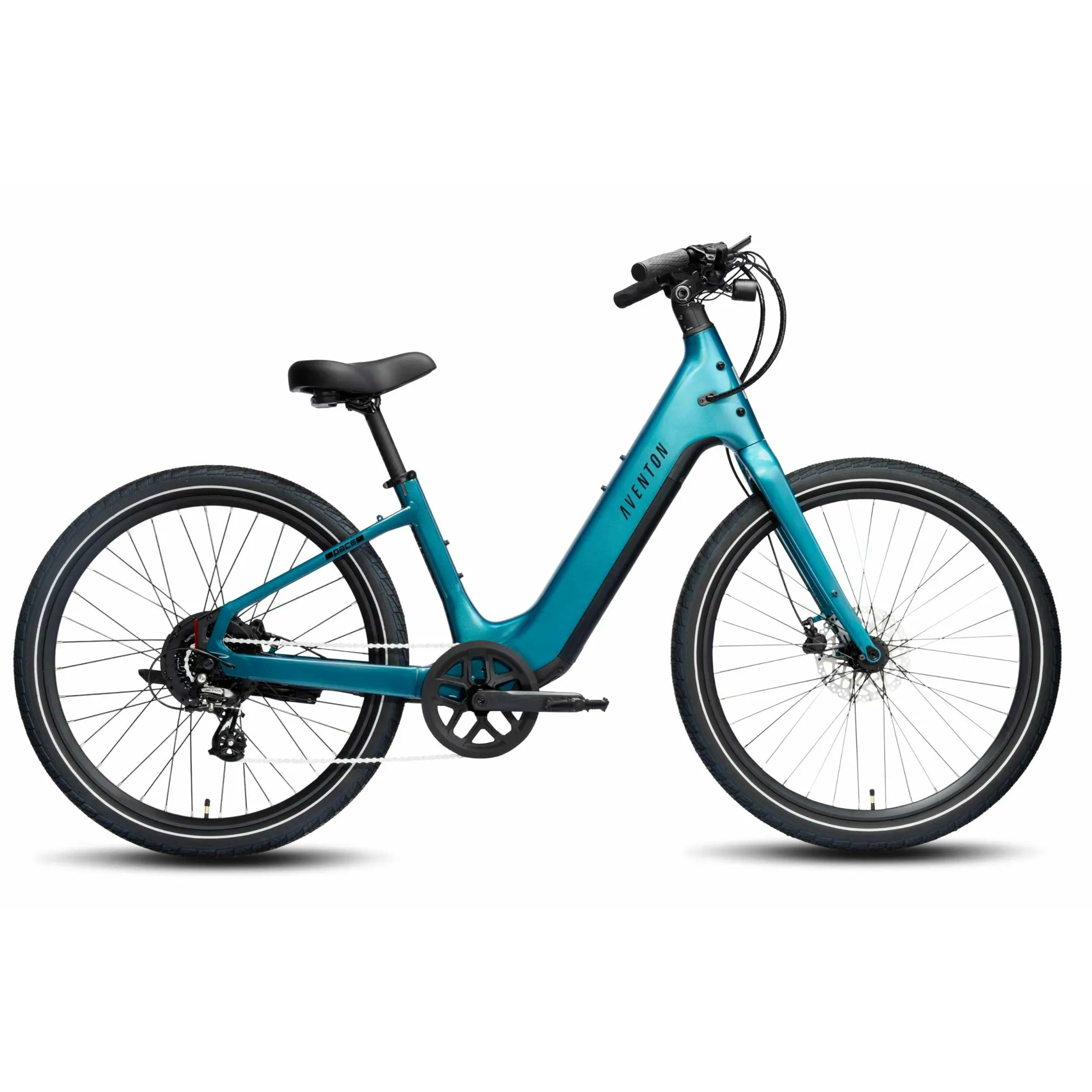
Best for an easy step-through and relaxed riding position
2. Aventon Pace 5 REC
The Pace 5 REC is the comfort-first choice. Its low step-through frame makes mounting easier, and the upright position with swept-back handlebars feels more relaxed than a sportier commuter geometry. It shares the 750W hub-motor and 733Wh battery platform with the Level 4 REC, but the frame shape and lighter build are the real reasons to choose it.
Aventon lists the bike at about 60.5 pounds with a 330-pound total weight limit. The rigid fork keeps the front end simpler and lighter than the Level 4's suspension setup, but it also means rough pavement is felt more directly through the hands. If your route includes broken pavement, consider a test ride before choosing comfort based on frame shape alone.
Aventon's published class and top-speed information should be checked against the exact configuration being sold. The product page lists Class 2 and a 28 mph maximum figure; those labels do not line up with the usual three-class definitions unless the bike's operating mode is changed. Ask the seller which configuration is shipped and check local law.
- 750W rear hub motor; 733Wh battery; up to 75 miles claimed.
- About 60.5 lb; 330 lb total weight limit.
- Step-through frame and upright cockpit; rigid front fork.
- Aventon lists UL 2849 and UL 2271 certifications for the electrical system and battery.

Best value-oriented commuter with several ride configurations
3. Lectric XPress2 Commuter
The XPress2 is the most configurable value option in this group. Lectric lists a 750W rear hub motor with a 1,310W peak output, a 672Wh battery, and up to 60 miles of range. The bike can be set up for different class modes, which is useful for riders whose commute includes a mix of streets and permitted paths—but the class setting must match local rules.
The front suspension fork, hydraulic disc brakes, and eight-speed drivetrain make the specification more complete than a bare-bones city bike. Lectric lists the frame at about 60 pounds without the battery and a 330-pound payload limit. Confirm whether the selected package includes the rack, fenders, or other commuter accessories you expect; bundles can change.
The main compromise is that it is still a substantial bike to store and lift. The advertised range is also dependent on assist level, speed, rider weight, hills, tire pressure, and temperature. Treat 60 miles as a best-case ceiling rather than a round-trip planning number.
- 750W rear hub motor; 1,310W peak; 672Wh battery; up to 60 miles claimed.
- About 60 lb without the battery; 330 lb payload limit.
- Multiple class settings; UL 2849 and UL 2271 certifications listed by Lectric.
- 80 mm front suspension, hydraulic disc brakes, and an eight-speed drivetrain.

Best for riders who want a lighter, more natural pedal-assist feel
4. Specialized Turbo Vado SL 2 4.0
The Turbo Vado SL 2 4.0 is the outlier in this comparison. It is built around Specialized's SL 1.2 lightweight motor rather than a high-output hub-drive setup. The manufacturer lists 320 watts of motor power, a 520Wh battery, and up to five hours of range. Specialized expresses the range in riding time, which is a useful reminder that miles depend heavily on how much assistance the rider uses.
At roughly 20 kilograms (about 44 pounds), it is substantially easier to handle than the 60- to 68-pound utility bikes here. That matters if you carry the bike into an apartment, take it on a train, or want a ride that still feels close to a conventional fitness bike. It is the strongest fit for a rider who expects to pedal actively and wants a subtle boost rather than relying on throttle power.
The trade-off is price and utility. You are paying for a lighter integrated system and a more natural ride, not for the largest battery or a ready-made cargo setup. If you need a throttle, heavy cargo capacity, or a low step-through frame, choose a different model.
- Specialized SL 1.2 motor; 320W listed motor power.
- 520Wh battery; up to five hours of range claimed.
- About 20 kg / 44 lb listed bike weight.
- Lightweight fitness-oriented build; check the exact size and regional specification.
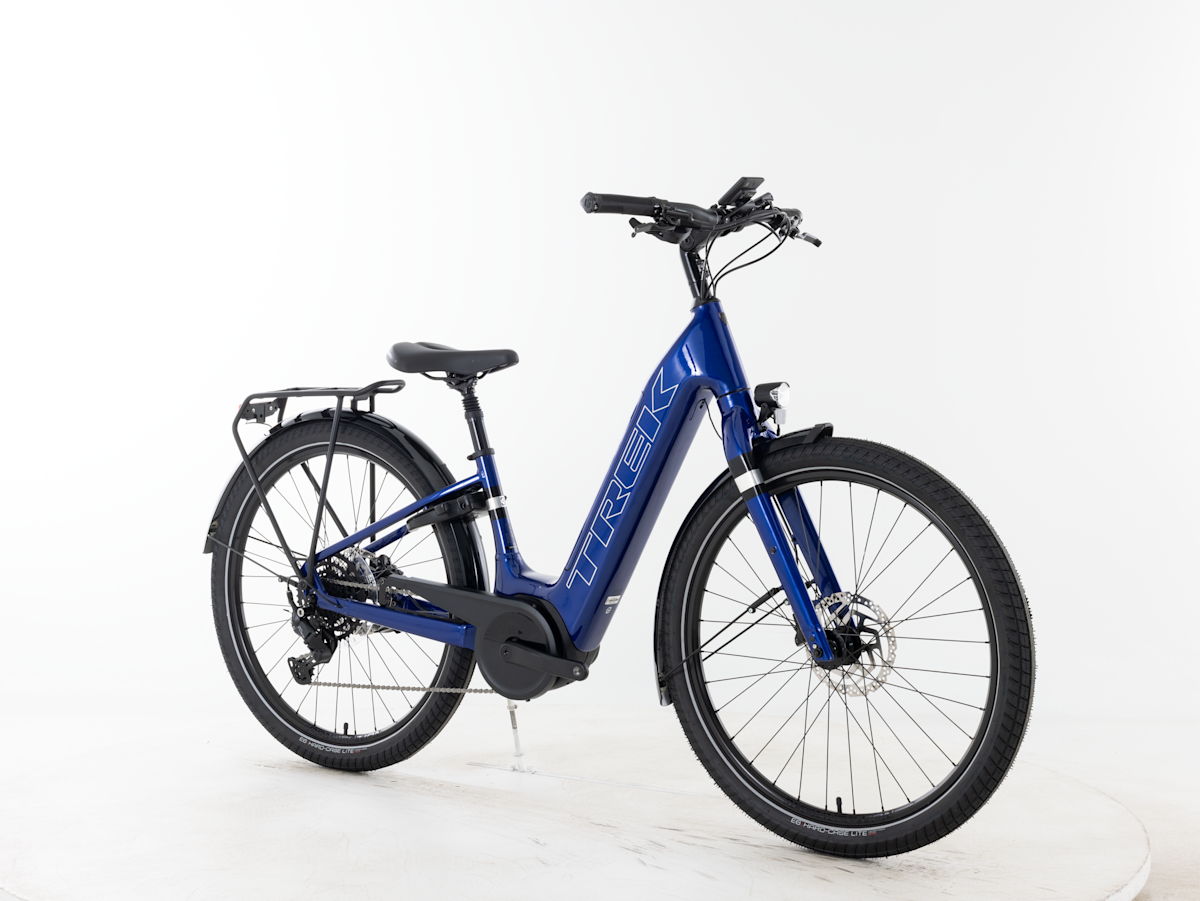
Best for upright comfort and a Bosch mid-drive system
5. Trek Verve+ 3 Lowstep Gen 3
The Verve+ 3 Lowstep takes a different approach from the hub-drive Aventon and Lectric models. Its Bosch Performance Line mid-drive is listed at 250W and 75Nm of torque, paired with a 545Wh battery. The mid-drive uses the bike's gearing, which can feel more natural on rolling routes and climbs than a simple hub motor, especially when the rider keeps the cadence in a useful range.
The low-step frame and upright fit are aimed at comfort and easy mounting. Trek lists a Class 1 system and up to 68 miles of range. Class 1 means pedal assist only, with the motor cutting out at 20 mph under the common U.S. three-class definition. The bike is designed for steady commuting and recreational rides rather than throttle-first riding.
The main trade-off is that the Bosch system and dealer-oriented platform generally cost more than entry-level direct-to-consumer bikes. Check the exact size, total weight limit, and included rack or fender package at the dealer; model-year builds can differ.
- Bosch Performance Line mid-drive; 250W and 75Nm listed.
- 545Wh battery; up to 68 miles claimed.
- Class 1 pedal-assist system; UL 2849 certification listed for the electrical system.
- Low-step frame and upright comfort geometry.
Class 1 vs. Class 2 vs. Class 3
The common U.S. three-class framework describes how the motor assists, not how fast a rider can pedal downhill. Class 1 provides pedal assist only up to 20 mph. Class 2 allows a throttle but motor assistance stops at 20 mph. Class 3 provides pedal assist up to 28 mph. State and local rules can add age, helmet, speedometer, path-access, or trail restrictions, and not every state uses identical wording.
Do not assume that a bike's marketing page, display setting, and legal class are interchangeable. The Aventon Pace 5 page, for example, lists a Class 2 label alongside a 28 mph maximum figure. That is a reason to confirm the shipped configuration with the seller, not a reason to assume every throttle mode is legal on every path. The same applies to bikes that let the rider switch between class settings: choose the setting that is legal where you ride and do not modify the bike to exceed its approved configuration.
Before buying, check the current rules for your state, city, park, and any trail system on your commute. The class on the frame label and the owner's manual should match the configuration you actually use.
How much battery range do you really need?
Battery capacity is measured in watt-hours (Wh). It is a more useful starting point than motor wattage when you are comparing how much stored energy a bike carries. A 733Wh battery stores more energy than a 520Wh battery, but that does not guarantee a longer ride: motor efficiency, rider input, speed, assist level, hills, wind, temperature, tire pressure, and cargo all change consumption.
For commuting, calculate the round trip first. Add any detours or errands, then leave a reserve for cold weather, headwinds, a heavier bag, and a route that turns out to be hillier than expected. If the product page says “up to 75 miles,” do not plan a 74-mile ride around that number. Manufacturer range tests often use favorable conditions and lower assist settings.
For a more detailed breakdown, read Electric Bike Battery Range: What Commuters Should Know. If you are still deciding which class fits your route, see E-Bike Classes Explained.
Fit, weight, brakes, and daily ownership
Test the frame before you fall in love with the motor
Stand-over height, reach, handlebar position, saddle height, and the ability to put a foot down confidently are more important than a long specification list. A step-through frame can make starts and stops easier, but it still needs the right reach and saddle position. If possible, test ride the exact frame style and size rather than a different model from the same brand.
Think about where the bike lives
A 60- to 68-pound e-bike is awkward on stairs and difficult to lift onto some car racks. If the bike will live in a second-floor apartment, measure the doorway and storage area and consider whether the battery can be removed for carrying. A lighter bike may be a better purchase even if its motor and battery look smaller on paper.
Check the brake and accessory package
Hydraulic disc brakes can offer useful control on a heavy e-bike, but the exact rotor size, pad availability, and service support still matter. A commuter also needs lights, fenders, a rack or bag solution, a kickstand, and a secure way to carry a lock. Check what is included in the selected trim; product photos sometimes show accessories that are sold separately.
Battery and riding safety
UL 2849 addresses the electrical system of an e-bike, including the drive train, battery, and charger combination. UL 2271 is a separate standard for batteries used in light electric vehicles. A battery-only certification is not the same as certification of the complete bike electrical system. Look for the certification mark and the exact model in the manufacturer's documentation; vague wording such as “UL tested” does not establish which standard was met.
Use the supplied or manufacturer-approved charger, charge while you are present, and unplug when charging is complete. Do not charge while sleeping or away from home, and do not use a damaged, modified, or unapproved replacement battery. Inspect the brakes, tires, cables, lights, and fasteners regularly, wear a helmet, and follow the rules for the road or path you are using.
Frequently asked questions
Is a 750W e-bike automatically a Class 3 bike?
No. Motor power and class describe different things. The common class framework is based on whether the motor assists only while pedaling or can use a throttle, and the speed at which assistance stops. State law and the bike's actual configuration matter.
Is a bigger battery always better?
A larger battery can store more energy, but it also adds weight and cost. Choose enough capacity for your round trip with a sensible reserve. A smaller, lighter battery can be a better fit if your commute is short and you can charge at home.
Should I buy a hub-drive or mid-drive e-bike?
Hub motors are often simpler and can offer strong acceleration on flat routes. Mid-drive systems use the bicycle's gearing and can feel more natural on climbs and varied terrain. The right choice depends on your route, maintenance preferences, and how much you want the motor to do.
Can I ride an e-bike on every bike path?
No. Access depends on state law, local ordinances, land-manager rules, and the bike's class. Check the specific route before riding, especially on shared-use paths and natural-surface trails.
Sources & further reading
- Aventon Level 4 REC exact model page
- Aventon Pace 5 REC exact model page
- Lectric XPress2 Commuter exact model page
- Specialized Turbo Vado SL 2 4.0 exact model page
- Trek Verve+ 3 Lowstep Gen 3 exact model page
- PeopleForBikes three-class e-bike system
- UL electric bicycle certification and UL 2849
- CPSC micromobility product safety guidance
Content reviewed: Nov 19, 2026